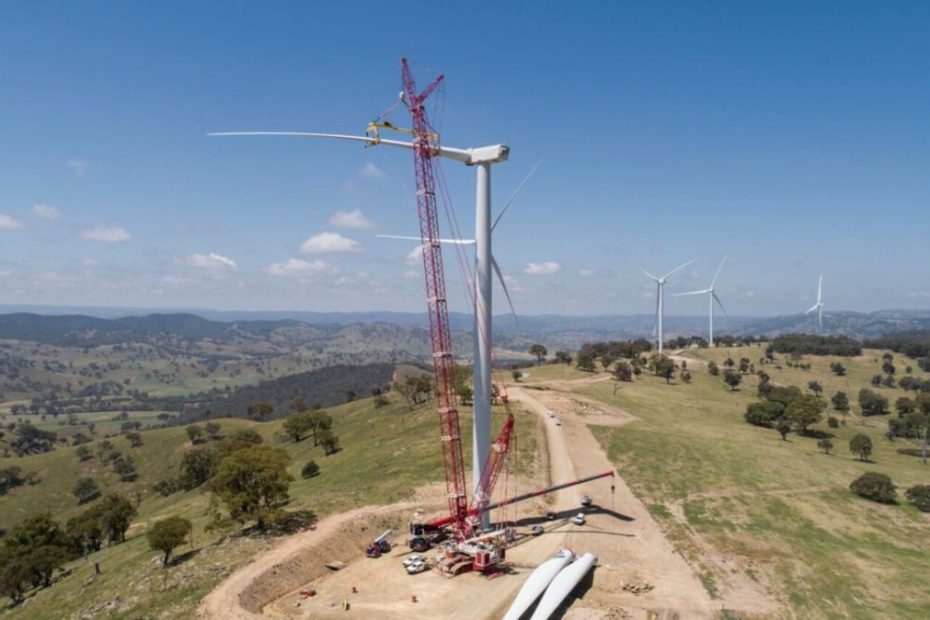
The Queensland LNP has wanted to give every impression of being a God-fearing, coal loving, climate skeptic government since it was elected to govern the country’s most coal dependent state in 2024.
It ripped up the renewable energy target, scrapped emission reduction efforts, proudly cancelled a couple of wind projects and put others on hold, and vowed to keep its power plants burning coal well into the 2050s. It even cancelled plans for electric buses and put out a tender to buy 630 diesel ones instead.
Little wonder that the federal environment minister Murray Watt accuses the Queensland government of having an “ideological hatred of clean and cheap energy”, just weeks after the Smart Energy Council had also accused the LNP of having a “deliberate strategy” to kill large scale renewables.
But here’s the thing: Queensland’s renewables industry has not ground to a halt. With the exception of Western Australia, whose Labor government is ramping up construction because it wants to quit coal by the end of the decade, Queensland remains the hottest state for wind and solar in the country.
In fact, it is no longer the country’s most coal dependent state – that mantle has been inherited by NSW, a Labor state with a clearly enunciated plan to replace coal within a decade, but which is yet to get many renewable runs on the board.
Screenshot
In the last 12 months Queensland has sourced 38.4 per cent of its state demand from renewables, beating NSW which has had a share of 38.2 per cent, according to Open Electricity (see graph above from Rystad Energy, with Queensland in purple and NSW in blue).
For calendar 2026, the difference is marked – 38 per cent in Queensland versus 34.8 per cent in NSW. In 2025, Queensland had trailed NSW 33.2 per cent to 37 per cent. As the two biggest state grids in the country, these are not figures that would thrill federal Labor as it struggles to reach its 82 per cent national target for renewables by 2030.
Rystad Energy’s David Dixon says NSW has slipped behind Queensland on year-to-date and the rolling 12-month data, largely because of the winter effect – NSW has succeeded in getting solar and battery storage built, but has not seen a new wind farm start construction since Squadron Energy’s Uungula project in 2024.
Screenshot
“All that is coming online (from a renewables generation /storage perspective) in NSW is just solar and batteries,” Dixon says (see graph above and note the lack of wind, in blue, on the NSW table).
“This is bad news in winter (for NSW) as the volumes of energy won’t be available to replace the coal volumes lost from Eraring (the country’s biggest coal generator whose closure date has already been shifted from 2025 to 2029).”.
And the outlook looks poor for NSW. Only four wind farms have begun construction since 2020, and no wind PPAs have been written since 2024.
That’s in contrast to Queensland, where a lot of large projects have been contracted to Rio Tinto to power its giant smelters and refiners in Gladstone, where it plans to close the ageing coal fired generator in 2029 no matter what the state government says.
Screenshot
This includes the 1.4 gigawatt Bungaban wind project which has just received EPBC approvals, and the 1.1 GW Upper Calliope solar project, which is still working through them.
But there are still PPAs being written even outside the Rio transition plan, including the 600 MW Jackson North and the 408 MW Gawara Baya wind projects which recently announced it had reached financial close.
Dixon notes that although Queensland’s state owned utilities have pulled out of equity investments, they are still writing PPAs for renewables. The problem in NSW is that the big utilities are privately owned, and despite promising to close down their coal fired generators in coming years, have not written PPA’s or built any new renewables.
That, in turn, has rendered the flagship policy platform, the Capacity Investment Scheme, largely ineffective.
“The CIS was meant to help with the providing revenue support to get projects moving, but it hasn’t as the revenue floors are at uneconomic levels to get projects moving,” Dixon says.
It is tempting to imagine the scale of the new construction in Queensland if it still had a state goverment that supported the transition and was determined to meet its targets, which in that state were 80 per cent by 2035.
Victoria could face a similar situation by the end of the year, given the tight contest expected in the November state election, and NSW also goes to the polls next March.
And, of course, it’s what is promised by the federal opposition parties – Liberals, Nationals and One Nation – should they dislodge Labor at the next national poll.
But as the US is discovering in many states, despite the extraordinary efforts of the Trump administration, wind and solar are being built, and highly sought after. Ultimately, it comes down to simple economics over energy ideology, as Rio Tinto is discovering with its giant smelters in both Queensland and NSW.
“Renewable energy is the cheapest and cleanest form of energy, and these 150 projects are creating jobs, unlocking investment and reducing emissions right across the country,” Watt said in a statement on Friday while announcing approval for the Bungaban project.
“The Bungaban projects demonstrate the renewable energy transition in action, with the wind farm expected to help power the Boyne aluminium smelter in Gladstone, as it shifts from coal-powered power to cheaper, cleaner energy.
“These are exactly the type of job creating projects that simply wouldn’t go ahead under the Coalition’s plan to cut investment in energy, which would only drive up power bills.”
To join more than 29,000 others and get the latest clean energy news delivered straight to your inbox, for free, click here to subscribe to our free daily newsletter.
To support independent media, and help combat the spread of deliberate misinformation and disinformation about the energy transition, you can click here to make a one off donation or become a regular supporter of Renew Economy.
Giles Parkinson
Giles Parkinson is founder and editor-in-chief of Renew Economy, and founder and editor of its EV-focused sister site The Driven. He is the co-host of the weekly Energy Insiders Podcast. Giles has been a journalist for more than 40 years and is a former deputy editor of the Australian Financial Review. You can find him on LinkedIn and on Twitter.
Share this:
Facebook
X
LinkedIn
Reddit
Email
Print