Ausgrid has revamped its sandbox trial designed to enable entire neighbourhoods to benefit from the power generated by local rooftop solar and stored in distribution grid-connected batteries, and says its shareholders will be on the hook if the project fails.
The newly launched Community Power Network trial will support the installation of up to 70 megawatts (MW) of additional rooftop solar and 130 megawatt-hours (MWh) of battery storage across the Botany-Mascot area of Sydney and Charmhaven on the Central Coast.
“The trial will make it possible for people with solar to earn more for the extra electricity they share with the community, encouraging more homes and businesses to install solar,” Ausgrid CEO Marc England said in a statement.
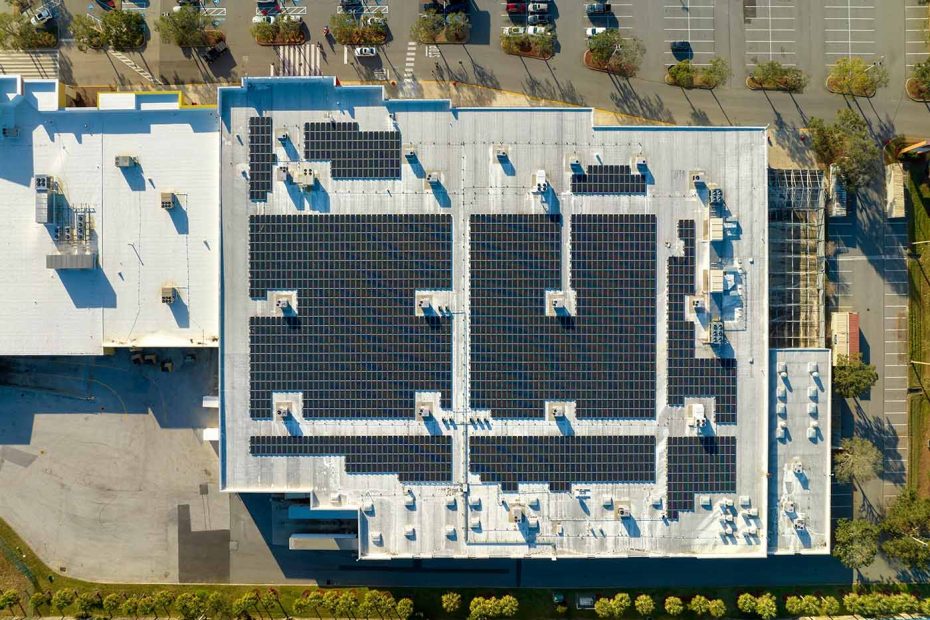
The solar will largely be installed on the underused roofs of warehouses, shopping centres, schools and other large buildings. A coordinated network of community-scale batteries will store surplus electricity during the day and release it locally during the evening peak.
About 32,000 local customers are expected to share in the value created, including renters and apartment residents who cannot install solar or batteries themselves.
The project is trying to overcome a major impediment to commercial rooftop solar. While many businesses have an incentive to install enough panels to meet their own daytime electricity needs, there is little financial incentive to fill the rest of a large roof and export the surplus.
“Feed-in tariffs at the moment are two, three cents, and if you’re a commercial business, they literally are nothing,” Ausgrid’s Steve Lewis told Renew Economy.
“There’s no incentive to put on any more power than what you can consume yourself. So we want to change that.”
Solar supply contracts will be awarded through reverse auctions, with generators bidding the price at which they are prepared to sell their electricity. Lewis said Ausgrid estimates a price of around eight cents a kilowatt-hour could be viable.
They estimate that one megawatt of additional commercial solar could generate up to $440,000 in profit over the 16-year life of the solar system.
Another impediment to businesses installing additional solar is the short duration of many commercial leases. A warehouse owner might install solar for a tenant with high electricity consumption, only to find that the next tenant uses much less power.
Under the Community Power Network, commercial rooftop owners will be offered power purchase agreements lasting 16 years, giving them a guaranteed buyer for whatever solar their tenants do not use.
“It’s not a high return, but it’s fixed and it’s guaranteed. So then they can go, right, fill the roof up.”
“Any surplus can go to the CPN, and then, if in four years’ time the tenant changes and that tenant doesn’t want any power, they can go, no problems, and they can just sell the whole lot to the CPN,” Lewis said.
The project expects to earn revenue by buying or storing inexpensive daytime solar in community batteries and selling it during more valuable evening periods. But Ausgrid says the batteries will also be positioned and operated to reduce pressure on particular parts of the local network.
Across the two Ausgrid-led areas, the project is forecast to reduce peak demand on participating zone substations by approximately 20 per cent.
That could create room for more EV chargers, electrified businesses and major customers, without the immediate need to build additional network infrastructure.
After costs and Ausgrid’s regulated-style return are covered, Lewis says the remaining value will be distributed to customers.
Solar owners will benefit through higher payments for their exports. Other households and businesses within the Community Power Network areas, including renters and apartment residents without solar, will receive an annual share of the profit pool, forecast to be worth up to $150 to $200 for customers without solar.
“It is all going to customers, either via a higher feed-in tariff or via a dividend at the end of each year,” Lewis said.
When the project was initially proposed, Ausgrid planned to recover $72.8 million of its cost from its wider customer base, meaning customers would have financed a substantial part of the trial through their electricity bills.
But the original proposal faced strong opposition from retailers, other energy companies and consumer advocates, who argued that allowing a regulated network monopoly to own batteries, procure solar and trade electricity could undermine competitive markets.
The AER said it could not waive the rule that would have allowed that cost recovery, so Ausgrid has had to secure alternative funding, with the company now saying its shareholders will carry the trial’s financial risk.
The company says it will invest approximately $120 million and receive a regulated return of about six per cent. The project has also received $13.2 million from the Australian Renewable Energy Agency (Arena).
“If the whole thing goes sideways, it’s Ausgrid shareholders, not Ausgrid customers, who end up wearing that problem,” Lewis said.
The AER has noted, however, that Ausgrid could seek funding for the trial in its next regulatory reset.
The other major change that was a condition of the AER’s approval, is the addition of a third region in Caringbah, to “make sure that there is competition”.
Ausgrid will publish a spatial map in coming weeks, that provides detailed information showing where the local network has room for more solar and batteries, potentially down to street level.
But it will not build its own Community Power Network in Caringbah. Instead, retailers, aggregators and battery companies will be able to use the data to test alternative commercial models.
“Anyone can try a different model,” Lewis said.
A potential snag for the project could be the continuing role of electricity retailers, which will manage customer billing and solar exports. Ausgrid wants retailers to pass the higher solar feed-in price directly to customers, but it cannot guarantee they will. The annual dividend can be paid via retailers’ bills or directly to customers.
Lewis says Ausgrid will make clear to participating retailers that the savings should be passed on to customers.
“We don’t want to see a world where we’re giving you eight cents and you’re only giving four cents to the customer,” Lewis said.
To join more than 29,000 others and get the latest clean energy news delivered straight to your inbox, for free, click here to subscribe to our free daily newsletter.
To support independent media, and help combat the spread of deliberate misinformation and disinformation about the energy transition, you can click here to make a one off donation or become a regular supporter of Renew Economy.
Anne Delaney
Anne Delaney is the host of the SwitchedOn podcast and our Electrification Editor. She has had a successful career in journalism (the ABC and SBS), as a documentary film maker, and as an artist and sculptor.
Share this:
Facebook
X
LinkedIn
Reddit
Email
Print