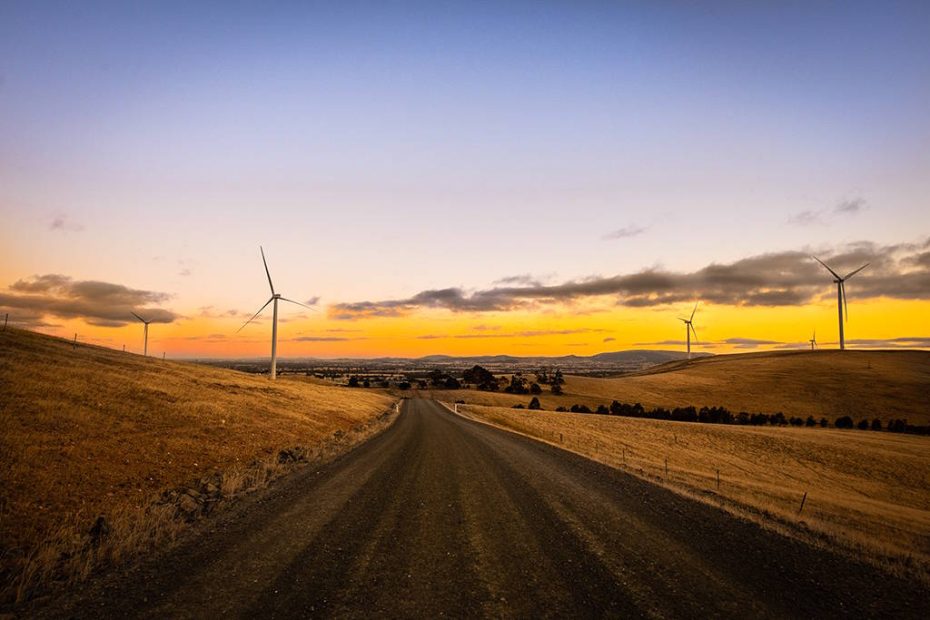
Federal energy and climate minister Chris Bowen is sticking by his renewable energy target of 82 per cent by 2030, despite the slow development of key wind projects and growing concern – and some predictions – that it will fall short.
Bowen was asked in the latest episode of Renew Economy’s weekly Energy Insiders podcast about the status of the government’s climate and renewables policy, and if it would use the global fuel crisis as a lever to accelerate its transition to green energy.
Bowen said the 2035 emissions reduction is already ambitious, and underpinned by the transition to renewables.
“I would say 82 per cent renewables by 2030 is also ambitious, but I believe achievable … yes hard work, but not inevitable, but I believe doable,” Bowen told the podcast. (You can hear the full interview here).
There has been some speculation that federal Labor is preparing to abandon that 82 per cent renewables target – given that the number itself was not included in the broad party platform prepared for the Labor conference to be held later this year.
But Bowen describes this as a “media beat-up,” saying the document is high level, and the renewables target is a critical component of the overall economy-wide emissions reduction target, which remains at 62 per cent to 70 per cent by 2035.
He hinted there could be some tweaks to the Capacity Investment Scheme (CIS), the government’s flagship policy, in the same way that NSW had done with its own version of the scheme as it hastens to build enough capacity to replace its ageing coal plants.
“Wind has become more expensive and harder,” Bowen conceded.
“Solar hybrids are going absolutely gangbusters. But the CIS was never designed to have added many electrons just yet. It is designed to be delivering electrons over the next few years, and I’m confident it will.
“We will continue to work on wind in particular, because I’m not going to pretend to you that wind hasn’t had its challenges. It has, and will, require further work. But solar hybrid is on the precipice of something very exciting.
“Wind is happening too, not as far or as much as you or I would like, but it is happening.”
Bowen pointed to the 830 megawatt (MW) Pottinger and 1.5 gigawatt (GW) Yanco Delta wind projects – which have both won access rights to the new renewable energy zone in in south-west NSW – as two of the most promising wind projects.
But the reality is that few are starting construction. There is only one wind farm currently under construction in NSW – Squadron Energy’s Uungala – and the Carmody Hill and Palmer wind projects in South Australia and Delburn project in Victoria have obtained off-take agreements and have started early works.
Most of the wind activity is happening in Western Australia, where the WA government-owned Synergy has written deals with four wind projects, the government has fast-tracked grid approvals, and where Andrew Forrest’s Fortescue is building the biggest remote grid wind project in Australia for his Pilbara iron ore mines.
The story is different with solar-battery hybrids, with nearly two dozen projects under construction, or about to start – a result of the falling costs of both battery storage and solar, and its easier approvals process, as well as its modularity.
In a wide ranging interview that also discussed EVs and the possibility of road user charges, electric trucks, the push for more electrification, and Bowen’s role as “president of negotiations” for this year’s UN climate talks in Türkiye, the minister was also asked if Australia had a future as an “electro-state” or a “petro-state.”
He still believes Australia’s future lies as a renewable energy superpower, given the country’s vast wind and solar resources, the opportunities for electrification and new industries, and climate priorities.
“There are people who try and drag this into a culture war straight away and say ‘drill, baby, drill’. I’m not interested in that culture war,” Bowen said.
“If there are sensible proposals to extract oil in Australia which help replace imports, great. If it stacks up environmentally, economically, engineering-wise, great. Of course, we’ll work on that together.
“But the idea that somewhere we could become fuel self sufficient is nonsense. And I think it has underlined, … around the world, the need for this energy transition.
“I represented the PM on a call last week with the prime ministers of Japan, India, Singapore, Sri Lanka, East Timor, etc, etc, and I was really stuck by how how many of them said this underlines the need for the continued transition to renewables, that we are at the end of of a fossil fuel supply chain.
“The second point is that many Australians are making this transition and realising that this is better for their bills and their energy security.”
He noted one in four new cars are now EVs or plug-in hybrids, compared to one in 50 four years ago, and Australian households installed 10 per cent of the global battery storage installations in the month of March alone.
You can hear the full interview with Chris Bowen on the latest episode of the Energy Insiders podcast: Energy Insiders Podcast: Chris Bowen on renewable target, wind delays, EVs and electrification
If you would like to join more than 29,000 others and get the latest clean energy news delivered straight to your inbox, for free, please click here to subscribe to our free daily newsletter.
If you wish to support independent media, and accurate information, please consider making a one off donation or becoming a regular supporter of Renew Economy. Please click here. Your support is invaluable.
Giles Parkinson
Giles Parkinson is founder and editor-in-chief of Renew Economy, and founder and editor of its EV-focused sister site The Driven. He is the co-host of the weekly Energy Insiders Podcast. Giles has been a journalist for more than 40 years and is a former deputy editor of the Australian Financial Review. You can find him on LinkedIn and on Twitter.
Share this:
Facebook
X
LinkedIn
Reddit
Email
Print