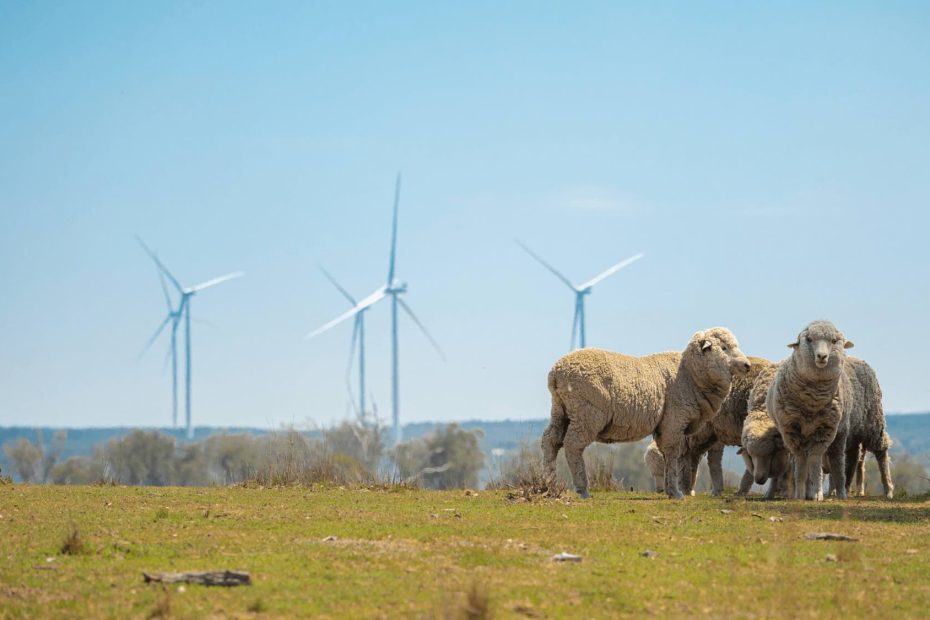
Record amounts of new solar and wind generation capacity met 99 per cent of global electricity demand growth in 2025, new data shows, as the rise and rise of big batteries helps transform solar into a “round-the-clock resource” – with Australia leading the charge.
According to the Global Electricity Review 2026 from energy think tank Ember, renewable power generation increased by 887 terawatt-hours (TWh) in 2025, outpacing electricity demand growth of 849 TWh for the year.
Solar – as noted above – was the big star of the year, with new PV generation meeting 75 per cent of the net increase in global power demand, growing by a record 636 TWh in 2025 to reach 2,778 TWh in 2025, a 30 per cent jump on 2024.
The increase in global solar capacity was 18 times as large as that of gas (+36 TWh), which was the only fossil power source that grew in 2025, Ember says.
A separate report, the International Energy Agency’s (IEA) Global Energy Review says the global solar juggernaut contributed the largest structural increase ever recorded in a single year for any electricity generation technology in 2025, and helped renewables outpace coal growth for the first time.
In the context of the current Middle East conflict, Ember notes that the solar generation added in 2025 would be sufficient to displace gas-fired electricity equivalent to all LNG exports through the Strait of Hormuz in the same year, estimated at 550 TWh.
Global solar generating capacity has been doubling roughly every three years, Ember says, rising from 1,333 TWh in 2022 and overtaking wind power for the first time globally in 2025. Both solar and wind are expected to overtake nuclear in 2026.
Wind energy, too, had a bumper year according to a separate Ember report, which shows that the global industry installed a record-smashing 165 gigawatts (GW) – or 205 TWh – in 2025, marking the highest ever level of new installations for the wind power industry.
Australia followed the global wind trend, charting 43 per cent year-on-year growth with 1,200 new wind projects coming online in 2025, compared to 835 in 2024 – bringing the total number of wind projects by the end of 2025 to 13,515.
“Australia recorded a significant increase in wind generation … due to stronger wind conditions and major new wind farms coming online, such as the 412 MW Goyder South wind farm and the 923 MW MacIntyre Wind Farm, Australia’s largest-ever wind farm project,” the report says.
But Ember notes that fewer projects achieving final investment decision and approval for the coming years, due to planning delays, inflation and community opposition, points to a drop in the future pipeline.
In combination, wind and solar now contribute more than half of all global renewable generation and, combined with nuclear (8.9%) and hydro, low-carbon sources reached 42.6 per cent of total electricity generation in 2025, up 9.1 percentage points from 33.5% in 2015.
On the other side of the coin, the share of fossil generation fell to 57.4 per cent, down from 66.5 per cent in 2015. This was the first year since 2020 without an increase in electricity generation from fossil fuels and only the fifth year without a rise this century.
For storage, 2025 was also a landmark year, in which battery economics reached a turning point, with battery pack prices for stationary storage falling to a record low of $US70/kWh – down 45 per cent on 2024 – allowing dispatchable solar with batteries to be delivered for around $76/MWh.
“This makes it cheaper and faster to build than a new gas power plant, particularly in countries reliant on expensive LNG imports,” the report says.
Globally, battery storage capacity additions jumped by 46 per cent from 2024 to an estimated 247 GWh, according to Ember – enough to shift around 14 per cent of global solar generation from daytime to other hours.
According to the IEA, battery storage was the fastest-growing power sector technology in 2025, with the roughly 110 GW of new capacity added over the course of the year beating the largest-ever annual capacity additions for natural gas.
“Battery storage is the fastest growing power technology today,” the IEA says.
“Installed capacity is now eleven times higher than in 2021. Lithium‑iron phosphate (LFP) batteries now account for around 90% of deployments; while less energy‑dense than rival chemistries commonly used in EVs, LFP batteries are typically cheaper and better suited to more frequent cycling. Just five years ago, the market share of LFP batteries in deployments was well below 50%.”
Ember marks 2025 as the year that batteries are “finally moving into the mainstream” to help shift solar power beyond daylight hours and unlock the next phase of solar expansion.
“Batteries have outgrown their initial niche role as a grid stability service and are now core infrastructure designed to store excess daytime electricity and release it in the evening and at night,” the Ember report says.
In this regard, Ember says Australia is leading the world, as one of two countries alongside Chile that could shift more than 50% of the new solar capacity added in 2025 with new battery capacity, transforming PV generation from a daytime solution to “a nearly round-the-clock resource” and the most affordable pathway to meet rapidly rising electricity demand.
“Australia and Chile stand out for adding relatively small amounts of battery capacity in absolute terms, 9 GWh and 4 GWh respectively, but large enough relative to their solar growth to make a material difference,” the report says.
“Australia shows how batteries can quickly reshape power markets once deployed at scale. In Q4-2025, during the high-value evening peak hours (18:00-20:00) in the National Electricity Market, batteries set prices 36% of the time – doubling from 18% in Q4-2024, displacing gas and hydro as price setters.
“This led to significantly lower price volatility compared with Q4-2024, with average spot prices of around $100 per MWh during 18:00-20:00, less than half of the Q4-2024 average spot prices during these hours. This helped bring overall prices lower, with wholesale prices averaging $50/MWh, a $39/MWh (-44%) reduction from Q4 2024.
These dynamics, says Ember, show batteries are already delivering tangible system benefits by reducing reliance on expensive fossil generation and stabilising prices at the most critical times of day.
“We have firmly entered the era of clean growth,” says Ember managing director Aditya Lolla.
““Clean energy is rapidly redefining the foundation of energy security in a volatile world. It is already helping countries reduce exposure to fossil fuel imports and costs while meeting rising electricity demand.”
If you would like to join more than 29,000 others and get the latest clean energy news delivered straight to your inbox, for free, please click here to subscribe to our free daily newsletter.
Sophie Vorrath
Sophie is editor of Renew Economy and editor of its sister site, One Step Off The Grid . She is the co-host of the Solar Insiders Podcast. Sophie has been writing about clean energy for more than a decade.
Share this:
Facebook
X
LinkedIn
Reddit
Email
Print