⚠️ New CER Photo Requirements for Solar Battery Installations — Starting 1 March 2026
Published Feb 8
The Clean Energy Regulator (CER) will introduce new mandatory photo requirements for all solar battery installations under the SRES from 1 March 2026. These changes affect the photographic evidence installers must submit and emphasise clear, legible labelling at key locations on site.
Geo / Onsite apps — updates coming
Installer apps and field reporting tools (Geo, Onsite and similar) will be updated to include the new “photo buckets” and descriptions required by the CER. Ensure your site documentation workflow captures the new images and label detail before you submit claims.

The 3 main areas requiring additional photographic evidence
The CER has highlighted three core areas where installers must supply clear photos. Below is a concise guide to what to photograph and what labels to check.
1. Meter Box Labels
- Main battery label: A circular green reflective Emergency Services (ES) label is required (minimum 100 mm diameter). The label must show the correct UN number for the battery chemistry (for example: UN3480 for lithium-ion cells).
- PV label: The standard circular green PV label must be present where appropriate.
- Compliance: Include any other labels required by Australian Standards or relevant state regulations (e.g., fused isolator notes, consumer mains information).
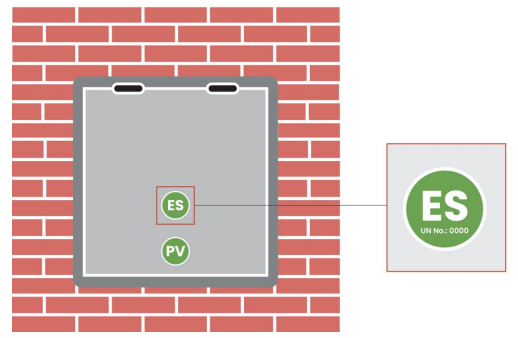
Figure: Example of emergency services labels located on the outside of a meter box. Source: CER
2. Switchboard & Isolation Labels
- Warning labels: Place clear warning labels on the switchboard or on the outside of the meter box indicating battery presence and hazards.
- Shutdown procedure: A clearly legible emergency shutdown procedure label is required — the label must be readable in submitted photos.
- Alternative supply labeling: If the property has an alternative supply (e.g., dedicated backup circuits), include specific labels showing how to isolate or manage the alternative supply.
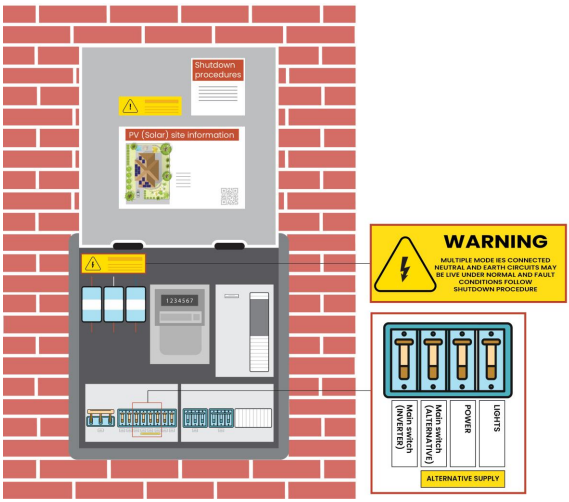
Figure: Example of critical labels located on the switchboard and inside the meter box cover. Source: CER
3. Solar Battery Unit Labels
- Safety signs: On or adjacent to the battery, photograph risk-specific warnings (for example: Toxic Fumes, Battery Explosion, Arc Flash).
- First aid / chemical hazards: Provide clear images of first aid instructions and chemical hazard signs that describe actions for exposure to battery chemicals.
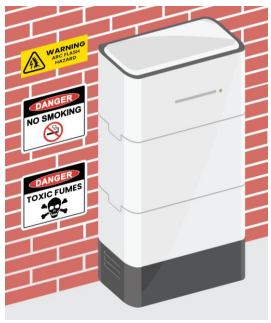
Figure: Example of labels mounted adjacent to the solar battery. Source: CER
Practical tips for installers
- Photo clarity: Ensure photos are well-lit, in-focus and show the full label area. Take a close-up and a wider shot so the label context (location on site) is clear.
- Label size & reflectivity: Where the CER specifies size (e.g. 100 mm for ES), confirm the label meets that minimum and is reflective if required.
- Document everything: Capture both the label face and its mounted location (e.g., inside meter box cover and on the external surface).
- Cross-check standards: Check Australian Standards and any state-specific requirements in addition to the CER guide.
Always check the source
This post outlines the key points, but you should read the official CER guidance for full details:
How Koalabel can help
Koalabel has supplied compliant bollard and label solutions, solar label kits and battery stickers across Australia and New Zealand for over 15 years. We can help you prepare compliant label kits and advise on the right signs and sizes to meet CER requirements and Australian Standards.
If you need site-ready solar battery label kits or guidance on compliance, Koalabel can assist — ask your usual Koalabel contact or account manager for available kits and training options.
Koalabel Solar Team