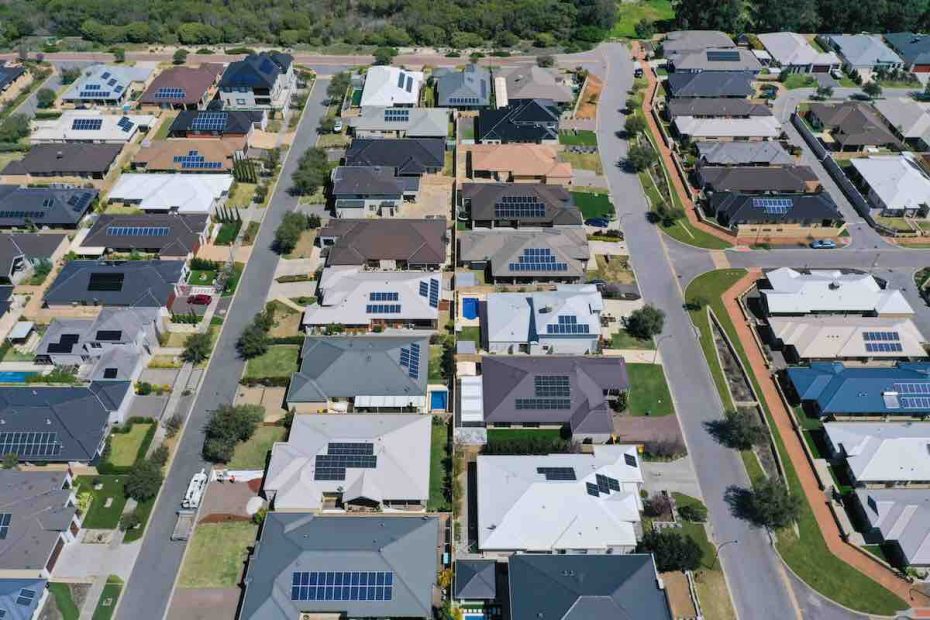
Western Australia’s South West Interconnected System (SWIS), recognised as the largest isolated grid globally, has set an impressive new record with 89 per cent of its energy coming from renewable sources, predominantly driven by rooftop solar.
This new peak, reaching 88.97 per cent precisely, occurred at 11am on Monday, surpassing the previous record of 87.29 per cent established just a day before, as well as the earlier high of 85.36 per cent recorded on October 23.
Significant Steps Towards a Clean Energy Future
Sanderson expressed enthusiasm over this achievement, stating, “Another milestone for WA’s clean energy future. It’s another strong sign of the transformation underway in our energy system as we become a renewable energy powerhouse.”
According to the Australian Energy Market Operator (AEMO), this record was primarily driven by rooftop solar, which contributed a staggering 64 per cent of the energy generation at that moment. Large-scale wind energy followed, accounting for just over 16 per cent, with additional contributions from large-scale solar, solar battery hybrids, biomass, and battery storage.
Factors Behind the Record Achievement
Kirsten Rose, AEMO’s executive general manager for Western Australia, noted that the new record was facilitated by favourable weather conditions, including clear skies, low energy demand, and strong winds. “From our control room, we are witnessing renewable energy increasingly catering to over 80% of the SWIS’ electricity requirements, a trend expected to grow as more investments connect to the grid,” Rose remarked.
This achievement is remarkable, especially considering that not long ago, critics of renewable energy predicted that instantaneous shares of only 20 per cent could jeopardise grid stability and economic viability, leaving people to revert to primitive living. These sceptics, particularly from the Nationals party, still hold onto such beliefs.
Comparative Renewable Energy Shares
While other Australian states, such as South Australia, have witnessed even higher renewable contributions—reaching a peak of 150 per cent of state demand—these regions benefit from interconnected transmission links that allow them to export excess wind and solar energy. In contrast, Western Australia’s SWIS stands alone, lacking connections to other grids and any pumped hydro capabilities, which are a common solution for grids with high renewable integration.
However, Western Australia is rapidly expanding its collection of large batteries, including two of the country’s largest. One of these has recently begun operations, further enhancing the state’s capacity to manage its renewable energy. These batteries are crucial in maintaining grid stability, allowing for demand adjustments when solar output peaks are excessive, and storing solar energy for use during evening periods. They are also designed to respond swiftly to any disturbances within the grid.
Future Plans for Energy Generation
The state has plans to retire its last three state-owned coal generators by 2029, alongside the expected closure of the remaining privately owned generator. However, a significant challenge lies ahead in securing enough new wind and solar generation capacity to fill the void left by these closures.
The federal government is currently conducting a generation tender specific to Western Australia as part of its Capacity Investment Scheme, with an aim to secure 1.6 GW of new wind and solar generation capacity. The deadline for bids is set for Friday, with successful proposals expected to be announced in March or April of next year.
Support for independent media and reliable information is crucial; individuals are encouraged to consider making a one-off donation or becoming a regular supporter of Renew Economy to help sustain their mission.