The federal government’s expansion of the small-scale renewable energy scheme (SRES) is already lifting demand for both solar panels and storage, as commercial and industrial companies look to generate and store more of their own power, according to Chinese giant Trina Solar.
Edison Zhou, Trina’s head of operations in Australia, New Zealand and Pacific Islands, said the company had already received much “positive feedback” from both the industry but also distributors and those providing engineering, procurement and construction (EPC) services.
From the start of this month, the SRES scheme lifted the maximum size of systems covered from 100 kilowatts to 1 megawatt capacity. The discount of about 20% would shave $68,000 from the cost of a 250-kW system while saving the owners about $50,000 a year in electricity costs, the government said when announcing the expansion in August.
With a longer planning and approval process that for residential solar installations, the pick-up in C&I installations will take a bit more time to show up, Zhou told Renew Economy in an interview.
Commercial sales now about for about 20%-30% of Trina’s Australian operations and the bulk of the rest in residential. However, “we do believe that ratio will increase”, Zhou said.
Zhou comments preceded a formal announcement on Thursday of Trina’s new module launch, aimed to coincide with next week’s All Energy Australia conference in Melbourne.
Trina will unveil its latest Vertex S+ G3 Full Black solar module, that the company says is an Australian-exclusive product combining “premium aesthetics with next-generation performance for Australian rooftops”.
The return of an all black offering, based on the firm’s TOPCon 3.0 technology, boasts as much as 510 watts of power output with 24.4% efficiency. The lightweight dual-glass construction is backed by a 25-year product warranty, the company said in a media release.
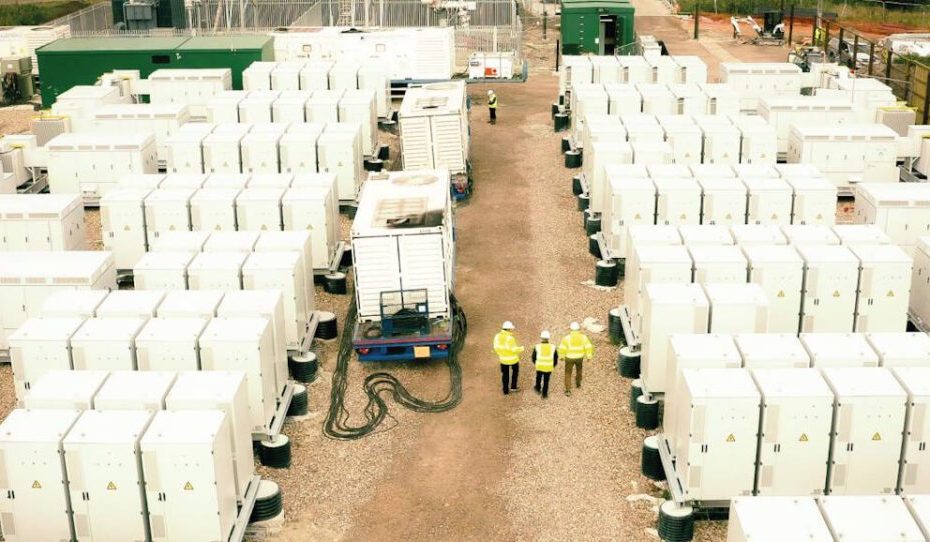
Trina is also using the SRES extension as a prompt to make Australia the launch market for its C&I Integrated Engineering & Solutions product, that will combine solar modules, mounting and tracking systems, and battery energy storage solutions (BESS).
The company also said it would use the All Energy event to showcase its 6.25MWh Elementa 3 battery, which brings together advanced DC technology with AC-side integration capabilities.
Ryan Sequeira, head of Trina’s distribution sales in Australia and New Zealand, told Renew Economy that networks needed to assess how much electricity commercial premises with panels would likely export to the grid before approving the connection.
However, the connection process was becoming smoother because more systems would come with storage, meaning power generated at the site would be consumed there too, limiting pressure on the grid.
“If people are putting panels on their roof commercially, they want to have some storage attached to that,” Sequeira said. “It’s the total package that they’re looking at.”
“[T]he EPCs know about this, so they they build their entire grid application based on that,” he said.
The design of the SRES expansion should also sustain C&I demand. Unlike the sliding value of the residential SRES certificates, the value of the mid-scale ones will remain steady. “So it doesn’t matter if you’re installing it in 2026 or you install it in 2028, you’ll still get the same amount of mid-scale certificates,” he said.
On the residential front, Trina is experiencing roughly the same drop in the average size of new solar systems being installed as the overall market after the government pared back the subsidies of its Cheaper Home Battery scheme. Sunwiz data shows average solar systems dropping from about 12 kW capacity to under 10 kW.
For Trina, the average size of the batteries they are installing is about 24 kW-hours, or about twice the level prior to the battery subsidy scheme’s start, Zhou said.
The impact of the battery support, though, is that storage is now the first point of discussion with residential customers, Sequeira said. As inverters and batteries are typically included together, “the conversation on panels is actually last”.
That said, Trina has also produced many sales from the “existing market”, where households looking to add a battery have used the occasion to replace their older, smaller solar systems, Zhou said.
Trina brought its research & development team to Australia during the last quarter to improve their understanding of the needs of installers and retailers, and to get a better handle on the C&I opportunity.
One recent change has been Trina bringing its Vertex S+ panels with a length of 1.842 metres to Australia, a product sold to both commercial and residential customers. Warehouses can avoid stocking varying sizes – at 1.76m and 1.96m, as previously.
Zhou, who also oversees sales in the Pacific, said demand has been on the rise as nations such as Fiji and Papua New Guinea look to reduce their exposure to expensive diesel imports.
In Fiji, where Trina has been a supplier since 2020, demand has gone up from a couple of containers’ worth a year to about 10 MW’s worth over the past three years. Customers include the university and a 3 MW system for an airport project.
Support has come from the World Bank, the Asian Development Bank and the UNDP, These programs include providing a panel or two to bring light to remote village homes, and the spread of microgrids across Fiji and other Pacific Islands.
Trina, which typically ranks among the top three global solar PV makers, had shipped more than 350 GW of generation capacity as of June since its founding in 1997, according to its website. Taking the European Union as a single entity, Australia typically ranks among Australia’s top five markets, Zhou said.
To join more than 29,000 others and get the latest clean energy news delivered straight to your inbox, for free, click here to subscribe to our free daily newsletter.
Peter Hannam
Peter Hannam is a veteran journalist whose work spans almost four decades and includes stints outside Australia, including time in China, Japan, Singapore and Mongolia. He has lately reported extensively on energy, climate and environmental issues in Australia, and also worked for the federal Climate Change Authority as a special media advisor.
Share this:
Facebook
X
LinkedIn
Reddit
Email
Print