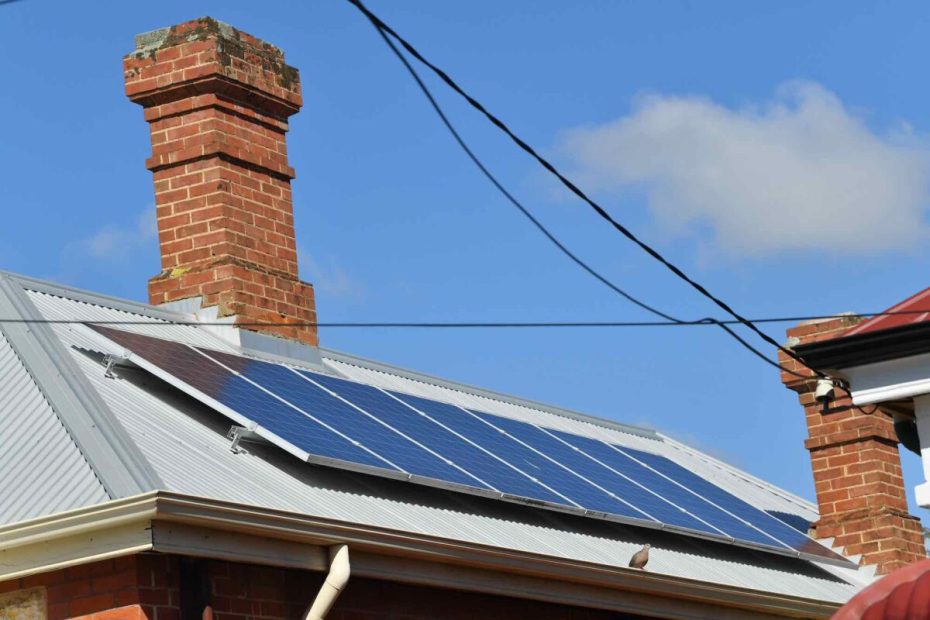
Around 100,000 rooftop solar systems in South Australia will be switched off for an up to an hour on Tuesday as the local distribution network operator tests its so-called backstop system to help protect the grid.
SA Power Networks describes the one-a-year exercise as “like a fire drill for the grid”, and the number of times it is tested has so far outnumbered the times when it has been called into action.
South Australia leads the country, and the world, in the uptake of wind and solar, and rooftop PV in particular, and the output from rooftop solar systems on homes and businesses often exceeds state demand, and pushes the local grid into “negative” demand.
The problems that this can create have been mitigated in the last 12-18 months by the rapid uptake of home batteries, courtesy of the federal battery rebate, the increase in the amount of grid-scale batteries – which can both soak up excess solar – and the growth in electric vehicle and electric appliances, which creates new demand.
Networks such as SAPN have also been exploring more subtle program such as flexible exports and more recently flexible imports, and create tariffs that reward households to respond to any tricky situations.
And while the ability to shut down rooftop solar on command is considered a blunt instrument, it is still considered an important part of the armoury for the Australian Energy Market Operator as it learns how to navigate the changes in grid management brought about by the transition from fossil fuels to renewables.
South Australia currently sources around 75 per cent of its annual demand from wind and solar – the highest ration in the world for a gigawatt-scale grid – aims to reach 100 per cent “net” renewables by the end of 2027.
In a statement this week SAPN says the ability to temporarily curtail rooftop solar generation is essential to help maintain system security, balancing electricity supply with demand.
“In South Australia, that balance can be challenging because we have more rooftop solar per capita than almost anywhere in the world,” it said.
“Sometimes, when rooftop solar exports are very high and electricity demand is very low, the grid can become unstable. SA Power Networks is delivering a range of innovations to manage this challenge (including flexible exports), but we must still be prepared for unlikely events that could put the grid at risk.”
The tests are designed to confirm that solar systems installed after September 2020 are compliant, and that third parties, known as Relevant Agents, who are responsible for disconnecting and reconnecting systems, can respond quickly.
“If compliance or responsiveness is lacking, more severe measures may be needed in a real emergency. This test helps confirm we can rely on the Smarter Homes capability,” it said.
One of the most notable shutdowns of rooftop solar occurred in November, 2022, when a severe storm cut the interstate transmission links and left the South Australia grid “islanded” for nearly a week.
This worked OK, and the state still reached penetrations of up to 91 per cent wind and solar, but AEMO needed to manage the amount of rooftop solar being produced in the middle of the day, because the ability to export excess solar had been removed.
“If AEMO forecasts a risk to system security and has already used all other available controls, it can direct SA Power Networks to increase operational electricity demand,” SAPN says.
“The fastest way to do this is by temporarily reducing rooftop solar generation. If this is not done, the imbalance could lead to widespread power outages.”
SAPN says around 100,000 customers will be affected by the outages, which should last for less than one hour and will result in the loss of about 1.5 kWh of generation – on average.
To join more than 29,000 others and get the latest clean energy news delivered straight to your inbox, for free, click here to subscribe to our free daily newsletter.
Giles Parkinson
Giles Parkinson is founder and editor-in-chief of Renew Economy, and founder and editor of its EV-focused sister site The Driven. He is the co-host of the weekly Energy Insiders Podcast. Giles has been a journalist for more than 40 years and is a former deputy editor of the Australian Financial Review. You can find him on LinkedIn and on Twitter.
Share this:
Facebook
X
LinkedIn
Reddit
Email
Print