South Australia energy minister Tom Koutsantonis has hinted – for the first time – that the state may not reach its stated target of 100 per cent “net” renewables by the end of 2027 as promised, but insists that it will not matter much if the timeline slips by a year or two.
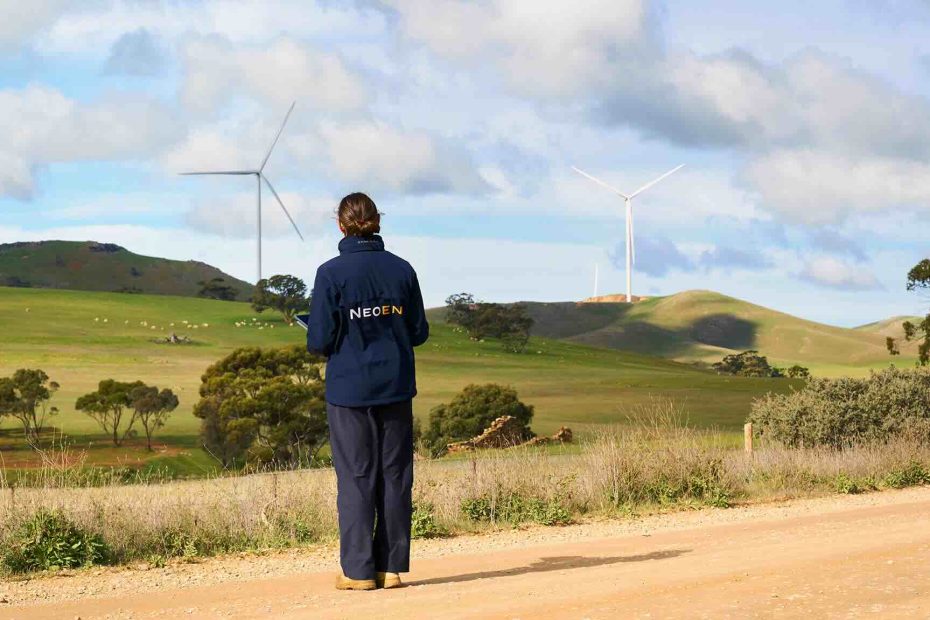
Koutsantonis was asked about the target this week after attending a “sod turning” ceremony at the 288 MW Palmer wind project north of Adelaide, the same day that a construction start was announced at the bigger 346 MW Goyder North wind project and its neighbouring big battery.
“I think if anyone had told me in 2022 that we’d be at 75 per cent by 2025, I would have smiled,” Koutsantonis said.
“I think we are going to get to 100 per cent, I am confident we can meet that target. But the question for us is going to be is when in 2027 we hit that target. Now, look, if we overshoot it a bit, it gets into a little bit of 2028, fine.
“But the ambition is what’s important. The ambition is what drives the government’s agenda here. The ambition to make sure that we can show this to the world, that you can be 100 per cent net renewable and run a stable system.”
In reality, that’s a fair assessment.
South Australia has been sitting at an average of 70-75 per cent renewables for several years, which is world-leading because the state has no hydro or geothermal, and its renewable share is made up entirely of “variable” wind and solar resources, backed by battery storage and legacy gas generators.
The 100 per cent net renewable target was actually put in place by the former Liberal state government in South Australia, back in the day when there was bipartisan support for renewables (yes, that was once a thing in some parts of Australia).
Source: Rystad Energy.
The Liberals – who understood as well as Labor that South Australia’s economic future lay in a renewable grid after the closure of its last coal fired generator a decade ago – aimed to reach 100 per cent “net renewables” by 2030. But after Labor returned to power in 2022 they fast-tracked the target to 2027.
The problem is that nothing much has been built in the way of large scale renewables since then. A lot of big batteries have been added, but as the graph above illustrates, there were no wind farm construction starts in 2023, 2024 and 2025, and the only new wind project since 2020 has been the now completed 412.5 MW Goyder South, the state’s biggest.
And a key part of the 100 per cent net renewable equation, the new 800 MW transmission link to NSW, Project EnergyConnect, has been delayed because of delays and cost overruns on the NSW leg of the country’s biggest transmission project.
PEC has only just been energised along the full length of the transmission line, creating the first transmission “loop” in Australia’s main grid. But it will be many more months until it is operating at full capacity.
You can read Sophie Vorrath’s analysis of that new transmission line here: Australia’s first transmission loop between three states set to “fundamentally change” flow of electricity
Palmer and Goyder North, along with the 257 MW Carmody’s Hill wind project, which began construction earlier this year, will likely be enough to get the state close to the 100 per cent net renewables target.
But these projects won’t be completed before the end of 2027. Goyder North probably won’t reach full commercial production until 2029.
Project EnergyConnect allows more surplus wind to be exported to neighbouring states, and that will result in less curtailment, boosting the share of renewables.
The biggest winner from this addition could be utility scale solar, which has been heavily curtailed because it generates power at the same time as solar households. But no one is really too sure how the complex bidding and trading systems will work with the new transmission line.
The generation technology that has not slowed down in these past few years is rooftop PV, with South Australia now boasting the highest penetration rates in Australia, and likely the world, with half of all households generating power on their rooftops.
That remarkable story has been boosted by the success of the federal home battery rebate. So much so that what was once considered a major headache – having enough rooftop solar in the system to account for all state demand in the middle of the day – is now less of an issue as storage and “dynamic” connections mitigate the problem.
Screenshot
As illustrated by this graph above – another from the excellent analysts at Rystad Energy – the state’s households are now clearly the biggest generation source in the state.
Solar households produced more power than the three biggest private generation companies combined, and more than all the state’s remaining gas-powered generators.
Last year, rooftop solar accounted for 22 per cent of all state electricity demand, and met 100 per cent of local demand on 78 different occasions, according to the Australian Energy Market Operator.
It is important to note that renewable output is still growing in South Australia, but – as Koutsantonis points out – so is demand. Wind and solar generation has gone from 9.7 terawatt hours in 2022 to 11.4 terawatt hours in 2025, and most of that increase has come from rooftop solar, which jumped from 2.2 TWh to 3.4 TWh.
Without curtailment, and if you dial back in the wind and solar stored in batteries and then sent out to the grid, then the share of wind and solar in the last two years would have been well above 80 per cent. It’s going to be interesting to see what happens when the new transmission loop is operating at full capacity.
The renewable percentage equation is further challenged by those increases in demand – from population growth, in surge in electrification, and new industry which is being attracted to South Australia precisely because it is closing in on its 100 per cent net renewables target.
To join more than 29,000 others and get the latest clean energy news delivered straight to your inbox, for free, click here to subscribe to our free daily newsletter.
To support independent media, and help combat the spread of deliberate misinformation and disinformation about the energy transition, you can click here to make a one off donation or become a regular supporter of Renew Economy.
Giles Parkinson
Giles Parkinson is founder and editor-in-chief of Renew Economy, and founder and editor of its EV-focused sister site The Driven. He is the co-host of the weekly Energy Insiders Podcast. Giles has been a journalist for more than 40 years and is a former deputy editor of the Australian Financial Review. You can find him on LinkedIn and on Twitter.
Share this:
Facebook
X
LinkedIn
Reddit
Email
Print