Australia is clocking up record rates of investment in large and small renewable energy and storage projects, a pace that will need to be maintained – if not accelerated – to hit the nation’s clean energy and emissions target.
In the September quarter alone, investors reached a final investment decision on 2.1 gigawatts of large-scale renewable capacity – matching the previous high, and enough to power around 1.2 million homes, the climate change and energy minister, Chris Bowen, said in a statement.
New wind capacity deals totalled 1.1 GW, eclipsing the 1 GW of new FID for solar farms, and the highest for wind in any quarter. Solar’s FID rate, though, was 2 GW in the second quarter.
The total capacity to reach FID so far in 2026 is 5 GW, exceeding the previous full-year tally of 4.9 GW, with three month of this year to go. Of that amount, solar accounted for 3.5 GW, a record for that technology for any year, Bowen said.
The former head of the Clean Energy Finance Corp., Ian Learmonth, noted last year that Australia needed to install about 29 gigawatts of large-scale renewable generation by 2030, to meet its targets, or about 6.3 GW of new capacity.
While the quickening pace of FID sign-ups is encouraging, the lagging rate in previous years and the time it takes to start and complete construction makes it challenging for Australia to hit an 82% share of electricity coming from renewable energy by 2030.
Australia has a legislated target of cutting 2005-level greenhouse gas emissions 43% by that year, and has only reached about 25 percentage points of that reduction as of March, government data shows.
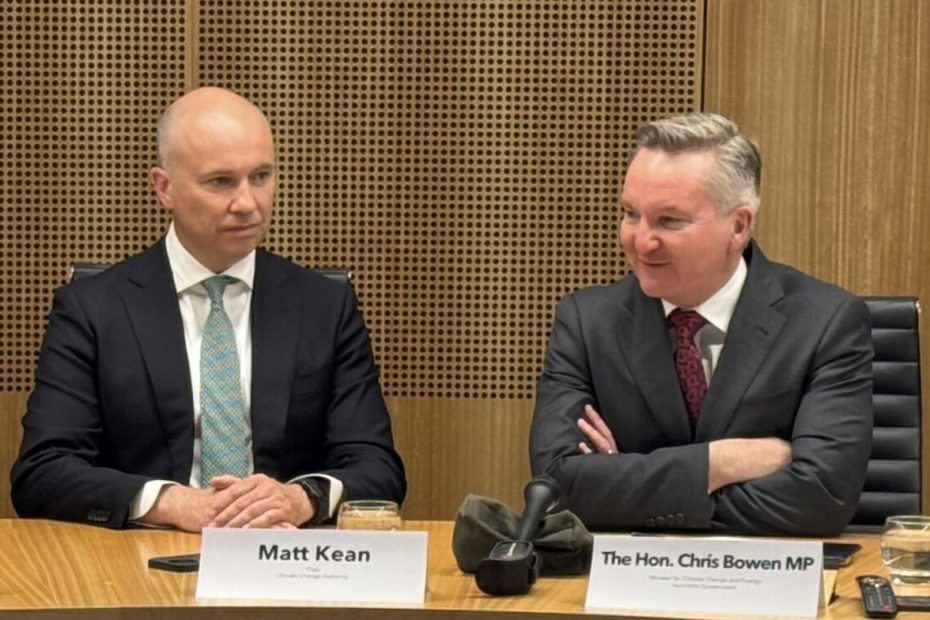
Minister for Climate Change and Energy Chris Bowen said the figures showed Australia’s energy transition is building momentum.
“This is what progress looks like: more renewable energy reaching final investment decision, more rooftop solar on homes and businesses, more batteries helping Australians store cheap solar power, and more downward pressure on power prices,” Minister Bowen said.
“Renewable investment has already broken the annual record with three months still to go. And it isn’t just investment; last month renewable energy generated more electricity in the national grid than fossil fuels.”
“This is what progress looks like: more renewable energy reaching final investment decision, more rooftop solar on homes and businesses, more batteries helping Australians store cheap solar power, and more downward pressure on power prices,” Bowen said.
“And it isn’t just investment; last month renewable energy generated more electricity in the national grid than fossil fuels,” he said.
While grid-scale storage has doubled in the past year, the increase has been far fasted because of the federal government’s Cheaper Home Batteries Program.
Approved capacity of small-scale storage reached 15.3 GW-hours by the end of September, up from less than 2 GWh at the same time last year. The pace of growth, though, as slow after the government pared the size of the benefits, with 1.9 GWh of home battery capacity added in the September quarter alone.
Total home battery capacity in Australia is more than five times greater than when the scheme began, Bowen said.
Among the states, NSW leads with 5.6 GWh of approved home battery capacity, followed by Victoria and Queensland at about 3.2 GWh each.
Rooftop solar continues to tick higher, with households adding 90,000 installations and 894 megawatts of capacity in the September quarter alone. The year-to-date rooftop solar capacity is now 45% higher than at the same point in 2025, the statement.
“Households are not waiting around. They are putting solar on their roofs, batteries in their homes, EVs in their driveways and taking more control over their power bills,” Bowen said.
The government said large-scale FID now totals almost 17 GW since Labor was elected in May 2022. Households have installed more than 13GW of small-scale solar during that time.
To support independent media, and help combat the spread of deliberate misinformation and disinformation about the energy transition, you can click here to make a one off donation or become a regular supporter of Renew Economy.
To join more than 29,000 others and get the latest clean energy news delivered straight to your inbox, for free, click here to subscribe to our free daily newsletter.
Peter Hannam
Peter Hannam is a veteran journalist whose work spans almost four decades and includes stints outside Australia, including time in China, Japan, Singapore and Mongolia. He has lately reported extensively on energy, climate and environmental issues in Australia, and also worked for the federal Climate Change Authority as a special media advisor.
Share this:
Facebook
X
LinkedIn
Reddit
Email
Print