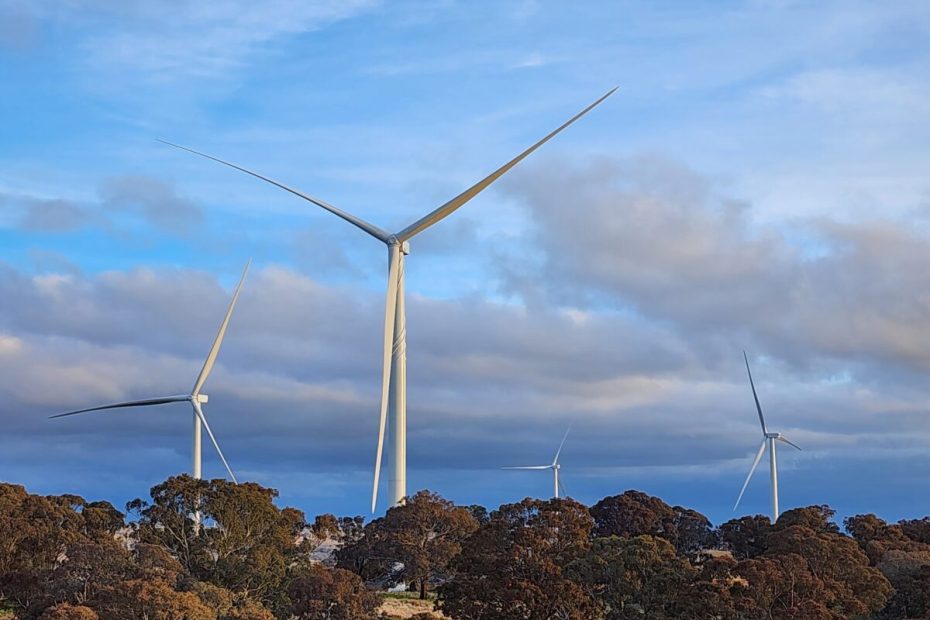
New South Wales is about to launch its biggest ever tender for new generation capacity, with a particular focus on solar and battery hybrids and wind projects that will deliver power when the sun don’t shine.
The 2.5 gigawatt (GW) tender is expected to be formally launched in the next week, alongside a new 12.5 gigawatt hour long duration storage tender, and comes as the state announces the winners of its latest “firming tender” for capacity than can be delivered in the event of a supply crunch.
NSW is scrambling to ensure enough new wind, solar and storage capacity is in place to allow its four remaining and ageing coal generators to exit the grid.
It has done well on storage, but less well on new generation, and has made some key changes to the latest tender, its first since the launch of the federal government’s Capacity Investment Scheme.
NSW has largely filled its CIS quota, but needs more to be built – particularly as only one wind farm, Squadron Energy’s 414 MW Uungula project – is currently under construction.
The state and its tender manager, ASL, have already tweaked the design of the tender to cater for the needs of solar-battery hybrids, which have become the new go-to technology set up given the falling costs of both PV and battery cells, and the ongoing difficulties and cost challenges facing wind projects.
The new tender details released by ASL on Friday make clear the projects with generation profiles that can deliver outside of solar hours will be well regarded.
This is in response to the growing dominance of rooftop solar during daytime hours, which is causing wholesale prices to plunge, and coal, gas and renewable generators to be sidelined.
“Projects with generation profiles aligned to high value periods in NSW – particularly wind and hybrid generation storage projects producing during non solar hours – are expected to deliver strong financial value,” the market briefing document notes.
It adds that “well progressed wind projects recognised as having high marginal value for achieving NSW’s energy transition objectives” will also be highly regarded, although it insists that “all proposals continue to be assessed on a technology-neutral, value-for-money” basis.
“Wind remains a core technology and a critical component of a balanced and resilient future energy mix, notwithstanding the delivery challenges currently facing the sector,” the briefing note says. (Most wind output tends to occur in the evening and at nights).
And it clearly wants solar-battery hybrids to show the capability of pushing significant amounts of output into the evening peaks.
“Projects bidding for a Hybrid LTESA will also be assessed as having no wholesale market benefits if the initial storage duration is less than 4 hours or the capacity of the generation component is below the capacity of the storage component,” it says.
The generation tenders held by NSW to date have resulted in the nearly completed New England (720 MW) and Stubbo (40 MW) solar projects, both owned by Acen Renewables, Neoen’s Culcairn (400 MW) solar farm and Iberdrola’s Flyers Creek wind project, which was well under construction when it won the tender.
The Uungula wind project is being built now, but Goldwind’s 275 MW Coppabella wind project and nearly all the NSW-based winners of the CIS tenders have yet to get going.
Along with the state-based generation tender, NSW will also launch this month a new long duration storage tender – minimum eight hours storage – seeking 12.5 gigawatt hours of storage as part of state government plans to increase its storage reserves in the early 2030s to 42 GWh.
The main interest there will be if big batteries can maintain their dominance, or if another pumped hydro project can secure an underwriting agreement.
In terms of numbers, big batteries have dominated the three LDS tenders to date, with the first – the 50 MW, 400 MWh Limondale battery owned by RWE – already commissioned.
Acen Renewables broke the battery strangehold with its Phoenix pumped hydro project, with the only other non-battery winner being the Silver City advanced compressed air storage facility in Broken Hill.
If you would like to join more than 29,000 others and get the latest clean energy news delivered straight to your inbox, for free, please click here to subscribe to our free daily newsletter.
If you wish to support independent media, and accurate information, please consider making a one off donation or becoming a regular supporter of Renew Economy. Please click here. Your support is invaluable.
Giles Parkinson
Giles Parkinson is founder and editor-in-chief of Renew Economy, and founder and editor of its EV-focused sister site The Driven. He is the co-host of the weekly Energy Insiders Podcast. Giles has been a journalist for more than 40 years and is a former deputy editor of the Australian Financial Review. You can find him on LinkedIn and on Twitter.
Share this:
Facebook
X
LinkedIn
Reddit
Email
Print