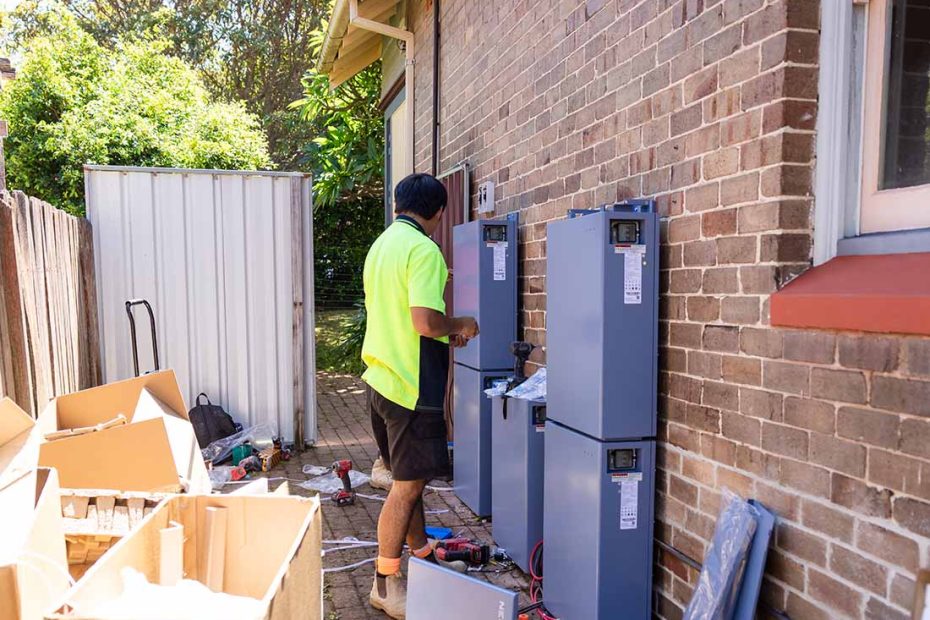
The rapid uptake in home batteries spurred by government subsidies has resulted in an increase of “substandard” installations in both storage but also new solar PV systems, prompting the Clean Energy Regulator to introduce a “targeted response” to improve compliance.
The findings are contained in the CER’s Small-scale Renewable Energy Scheme (SRES) inspection program report for the latest year, released over the weekend.
“Across the 2025–26 reporting period, the CER completed inspections on 3,425 solar battery systems and 3,129 of solar PV systems. This is the highest annual inspection volume delivered by the CER to date,” it said.
While the recent year’s data is incomplete – running from July to the end of April – the figures for solar PV systems showed an overall rise in “substandard” results, reaching 27.7% for the period. That ratio was the highest in the past decade.
The number of PV systems deemed “unsafe”, though, was the lowest in those 10 years.
The CER, though, expanded its inspection remit to include storage after the Albanese government launched its Cheaper Home Battery scheme from July last year.
About 470,000 households bought batteries during the financial year, a tally that has lately exceeded 600,000 even as the government pared back incentives.
The fact many households added solar PV to their battery packages – or expanded their existing PV systems – resulted in “a period of significant activity and growth in the rooftop solar and battery market”, the CER report noted.
“By starting inspections shortly after the rollout of the solar battery program, the CER has been able to identify emerging technical, safety and quality issues soon after installation and address them with a targeted response,” it said.
The CER’s month-by-month inspection data showed high share of substandard results, with batteries deemed “unsafe” reaching 2% in April this year – the busiest month of installs under Cheaper Home Batteries ahead of the rebate changes in May 2026.
The most common issues leading to a battery system being rated substandard, including labelling, a category that accounted for almost half, or 49%, the substandard finding.
This includes a battery missing or having incorrect critical warning labels, and insufficient identification of backup circuits.
Wiring issues, such as incorrectly configuring or missing residual current device when systems have alternate supply, accounted for about one-in-five of the “substandard” inspections.
Other issues included overcurrent protection – insufficient rated circuit protection – and mechanical protection, where inspectors deemed there to be insufficient physical protection for cables and the solar battery.
For the 2025-26 solar battery inspection program, 32 systems were rated unsafe. Of those, 23 were related to unsafe installation work, eight were related to a product recall, one system related “to a third-party incident”.
At its peak, substandard findings topped two in every three inspections before the CER took additional steps, but the ratio remained above one in two, as of April, the most recent reporting month.
Those steps included “taking compliance action against installers with repeated poor inspection results, including advisory warning letters and notices,” it said.
The regulator also included additional photographic evidence requirements for critical solar battery labels from 1 March 2026 after early inspection results identified labelling as the most common cause of substandard outcomes, it said.
The CER also increased the provision of “targeted education and guidance” directly to installers of both batteries and solar panels.
“As the solar battery market continues to grow, the inspection program will remain an important tool for identifying emerging risks and supporting the safe deployment of renewable energy technologies across Australia,” it said.
To join more than 29,000 others and get the latest clean energy news delivered straight to your inbox, for free, click here to subscribe to our free daily newsletter.
To support independent media, and combat AI slop, you can click here to make a one off donation or become a regular supporter of Renew Economy.
Peter Hannam
Peter Hannam is a veteran journalist whose work spans almost four decades and includes stints outside Australia, including time in China, Japan, Singapore and Mongolia. He has lately reported extensively on energy, climate and environmental issues in Australia, and also worked for the federal Climate Change Authority as a special media advisor.
Share this:
Facebook
X
LinkedIn
Reddit
Email
Print