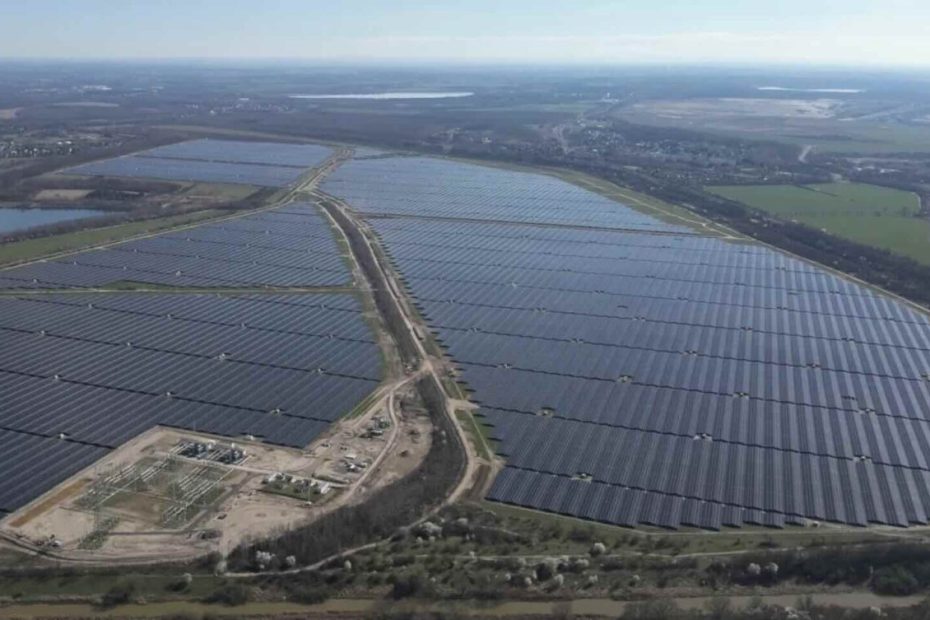
Germany generated as much solar energy by the end of September as it did during the whole of 2025, according to industry association BSW-Solar – and almost three times more than has been produced in Australia over the same period.
By 27 September, Germany’s net electricity generation from solar in 2026 had reached 90.2 terawatt hours (TWh), exceeding last year’s total of 90 TWh, BSW-Solar said, citing data from the research institute Fraunhofer ISE.
By comparison, this is almost triple the amount of PV produced in Australia over the same period, with 31.5 TWh of rooftop and large scale solar generation on the main grid, and a further 3.2 TWh on the separate main grid in Western Australia, according to data from Open Electricity.
“This is news Germany can be proud of,” said BSW-Solar head Carsten Körnig. Both solar capacity expansion and an unusually high number of sunshine hours contributed to the high output, the lobby group said. Körnig added that the record “is a cause for celebration, but not a reason to sit back and relax.”
The growth in solar capacity, combined with limited options for flexible electricity use and a higher need for storage, is putting Germany’s grids to the test.
The number of hours during which electricity supply far exceeds demand and power prices turn negative on wholesale markets is on the rise. This has also led to more renewable electricity curtailments, when wind or solar feed-in is deliberately shut down because of grid bottlenecks.
Germany’s coalition government is currently debating new rules for the support of renewable energy installations and grid connections, which it says are aimed at tackling the system integration of renewables.
The new laws would reduce incentives for new solar and wind energy projects in areas where grid congestion is common, as well as cut support for small-scale rooftop solar.
Economy minister Katherina Reiche has argued that renewable power project developers should bear the financial risk in case their electricity needs to be curtailed, and that small solar panels have already reached market maturity and need no further support.
However, researchers and the renewable energy industry have heavily criticised the reform proposals, saying that they risk stalling investments and slowing down the growth of renewables.
Germany aims to install 215 gigawatts (GW) of solar capacity by 2030, up from a current 130 GW. “If we want to achieve the expansion targets, we must facilitate investment rather than erecting new barriers,” Körnig said.
Original source: Clean Energy Wire. Reproduced with permission. Additional reporting and context from Renew Economy staff.
Carolina Kyllmann
Share this:
Facebook
X
LinkedIn
Reddit
Email
Print