Federal energy minister Chris Bowen has slammed calls to extend Australia’s ageing coal-fired generators, saying that not a single day had passed in the last three years without a breakdown, while also suggesting that data centres could rescue stalled renewables projects and put the country back on a path to its 2030 renewable targets.
In a major speech at the National Press Club in Canberra on Wednesday, where he also unveiled plans to extend solar subsidies in the small-scale renewable energy scheme to systems up to 1 MW,
Bowen said that consumers were embracing the green energy transition with the rapid uptake of solar, home batteries and electric vehicles, which for the second consecutive month posted a market share of more than 20 per cent in Australia.
He said this was despite a “wall of climate denial” and misinformation from the various right-wing opposition parties, as well as in mainstream media and in social media algorithms.
“Despite the loud attempts to ride the algorithms of social media to stop the transition, the quiet majority of Australians are simply getting on with it,” Bowen said.
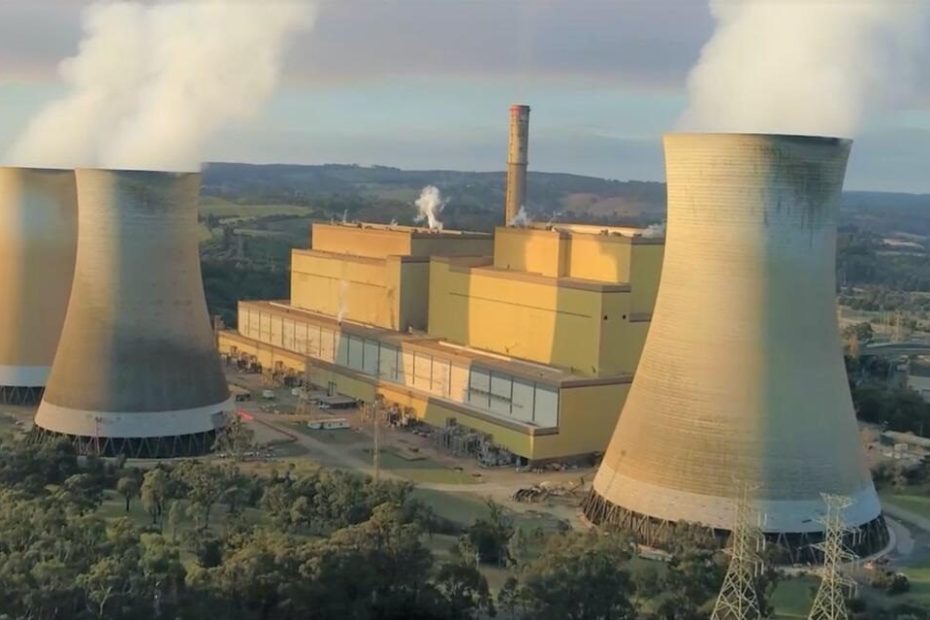
This was important, he said, because coal fired generators were getting old and increasingly unreliable.
“Three years in a row. Every single day. A coal outage somewhere in eastern Australia,” Bowen said. “Coal isn’t baseload power anymore – it’s an unreliable asset. Every time coal breaks down – your bills go up.”
The challenge for the federal government is that new bulk energy in the form of wind and solar is not yet being built fast enough to replace those assets, or to meet the ambitious renewable energy target of 82 per cent by 2030.
Many in the industry argue for moves to lock in closure dates, saying lingering coal generation – even unreliable – is not sending the right market signal. Given the lack of corporate buyers, particularly major utilities, data centre developers are now seen as a potential saviour, and Bowen says he sees them as an avenue to reach the targets.
Bowen and most state ministers have agreed on a plan to require data centres to bring new and additional renewable energy supplies to the grid, and Bowen said on Wednesday that contracts (PPAs) with wind and solar projects that won underwriting agreements under the Capacity Investment Scheme, but not built, would be considered additional.
“An agreement from a proposed wind farm for example that may have received support under the Capacity Investment Scheme or a state scheme and environmental approvals, but has not yet reached final investment decision stage, could qualify as new additional renewable energy,” he said.
“So data centres are not a challenge to 82 per cent. Handled well, they help us get there.”
However, Bowen also warned that the Commonwealth would use “all its powers” available to it to stop a “race to the bottom” – a reference to the Queensland and Northern Territory governments’ refusal to sign the data centre renewable pledge because of their preference to use fracked gas resources.
“States and territories will be free to add more rigorous requirements if they feel that is appropriate for their circumstances, but not to water them down,” he said.
Asked about how we would deploy those powers, Bowen said the focus will be on legislation, if a change to the National Electricity law is not possible because it requires all states and territories to agree.
“If a data centre is proposed to use only gas, it ill not meet the minimum national standard, and it won’t be allowed to register, and it will not be able to proceed. That’s what the Commonwealth thinks should happen, and that’s what our legislation will ensure, and will apply across the country.”
Bowen has received advice from the Australian Energy Market Commission on how it would ensure data centres use renewables, and it has recommended the use of REGOs – Renewable Electricity Guarantee of Origin certificates.
It also says connection approvals should also encourage data centres to shift demand and co-locate with generation, easing pressure on the network.
To join more than 29,000 others and get the latest clean energy news delivered straight to your inbox, for free, click here to subscribe to our free daily newsletter.
To support independent media, and combat AI slop, you can click here to make a one off donation or become a regular supporter of Renew Economy.
Giles Parkinson
Giles Parkinson is founder and editor-in-chief of Renew Economy, and founder and editor of its EV-focused sister site The Driven. He is the co-host of the weekly Energy Insiders Podcast. Giles has been a journalist for more than 40 years and is a former deputy editor of the Australian Financial Review. You can find him on LinkedIn and on Twitter.
Share this:
Facebook
X
LinkedIn
Reddit
Email
Print