A long-delayed solar and battery project in one of the most contentious renewable energy zones in New South Wales has been sent to the final planning arbiter, after attracting 119 objections from the public.
The 255 megawatt (MW) DC Bendemeer solar project is proposed to be paired with a battery energy storage system (BESS) of 150 MW and 300 megawatt-hours, alongside a separately assessed 360 MW wind farm in the NSW New England region.
But the fate of the solar and battery component of Metis Energy’s Bendemeer Renewable Energy Hub is now in the hands of the state Independent Planning Commission (IPC), after attracting more than 50 objections.
In NSW, projects that attract 50 or more objections are automatically referred to the IPC – even if the objections come from hundreds of kilometres away, or from a completely different state. The planning rule means it’s not unusual for renewable energy proposals to end up before the commission.
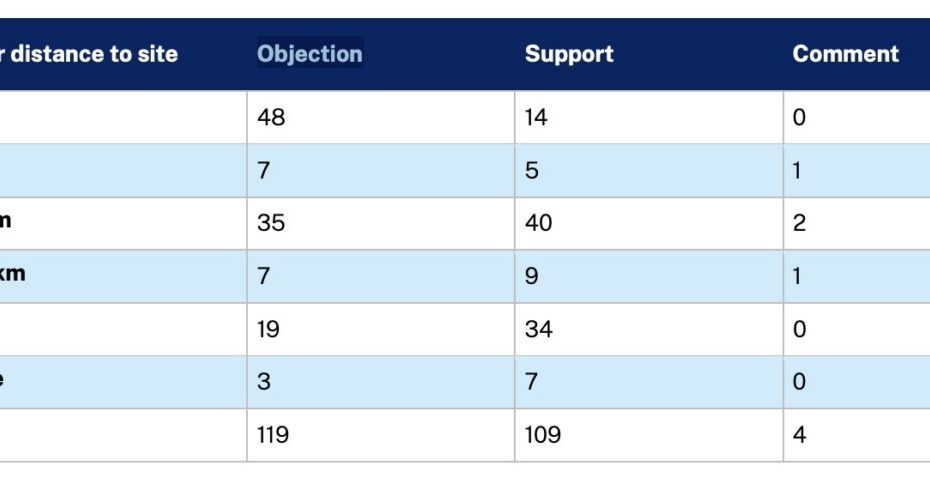
What is unusual in this case, however, is that a whopping 48 of the 119 objections submitted against Bendemeer came from people living within 5km of the project, as the people from the namesake town of Bendemeer lined up in opposition.
Also unusual is the face that the public submission period was three years ago. The solar and battery project has undergone some major modifications since then, to address “significant concerns,” the NSW Department of Planning, Housing and Infrastructure assessment report to the IPC said.
“The amended application responded to significant concerns… regarding biodiversity impacts,” the report says. “[It] substantially reduced the development footprint and reduced the extent of native vegetation clearing.”
Those concerns from community, council, and a range of government departments meant proponent Athena Energy Australia, which is owned by Singapore-based Metis Energy, had to make changes to 13 different parts of its plan.
It was also sent back twice to redo its Biodiversity Development Assessment report in late 2025, and this year needed to provide more information about where its workforce will live.
These amendments include carving 49 hectares out of the 104 hectares of endangered habitats it wanted to clear, cutting another 100 hectares off the footprint, making the panels themselves lower and fewer in number, and putting in better noise and visual buffers from the nearby town.
The project is about 1.8km from the village of Bendemeer, a village that in 2021 was home to 486 people, according to Census data. It also narrowly avoided being dissected by the transmission line EnergyCo plans to install to support the build-out of the New England REZ.
In October last year, it was one of 11 solar-battery hybrids to be awarded revenue underwriting agreements under the federal government’s Capacity Investment Scheme.
In 2023, however, the original state development application for the solar and battery project received 232 unique submissions, of which 119 were objections, 109 were in support and four were comments. Twelve government agencies gave advice.
Many locals thought the project was too close to the village – the battery and substation, in particular – but most were worried about the prospect of a solar and battery project setting up in their sleepy rural area.
Even though the submission period was just three years ago, the objections themselves hark back to a more polite era where exclamations about ‘ruinabulls’ in all caps were rarer.
Save Our Woodlands from a town called Yarrowyck, about 50km directly north of Bendemeer, politely and with zero spelling errors said it “would like to object” to the project, before listing its concerns.
The seeds of future themes can be seen emerging in the Bendemeer objections, however, as submissions began trying out the term “solar factory” and scattering in references to nuclear power as a better option and the possibility of chemical leaching into waterways.
A public hearing for the Bendemeer project will be held next month. In the meantime it is open to a new round of public submissions.
If you would like to join more than 26,000 others and get the latest clean energy news delivered straight to your inbox, for free, please click here to subscribe to our free daily newsletter.
Rachel Williamson
Rachel Williamson is a science and business journalist, who focuses on climate change-related health and environmental issues.
Share this:
Facebook
X
LinkedIn
Reddit
Email
Print