AirTrunk has committed to back a new wind, solar and battery projects in the New South Wales Hunter region, demonstrating that procuring new renewable energy sources is not as tall an order as some data centre operators – or politicians – are making out.
However, the deal announced today is mostly aspirational, with the renewable and battery plans yet to be put forward for approval and financiers yet to put money behind the projects.
Rather, AirTrunk has signed an “exclusivity agreement” with European Energy Australia for a 260 megawatt (MW) solar, 350 MW wind and a 600 MW, 800 megawatt-hour (MWh) battery project in the Hunter-Central Coast renewable energy zone (REZ).
Talks on a “potential long-term” power purchase agreement (PPA), the paperwork investors like to see before kicking in money to reach a final investment decision, are still “progressing,” the parties said on Thursday.
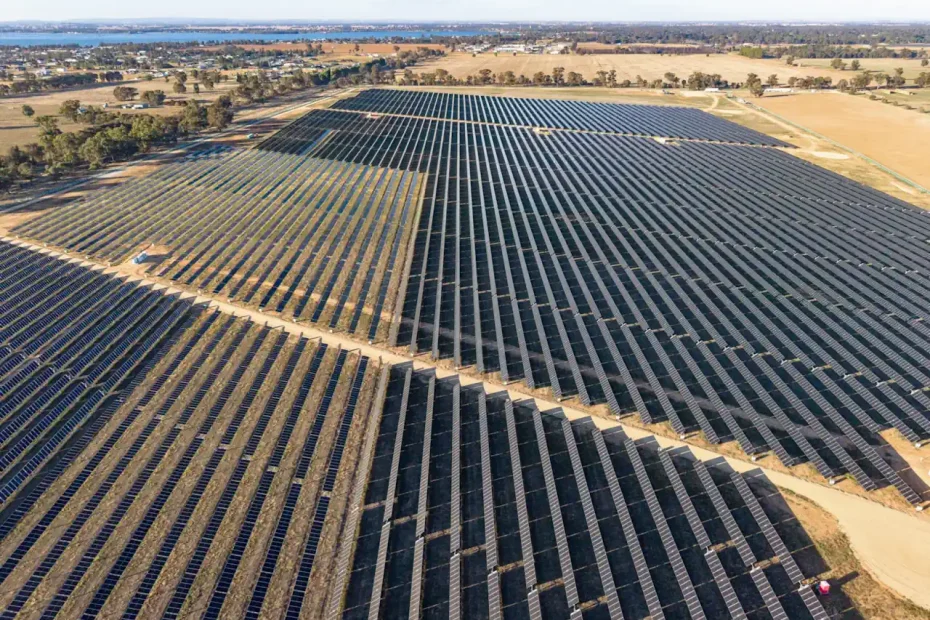
AirTrunk already has a PPA for a portion of the output of the 31 MW Mulwala solar farm, a completed and now operational project on the Victorian border of NSW that is also owned by European Energy.
AirTrunk says the generation and storage from the three new project proposals will support a 550 MW data centre at the old Kurri Kurri smelter site, directly adjacent to the troubled new Kurri Kurri gas-fired power station.
The solar and battery projects are expected to start operating in 2030 and the wind project in 2032.
AirTrunk is one of the biggest data centre proponents in Australia and says it wants to offset all of its energy use with renewables by 2030.
“Digital growth must bring new energy with it,” AirTrunk founder Robin Khuda said.
“The Australian Government’s expectations and NSW’s guidelines set a high bar for the industry. This partnership is an important step towards delivering on that commitment.”
The federal government is consulting on legislation that will require data centres to somehow bring their new and additional renewable energy to offset their energy needs – although potentially with carve outs for states that want to allow them to be powered by gas or even coal.
New South Wales (NSW) has guidelines for data centres that expects companies to self-fund the extra energy they need.
The agreement, even if it’s not yet a PPA, is exactly what renewable energy proponents are desperate for: a massive new customer who can anchor a project.
But many data centres are keener on gas as a constant energy supplier.
Cloud Carrier is claiming in court that it will mothball a 16 MW gas power station, to be built to support its proposed NSW southern highlands data centre, after as little as two years once it can guarantee secure power via the grid, the ABC is reporting.
The Wingacarribee council rejected the 16 MW gas power station plan, and the appeal is still before the Land and Environment court, but the data centre developer is also proposing a massive 673 MW fossil gas generator.
Currently the largest gas peaking plant in the state is the 724 MW Colongra power station.
Other data centre projects are raising suspicions they’ll not be good corporate citizens in other ways.
The Meridien data centre proposal in Western Australia’s Kimberley region says it will power the first 240 MW stage entirely with gas, and is building gas peaking capacity that would enable it to power the whole 1 gigawatt (GW) proposal with gas with no need for renewables at all.
It is promising some 6.7 GW of wind, solar and battery, but won’t start building these until the second stage of the project starts in 2032, meaning gas power will be the primary source of electricity for the data centre for as many years as it takes to build the renewables – if the project eventuates, that is.
Environs Kimberley is also concerned the data centre is a way to create a customer for a gas fracking operation owned by the same backer, Perth-based Longreach Capital.
Long-time oil and gas executive Jop van Hattum, the CEO of Gingerah Energy which is building the Meridien data centre, was the CEO of a company called Theia Energy.
While Theia Energy’s website is now defunct, the corporate structure is still live and pays an annual $53,000 for an active shale gas exploration licence in the Kimberley.
Rachel Williamson
Rachel Williamson is a science and business journalist, who focuses on climate change-related health and environmental issues.
Share this:
Facebook
X
LinkedIn
Reddit
Email
Print