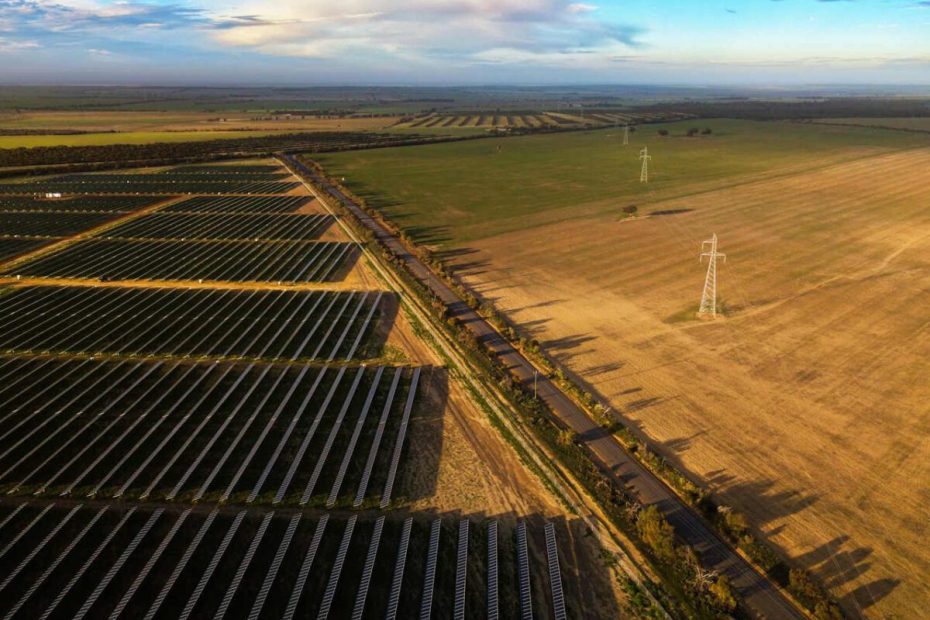
Australia’s wind and solar farms generated a total of 4.7 terawatt-hours (TWh) of renewable electricity in March, new data has shown, continuing their year-on-year increase from 4.6 TWh in 2025, as gas continues its year-on-year decline.
According to the latest monthly update from Rystad Energy, Queensland was the star of the month for overall wind and solar generation, generating a total of 1,300 gigawatt-hours (GWh) split almost down the middle, at 676 GWh from utility PV and 624 GWh from wind.
“It was the highest month for wind generation on record in the state and the first time Queensland has been the state with the second highest wind generation on a monthly basis,” Rystad Energy analyst David Dixon says on LinkedIn.
“By contrast it was a fairly low wind generation month for all the other NEM states,” he adds, noting that it was “particularly low” in Victoria, at a capacity factor of just 18.6 per cent, the third lowest month since 2011.
According to Dixon, the top-five performing wind assets for the month were all in Western Australia and Queensland (see chart below), led by the consistently high-achieving Warradarge wind farm in WA, with a capacity factor (CF) of 56.7 per cent.
For solar, it’s a different variation of the same story, with the top five best-performing assets in March coming from Queensland and Western Australia, led by the Columboola solar farm, in Queensland’s Western Downs region, with a capacity factor of 32.4 per cent.
Utility-scale battery energy storage capacity grew to 8.9 GW at various stages of commissioning or operation, says Dixon, with big batteries consistently dispatching more energy than the nation’s open-cycle gas turbine fleet.
Gas generation, meanwhile, continues its year-on-year decline, contributing a total of ~540 GWh in March 2026 compared to 631 GWh in March 2025.
As Dixon notes, the March 2026 data is set against a backdrop of comparatively low operational demand, at around 20.7 gigawatts (GW). Only March 2020 and 2021 have come in lower since 2011.
“The impact on reducing gas consumption will be interesting to watch during the winter months when renewables generation is lower, but the batteries can just charge from the daytime coal and renewables generation to displace gas in the evening peak,” Dixon says.
If you would like to join more than 28,000 others and get the latest clean energy news delivered straight to your inbox, for free, please click here to subscribe to our free daily newsletter.
Sophie Vorrath
Sophie is editor of Renew Economy and editor of its sister site, One Step Off The Grid . She is the co-host of the Solar Insiders Podcast. Sophie has been writing about clean energy for more than a decade.
Share this:
Facebook
X
LinkedIn
Reddit
Email
Print