Australians are yet to be convinced about the virtues of enrolling their solar and home batteries into virtual power plants (VPPs), even as new data shows that joining up can save them more on power bills.
A new study by the Energy Consumers Australia (ECA) has found that Australians are keen to learn more about VPPs when they are in the process of researching a battery, but once they’re battery owners, they are much less keen to lose control of their asset.
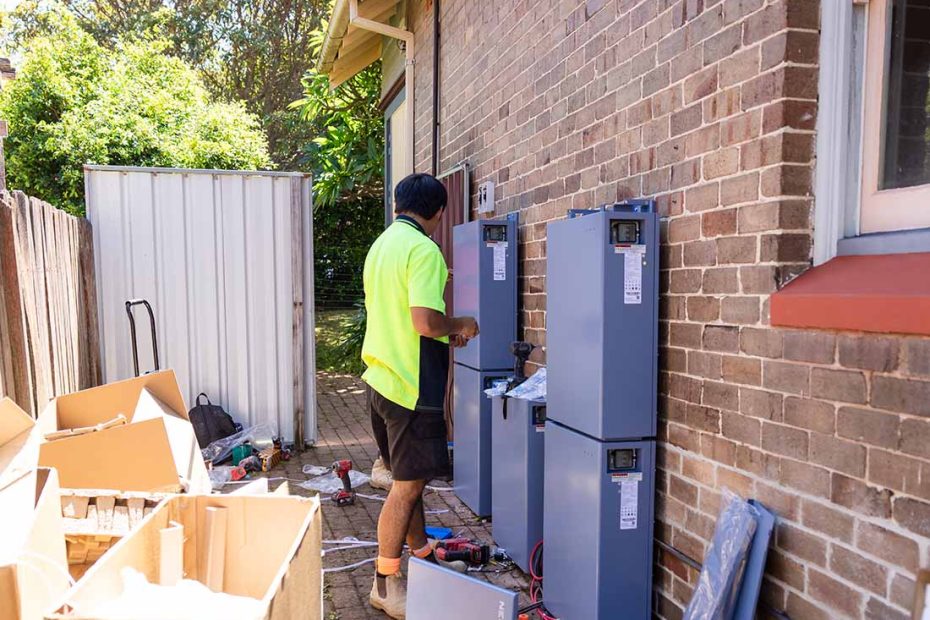
The battery boom, created by the Cheaper Home Batteries rebate, led to almost half a million storage units installed in homes around the country by the end of July, and all of these batteries are VPP compatible.
But the ECA report, Why households adopt batteries and why many aren’t joining a VPP, confirms that households are not buying into the subsidy’s side-quest, to drive participation in orchestrated consumer energy resources.
A recent Australian Competition and Consumer Commission (ACCC) inquiry found VPP participation at slightly higher than the ECA numbers, at 24 per cent.
And yet it also found that joining a VPP can shrink bills.
In 2025–26, customers with a solar and battery system had median annual bills that were between $329 to $909 (20-52 per cent) lower than regular customers, the inquiry found.
Those participating in virtual power plants had median annual bills that were between $762 to $1,093 (57–63 per cent) lower.
Chart using ACCC data on VPP savings for solar and battery households. Image: ECA
But in order to get Australians to see those benefits, governments, VPP operators and networks need to put in some work to build trust in the offer and change the incentives that currently prioritise self-consumption.
“By understanding the underlying motivations for Australians purchasing a battery, it is clear why some may be hesitant to join a VPP,” the study says.
Australians have mainly bought into the idea of a home battery as a way to reduce their power bills.
But around a quarter of the people surveyed have done so with a view to going off grid entirely.
“These findings suggest that households value batteries not only for the savings they provide, but also for the greater energy independence and resilience they offer,” the study says.
“For some consumers, there may be concerns that participating in a VPP could reduce these benefits if stored energy is dispatched to support the grid, leaving them to purchase electricity later, or reducing the energy available during a power outage. This may contribute to a preference for retaining full control over how and when their battery is used.”
The ECA says current tariffs incentivise self-consumption: time-of-use tariffs encourage people to reduce their consumption – and use their stored energy – during peak periods, which is exactly when VPPs would like to export.
Instead, networks could design more two-way tariffs, which include charges and rewards for both electricity imports and exports that align batteries with actual network costs and benefits.
Then there is the perennial issue around trust, with Australians wary of handing over control of a major purchase to a third party.
The ACCC and ECA both recommend stronger consumer protections to build trust in VPP operators, calling for a consumer duty so aggregators must work in their customers’ interests.
But there are other ways to introduce households to the idea of joining a VPP, such as including them on the government-run energy comparison websites, or even offering bigger subsidies with a VPP condition for home batteries in network-congested areas, the ECA says.
Size matters
The market operator is forecasting that 53 per cent of battery owners will be participating in a VPP by 2050, avoiding around $7.2 billion in additional generation and network investment.
But the Australian Energy Market Operator’s (AEMO) Step Change scenario in its 2026 Integrated System Plan (ISP) is unlikely to be met given the very low interest in consumer VPPs, the ECA report says.
What could save that scenario, however, are the super-sized units that Australians are still installing in their homes.
Battery sizes have more than halved from the nearly 50 kilowatt-hours (kWh) in April, after the subsidy was adjusted in May to incentivise smaller systems, but they’re still big at 22.6 kWh on average.
The big change in home battery sizes during the Cheaper Home Battery period. Image: Sunwiz
“AEMO’s projections assume much smaller average battery sizes – around 10 kWh today and 20 kWh by 2050,” says the ECA report.
“Given the current surge in household battery capacities, with many new systems already exceeding these assumptions, similar levels of orchestrated capacity could be achieved with lower participation rates.”
If you would like to join more than 29,000 others and get the latest clean energy news delivered straight to your inbox, for free, please click here to subscribe to our free daily newsletter.
If you wish to support independent media, and accurate information, please consider making a one off donation or becoming a regular supporter of Renew Economy. Please click here. Your support is invaluable.
Rachel Williamson
Rachel Williamson is a science and business journalist, who focuses on climate change-related health and environmental issues.
Share this:
Facebook
X
LinkedIn
Reddit
Email
Print