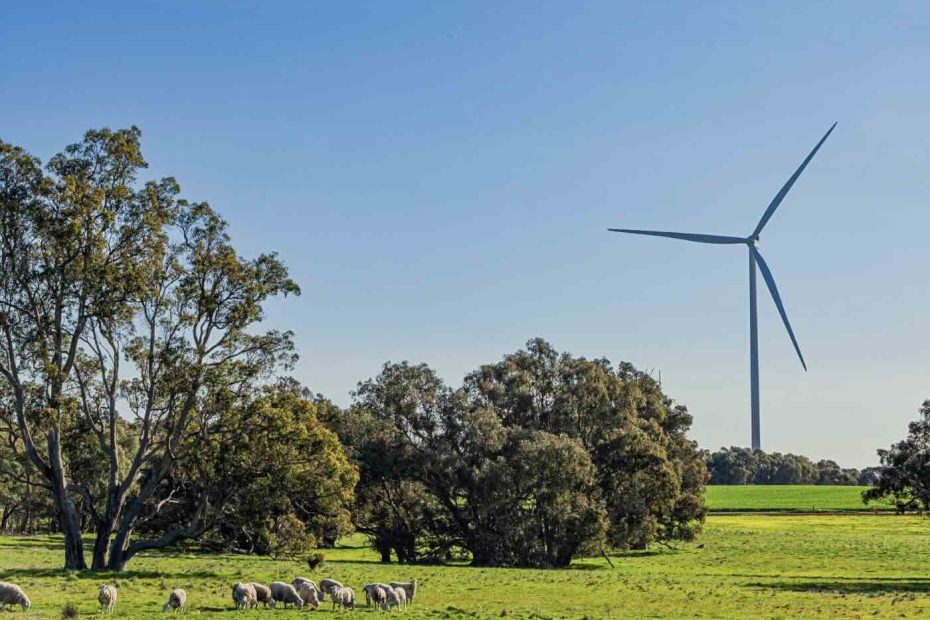
The Western Australia government is about to roll out what it describes as a “simplified” version of the proposed new market design to underpin its urgent push to reach 75 per cent renewables and fill the gap to be created by its exit from coal.
W.A. announced on Tuesday a landmark renewable energy target of 75 per cent renewables – to be reached by 2030/31 (read 2031) – nearly doubling its renewable share in just five years. And it looks like the target will have real bite, or at least a mechanism to get there.
Renew Economy understands that the government will in the next few days roll out details of a Renewable Energy Mechanism, which it describes as a “simplified” version of the Electricity Services Entry Mechanism (ESEM) that is being designed to underpin future investments in the country’s main grid.
W.A. is currently in the midst of a burst of activity, particularly in wind energy but also battery storage, that has seen five wind farms reach financial close and begin construction, with another – likely the biggest at the 550 MW Marri wind project – expecting to get the green light soon.
These projects have largely been underwritten by state government utilities such as Synergy and Water Corp, and according to energy minister Amber-Jade Sanderson, should be enough to take the state to around 60 per cent renewables and cover the closure of the Collie coal fired power station in late 2027.
But more is needed to cover the closure of the Muja coal fired generator in 2029 – the last of the state-owned coal fired generators, and the expected closure of the struggling Bluewaters generator, the last privately owned coal fired generator in the state.
W.A official estimate that around 4,000 MW of new capacity, including rooftop solar, is needed to achieve the 75 per cent renewable target, keeping in mind that underlying demand is also expected to increase given the increase in the uptake of electric vehicles, home electrification, and new green industry such as the proposed Generation Steel mill in Collie.
The focus now is on bringing in new private investment, and sending market signals, rather than relying on the blunt (but hitherto effective) force of government intervention.
The renewable energy target has been rolled out as a key part of what the state government describes as its “affordable energy plan”, that includes further push into electrification, consumer energy resources, and even to be the first to approve so called “balcony” or plug-in solar and batteries.
“Delivering affordable energy to businesses is a fundamental part of my government’s objectives to diversify WA’s economy and create more jobs,” premier Roger Cook says.
“Ask any WA household that has solar panels or batteries, they will tell you solar is the cheapest energy that is available. Without the plan, we’ll be reliant on aging coal-fired power stations, and that is just not the way of the future.”
But there is concern about a push for gas, particularly as details emerge of what could be the biggest gas generator in the state, the 870 MW Keralup energy hub.
You can read more analysis here: WA needs more renewables, but that does not mean it needs more gas
And: I was wrong about Nelson’s ESEM: It could actually provide the answer to decarbonising Australia
To support independent media, and help combat the spread of deliberate misinformation and disinformation about the energy transition, you can click here to make a one off donation or become a regular supporter of Renew Economy.
To join more than 29,000 others and get the latest clean energy news delivered straight to your inbox, for free, click here to subscribe to our free daily newsletter.
Giles Parkinson
Giles Parkinson is founder and editor-in-chief of Renew Economy, and founder and editor of its EV-focused sister site The Driven. He is the co-host of the weekly Energy Insiders Podcast. Giles has been a journalist for more than 40 years and is a former deputy editor of the Australian Financial Review. You can find him on LinkedIn and on Twitter.
Share this:
Facebook
X
LinkedIn
Reddit
Email
Print