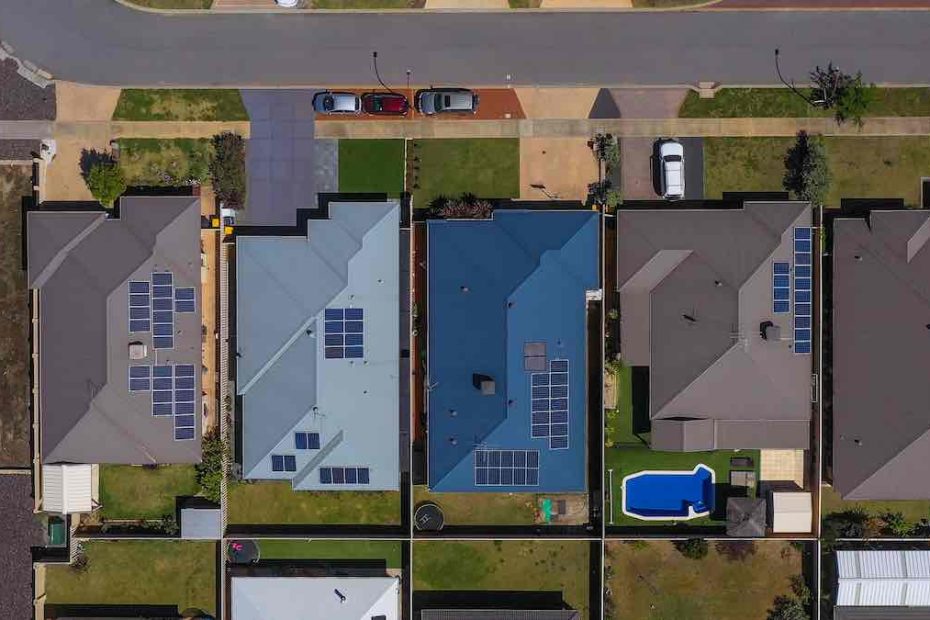
Western Australia is preparing to hit go on a set of major rule changes for rooftop solar and battery systems in the state, in a move it hopes will help further stabilise the world’s biggest isolated grid and make it more attractive for households to join virtual power plants.
From May 01, 2026, inverter connection rules will change for all new or upgraded solar and battery systems on the state’s main grid, the SWIS, enabling bigger systems to be installed, and unlocking greater solar exports where network capacity allows.
The changes mean inverter-based energy systems can be installed up to an aggregate of 30 kilowatts (kW) under the one standard connection (both single- and three-phase), up from the current limit of 5 kW.
This, says Western Power, will allow households to export greater quantities to the network and provide greater opportunity for customers to participate in virtual power plants (VPPs) or other flexible export products in the future.
The timing of the inverter rule changes is important for Western Australia, which has pushed harder than most other states to encourage households to join virtual power plants, leveraging the state and federal rebates on offer.
In WA, solar households can apply for discounted home energy storage through the federal government’s Cheaper Home Batteries, or they can opt for a combined offering taking in the state rebate, too.
In most cases, choosing the “stacked” state and federal rebate means a bigger overall discount on the cost of investing in a battery, and gives medium- and low-income households access to a $10,000 interest free loan.
Opting in to the state rebate also makes it mandatory to sign up to a virtual power plant, which is currently limited to two state-owned retailer offerings, with one alternative from Plico Energy (via Synergy).
“We want to support as many people in Western Australia as possible to benefit from rooftop solar, and for those people to get the maximum benefit from each system,” the WA department of energy says here.
“These changes make it possible for installers to continue connecting more and larger systems in the distribution network, and for electricity retailers to begin rolling out new products to take advantage of greater device functionality.”
Ride-through capability and the Big Solar Button
Beyond the changes to inverter export limits and flexibility, WA is also catching the state up to most of the rest of the country on updated inverter standards that have been brought into play to ensure rooftop solar systems play nicely on the grid and can – if push comes to shove – be controlled to some extent by the market operator.
To this end, all new inverters installed on the SWIS with new or upgraded rooftop PV and battery systems must comply with AS/NZS 4777.2, the Australian standard that requires inverters to have an undervoltage disturbance ride-through capability, to ensure household energy systems don’t “trip” or disconnect when there are voltage disturbances on the network.
And finally, all new inverters must have the technical capability to allow a rooftop solar and battery system to be remotely disconnected and reconnected – an emergency measure sometimes referred to as the Big Solar Button.
Households that do not wish to, or cannot, meet this requirement will have their solar exports capped at 1.5kW, Western Power says.
“Western Australia’s South West Interconnected System (SWIS) is the biggest isolated grid in the world. The grid’s size and isolation, coupled with large amounts of exported solar, create a unique challenge for the Australian Energy Market Operator (AEMO) to maintain the stability of the power system,” the government says.
“These changes are the first step to simplify requirements and legal arrangements for customers and installers. Once in place, we will commence other work with installers and device makers to support bigger systems and to create a streamlined connection process.”
Read more about the rule changes here.
If you would like to join more than 29,000 others and get the latest clean energy news delivered straight to your inbox, for free, please click here to subscribe to our free daily newsletter.
Sophie Vorrath
Sophie is editor of Renew Economy and editor of its sister site, One Step Off The Grid . She is the co-host of the Solar Insiders Podcast. Sophie has been writing about clean energy for more than a decade.
Share this:
Facebook
X
LinkedIn
Reddit
Email
Print