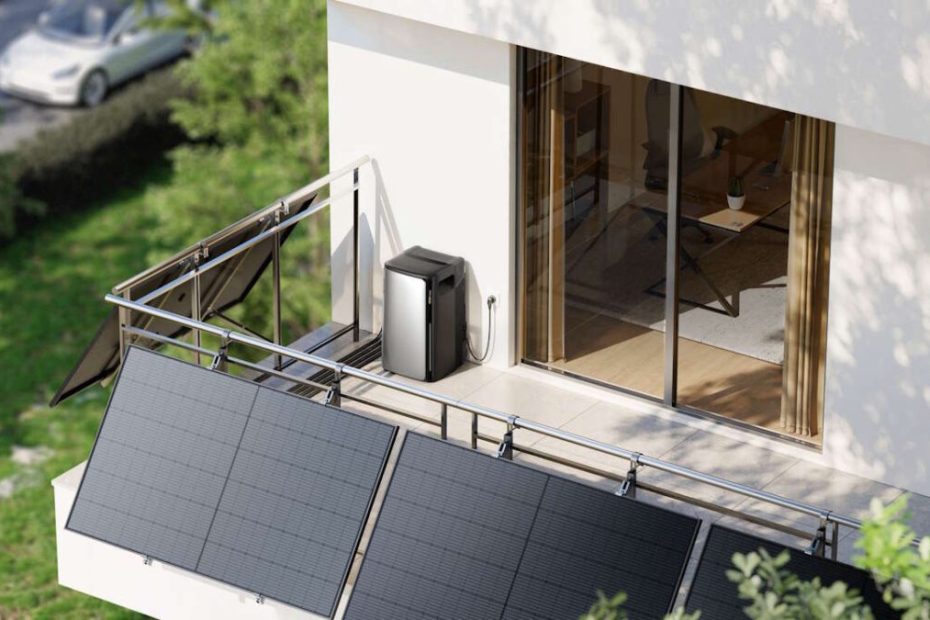
Western Australia has launched consultation on safety standards for plug-in solar and batteries, and declared its intention to become the first Australian state or territory to legalise the potentially game-changing portable energy systems that promise to truly democratise consumer energy.
Plug-in solar – or balcony solar, as it is known in Germany, the market where it first took off – has become hugely popular in parts of Europe and the US as an affordable and easy way for people living in apartments or in rental properties to get in on the bill savings offered by PV self-generation.
The phenomenon – which was most recently legalised in the UK – literally allows households to plug portable PV panels into a standard wall outlet and has also expanded to include plug-in batteries, extending the full consumer energy experience to households otherwise excluded from its benefits.
In Australia, a meeting of federal and state energy ministers last month agreed to “explore pathways” to support the safe deployment of plug-in consumer energy resource (CER) devices in Australia, promising to identify measures that enable its safe use and report back later this year on next steps.
At the time, federal energy minister Chris Bowen warned that the process would not happen “overnight” and would require updates to a range of national and state safety standards and technical regulations.
States would need to review their Strata laws, he said, adding the state regulations relating to landlords and tenants and strata rules might be some of the most complicated to navigate.
“This is not happening overnight, we have to get it right, and the work on the standards is very important,” Bowen said. “But … I’m delighted the states and territories unanimously agreed with me … to begin that work.”
Now, however, it appears that the race is on – and it’s a race that Western Australia intends to win.
“Western Australia will be the first state in the country to make this legal and we want to ensure that it’s done properly,” state commerce minister Tony Buti said on Wednesday.
“Today, we’re kicking off a thorough consultation process to make sure that these systems are safe for Western Australian conditions, and we want to hear from industry, electrical safety experts and the community before it is finalised.”
Renew Economy understands that the WA Department of Energy and the Department of Local Government, Industry Regulation and Safety’s Building and Energy Division will consult on the proposed legalisation pathway and a new technical standard.
The departments will also work on other changes that might be needed to support renter access to the systems once they are available.
“For too long, the benefits of cheap solar have been out of reach for anyone who doesn’t own their roof. That isn’t fair, and the Cook Labor government is doing something about it,” said Sanderson in a statement.
“I’m proud that our state is leading the nation on this issue – millions of European households already use these systems every day, and WA families should be able to do the same.
“Western Australians are already taking up solar and batteries in record numbers and this will ensure even more families can see the savings from the energy transition.”
Glen Morris, who is a solar and battery engineer and director of Smart Energy Lab, as well as a member of the Standards Australia committees that write the solar and battery installation rules, has said that the path to safe plug-in solar is “not complicated.”
“We do not need to invent anything,” Morris said in a statement following the September energy ministers agreement.
“We need a product standard so the inverter shuts down instantly when unplugged, a cap of around 800 watts so it cannot overload a normal power circuit, and a simple registration with the network so they know it is there.
“That is a job for the Energy Ministers to hand to the regulators with a deadline,” Morris said.
Morris told Renew Economy on this week that states can, technically, override Australian Standards and set their own rules and regulations for plug-in solar before a national standard is put in place.
But he adds that this could change under the Consumer Energy National Technical Regulatory Framework, another work in progress for the state and federal energy ministers that aims to establish a nationally consistent approach to the technical regulation of CER.
Solar Citizens, which has been working with governments and technical experts to help get plug-in solar and batteries over the line in Australia has welcomed the nudge from the west.
“WA’s announcement starts a ‘race to the top’, and puts a rocket up the need for the federal government to announce a nationally coordinated approach for the release of this money saving technology across Australia by July next year,” Solar Citizens CEO Heidi Lee Douglas said on Wednesday.
“We support the Climate Change and Energy Minister Chris Bowen announcing a date for the legal safe sale of these money saving devices that are already legally and safely available in the United Kingdom, Germany and 10 states of America.”
Renew Economy is seeking comment from federal energy minister Chris Bowen.
To join more than 29,000 others and get the latest clean energy news delivered straight to your inbox, for free, click here to subscribe to our free daily newsletter.
To support independent media, and help combat the spread of deliberate misinformation and disinformation about the energy transition, you can click here to make a one off donation or become a regular supporter of Renew Economy.
Sophie Vorrath
Sophie is editor of Renew Economy and editor of its sister site, One Step Off The Grid . She is the co-host of the Solar Insiders Podcast. Sophie has been writing about clean energy for more than a decade.
Share this:
Facebook
X
LinkedIn
Reddit
Email
Print