The main grid in Western Australia – the biggest isolated grid in the country and the world – has hit a remarkable new renewables peak of 91.1 per cent, driven entirely entirely by wind and solar, and mostly by rooftop PV.
The new milestone, which betters the 89 per cent penetration reach in November, occurred at 11.35am on Saturday, December 20, and is noted in the latest quarterly energy market update from the Australian Energy Market Operator.
According to AEMO, the new peak was driven by a high contribution of rooftop PV, which accounted for 62.6 per cent, following by wind with 19.8 per cent. Before the new records started tumbling in the latest spring and early summer, the previous peak had been 85.1 per cent, set in 2024.
The level of penetration is remarkable because W.A.’s main grid, known as the WEM, is isolated and has no links to other states or countries which would allow it to export and import power when needed. And, unlike most other grids with high levels of renewables, it has no significant hydro facilities.
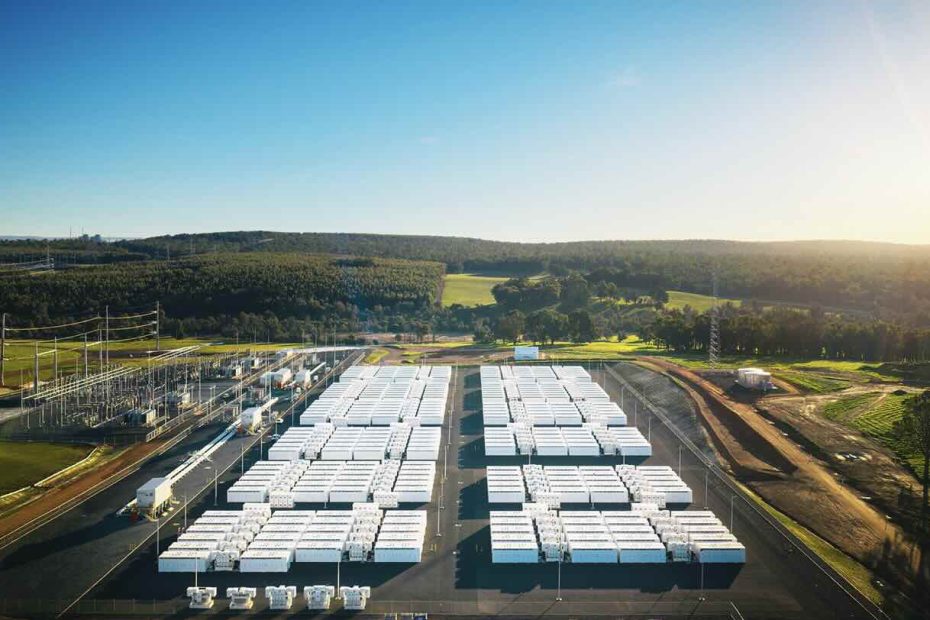
What it does have is a rapidly growing fleet of big batteries, including the two biggest in Australia (in terms of storage), which are both located in the coal centre of Collie, one a 560 MW, 2,240 MWh facility owned by Neoen, and a newly commissioned 500 MW, 2,000 MWh facility owned by Synergy.
These, combined with two big batteries at Kwinana, owned by Synergy, and the country’s first solar battery hybrid facility at Cunderdin, have helped change the dynamics of the grid in a significant way.
W.A. renewables record. Source: AEMO.
At the time of the renewable penetration record, battery charging supplied 466 MW of demand which AEMO said t relieved wind curtailment, which was useful as forced outages had reduced the state’s ageing coal fleet commitment to a mere 6.3 per cent at the time.
The dramatic changes to grid dynamics are underlined in the latest AEMO report, which notes that battery storage is displacing both coal fired generation and gas generation in the evening peaks, as well as soaking up excess solar PV during the day to allow such renewable peaks to be reached.
AEMO says coal-fired generation decreased by 5.8 per cent year on year, “driven by battery discharge replacing coal-fired generation during the evening peak”, while gas-fired generation slumped 16.4 per cent, partly due to more renewables, and also by big batteries in the evening peak.
W.A. demand changes. AEMO.
The big batteries have a specific role of soaking up rooftop PV in the middle of the day and sending it back to the grid in the evening peak, and the effect of this can be seen in these graphs (above and below) which highlights the changes over the last year.
The graph above focuses on the demand profile, and how batteries have boosted demand in the middle of the day – and at a lower level at night – and offset a fall in demand created by the growth in rooftop PV.
The graph below focuses on the generation changes. Again, it shows batteries have delivered the biggest change, particularly in the evening peak, mostly at the cost of gas, but also of coal (which is also affected by the closure of Muja 6).
W.A. generation changes. AEMO.
Renewables contributed 52.4 per cent of total power generation in the quarter, the first time it has exceeded 50 per cent, with battery storage accounting for 4.2 per cent. as well as a slight reduction in coal availability as Muja C Unit 6 was decommissioned in Q2 2025.
All this meant a significant reduction in emissions and emissions intensity for the WEM, despite a 2. 2 per cent lift in overall demand.
AEMO says total WEM emissions decreased plunged 14.4 per cent from 2.06 MtCO2-e in Q4 2024 to 1.77 MtCO2-e in Q4 2025, thanks to a 15 per cent fall in emission intensity to 0.43 tCO2-e/MWh (-15%).
“The reduction in emission intensity can be attributed to the greater share of the fuel mix taken by renewable generation in place of gas and coal,” it said, just to be clear.
W.A. has vowed to shut down its state owned coal fired generators at Collie by the end of the decade, although last week it did backflip on its promise not to extend the huge subsidies for the Griffin coal mine, which could mean that the last private coal generator in the grid, Bluewaters, will also survive for another five years.
As for the cost, AEMO notes that average wholesale prices for the December quarter also fell by 13 per cent compared to a year ago to their lowest level since the new market design was launched in 2023, again thanks to the role of renewables, and the increased share of battery storage.
Smarter, cleaner, cheaper. Who knew?
See also: “Landmark moment:” Prices plunge as renewables supply half of grid, batteries surge and coal hits new low
And: Wind and solar curtailment hits record highs, with grid solar “offloads” at staggering 59 per cent in one state
If you wish to support independent media, and accurate information, please consider making a one off donation or becoming a regular supporter of Renew Economy. Please click here. Your support is invaluable.
Giles Parkinson
Giles Parkinson is founder and editor-in-chief of Renew Economy, and founder and editor of its EV-focused sister site The Driven. He is the co-host of the weekly Energy Insiders Podcast. Giles has been a journalist for more than 40 years and is a former deputy editor of the Australian Financial Review. You can find him on LinkedIn and on Twitter.
Share this:
Facebook
X
LinkedIn
Reddit
Email
Print