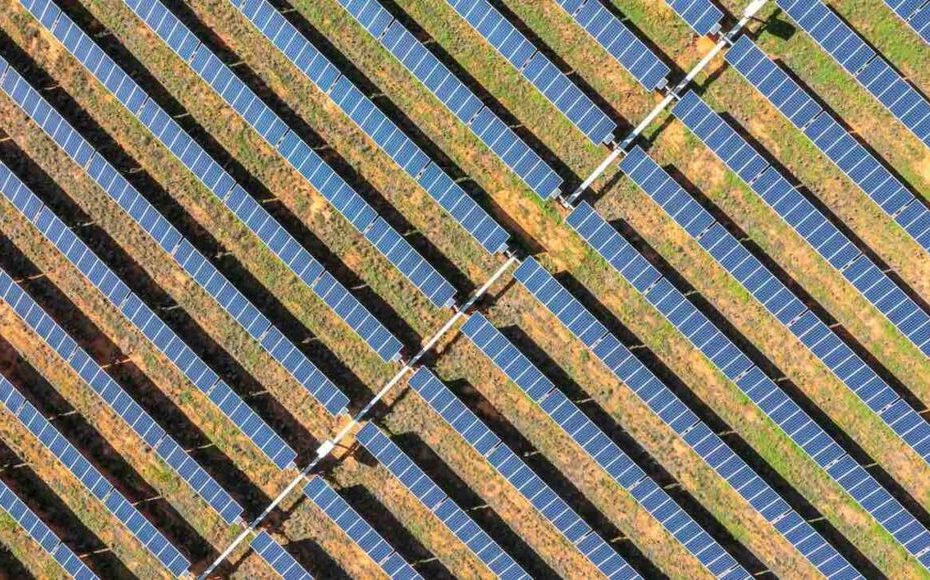
The curtailment of utility scale solar and wind farms in Australia’s National Electricity Market has hit record levels, and this week passed 6 terrawatt hours for the 2025 year to date.
Late-spring conditions across the NEM on Wednesday saw cumulative 2025 curtailment of utility solar and wind move beyond 6.0 TWh at 09:35am (AEST). This is a marked step up on previous years and a sign of both rapid renewable expansion and tightening daytime headroom.
This time last year the amount of curtailment stood at 3.7 TWh, so the level in 2025 represents a rise of 61.6 per cent. Most is happening in Victoria (1.97 TWh), followed by NSW (1.41 TWh), South Australia (1.37 TWh) and Queensland (1.25 TWh).
There has been no curtailment in Tasmania, which still has no large scale solar and a modest amount of rooftop solar.
What this chart shows is a steepening annual trajectory, with 2025’s cumulative curve separating clearly from the previous five years.
Observations and Considerations
– Curtailment is now material at system scale: 6 TWh is roughly two-thirds of Tasmania’s electricity consumption over the same period.
– The mix remains both economic (unprofitable dispatch) and system-driven (thermal and stability limits, transmission constraints).
– Significant opportunity exists at both ends of the system: utility-scale storage to shift midday surpluses into the evening, and consumer-level storage (home batteries, EVs, controlled hot-water, thermal storage) to soak up local abundance and ease upstream constraints.
– Storage charging windows are filling earlier, with limited ability to absorb additional solar in the late morning. Though in SA with minimum demand issues, one utility battery is being directed to hold minimum charge and charge later in the day.
– Flexible loads are the missing counterpart — EV charging, heat-pumps, hot-water, refrigeration, data processing and industrial batch processes could be timed into this abundance.
Conclusions
The familiar midday surplus continues to form the “Dolphin Curve” profile — a recurring signal of abundant renewable energy seeking load.
With five weeks of 2025 remaining, NEM-wide curtailment appears on course to finish near 8 TWh. The challenge and opportunity lie in converting more of this abundance into useful demand, storage, and transfer.
See also: Rooftop PV is eating the energy industry’s lunch, now big solar wants to hoe into coal generators’ dinner
Geoff Eldridge is an energy transition observer at Global Power Energy. Article first published on his LinkedIn and adapted with permission of the author.
Geoff Eldridge
Geoff Eldridge is a National Electricity Market (NEM) and Energy Transition Observer at Global Power Energy.
Share this:
Facebook
X
LinkedIn
Reddit
Email
Print