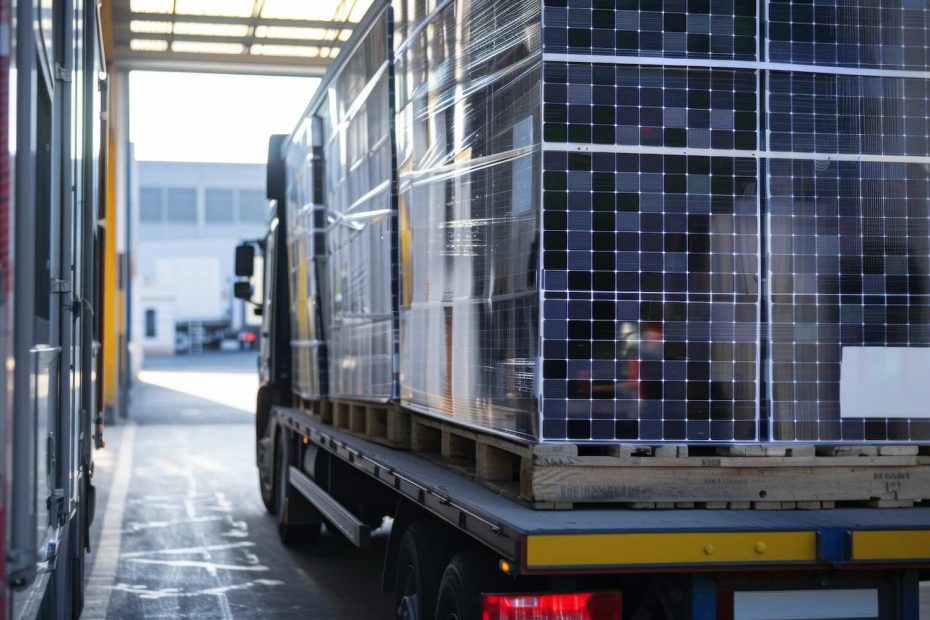
Urgent exhortations to “buy solar now! Before the 9% price rise in April!” are creeping into LinkedIn algorithms around the world, but don’t fall for the exclamation marks and the FOMO (fear of missing out).
The price rises for solar modules in Australia are indeed likely to be higher than just 9 per cent, but it won’t have much to do with a much talked-about tax rebate in China, as the LinkedIn and other algorithms might have you believe.
Those posts and their FOMO marketing gimmick are based on the fact that China is ending its VAT rebate on solar panels from April onwards, a strategy that was telegraphed last year.
But while the whole 9 per cent was a surprise to the solar industry, it won’t be the biggest factor in any increase on solar panel prices in Australia this year.
These are expected to come in between 2-4c a watt in the second half of the year, according to Aiko country director Thomas Bywater.
He says rocketing prices of silver, aluminium and even glass, as well as China’s new control over polysilicon pricing and currency movements, are already having a bigger impact on what Australians will pay for a solar panel later this year.
“What’s really shocked everyone was the VAT announcement. It was supposed to be a 3 per cent change, but it was a 9 per cent change,” he told Renew Economy.
Around June, China canvassed the idea of completely wiping out the rebate. By October, this shifted to lowering that to 3 per cent.
But when the government realised the industry was planning to absorb that extra cost – something it didn’t want to happen because it’s no longer willing to bail out loss-making manufacturers – it returned to the original plan so buyers must pay more for panels.
“The government has indicated a broad attitude that they’re not willing to provide support to struggling solar companies,” Bywater says.
“In the past people have thought the government will support us, we’ll sell as much as we can, it doesn’t matter what the price is.”
And yet that extra cost from losing the VAT rebate will still be negligible.
The rebate removal also only applies to the photovoltaic part of a solar system, or about 20-25 per cent of the whole system, says Huon Hoogesteger, managing director of Smart Commercial Solar.
“Therefore we’re only experiencing a price rise on 20 per cent of the overall system cost,” he told Renew Economy.
It means that if Hoogesteger is buying panels at 17c/watt, a 9 per cent rise turns that into 18.5c/watt, a mini increase of 1.5c/watt on a system that costs $1/watt.
Hoogesteger is also sceptical of cries that the wolf is approaching the door.
“The solar industry has a very bad habit of crying when things get a little bit more difficult for themselves, and that translates into what customers hear,” he says.
“What we should be saying is ‘we’re still the cheapest form of energy’. We’ve got to stop being alarmist and say we’ve got a great product that provides a huge amount of energy at a great price.
“It’s only 1.5c.”
Price spikes in silver
What isn’t just 1.5c/watt, will be the increase created by price spikes in silver, polysilicon, and aluminium.
The Chinese government has finally wrestled control over the polysilicon industry, and it’s driving up prices for the critical material by creating artificial scarcity, Bywater says.
“What has happened is that the Chinese government has coordinated polysilicon pricing,” he says.
“The government is trying to create scarcity in the market … Basically they’re controlling what the offers are from the silicon companies to the sell companies.”
Polysilicon prices fell from RMB 37,000 a tonne ($A7,600) a year ago, to just over RMB 10,000/t, before bouncing back up to RMB 60,000 earlier this year, according to the China Nonferrous Metals Industry Association (CNMIA).
Media reports last year uncovered a $US7 billion plan for six major polysilicon companies to buy and then idle about a third of China’s manufacturing base for the material, in an attempt to stabilise both the industry and prices.
The plan was scrapped in January by China’s antitrust regulator the State Administration for Market Regulation (SAMR), but it was a plan that had approval from other parts of the Chinese government.
The price of silver has also surged, rising in just the last six months by more than 200 per cent in Australian dollars.
That price impact could be 2c/watt on photovoltaic modules given it makes up 20 per cent of the cell cost, says Renate Egan, confounder of Solar Analytics, University of New South Wales (UNSW) academic, and Australian representative to the IEA PV Power Systems program.
She says silver pricing will have to flow through to product pricing at some point.
“This might take a while, as I suspect there is stock out there that needs to be sold before the silver price flows through, plus there is some price management within China that means the manufacturers may not see the full spike,” she told Renew Economy.
“But I would expect to see it play out this year sometime and somehow.”
Bywater says depending on the brand of panel, silver costs will send prices up between 20-40 per cent a watt.
Aluminum, the key ingredient in most solar panel frames, is up about 25 per cent across the year. Glass prices are up by single digits.
And currency effects are coming into play, as the Australian dollar creeps up against the US.
Bywater believes solar panels could be 10-15 per cent more expensive overall for consumers in the second half of the year – or 2-4c/watt.
“If you’re going to [buy solar] anyway, do it earlier,” Bywater says.
Buying at cost
Solar installers in Australia have been buying at cost for some time.
The industry switched from PERC technology to TOPCon panels in 2023-24, meaning the industry has been swamped with old and new generation solar panels for the last two years with 2026 being the nadir.
China’s VAT rebate removal was part of its attempt to get the massive oversupply under control.
But it’s not just hypercompetition in China that has caused a massive oversupply, Egan says.
She also blames promises made by western countries at the 2023 COP about their solar installation goals.
“China has built the manufacturing supply chains so we can meet commitments which were to triple renewable installments by 2030 [made at the COP],” she told Renew Economy.
“The market should be growing, and the Chinese manufacturers are ready for that, but everybody’s market has flattened. We should be ramping up our installation rates, but we’re not.
She says Australia has stalled at 4-5 gigawatts (GW) of solar every year for the past five years after the government promised to triple its solar capacity, as have other countries in the western world.
The reason? “Compliance and regulation and a lack of nerve”.
Black horses India and Pakistan, countries with solar demand that has come from an almost standing start, are backstopping solar purchases right now, which Egan says should be assisted by Western countries.
If you would like to join more than 29,000 others and get the latest clean energy news delivered straight to your inbox, for free, please click here to subscribe to our free daily newsletter.
Rachel Williamson
Rachel Williamson is a science and business journalist, who focuses on climate change-related health and environmental issues.
Share this:
Facebook
X
LinkedIn
Reddit
Email
Print