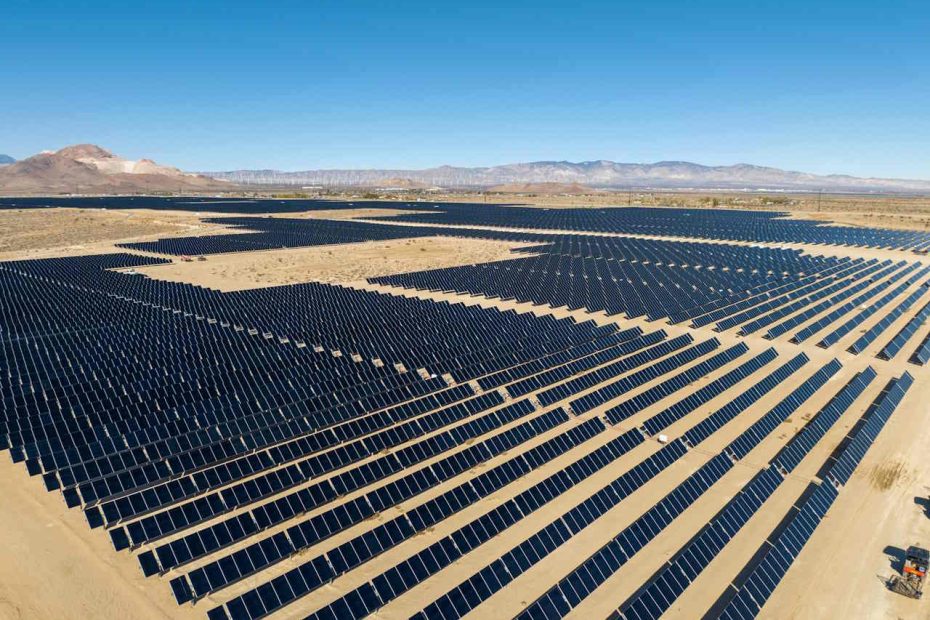
A new analysis from global energy think tank Ember has shown that solar power accounted for 61 per cent of electricity demand growth in the United States in 2025, highlighting both the technology’s importance in meeting ever-increasing demand as well as its resilience to Donald Trump’s anti-clean energy agenda.
Electricity demand in the United States increased by 135-terawatt-hours (TWh) in 2025, a 3.1 per cent increase on the previous year and the fourth largest annual increase in the past decade.
Solar generation, however, increased by a record 83 TWh in 2025, up 27 per cent compared to 2024 and the largest absolute growth of any electricity source for the year.
The increase in solar generation therefore accounted for 61 per cent, or nearly two-thirds, of total electricity demand growth across the US in 2025.
Importantly, according to Ember, solar grew most where electricity demand also grew most.
The increase in electricity demand through 2025 was highest in the Texas, Midwest, and Mid-Atlantic regions, but these regions also saw a corresponding growth in solar which met 81 per cent, 81 per cent, and 33 per cent of electricity demand growth respectively.
Solar growth also met all of the daytime growth in electricity demand, as well as some of the growth in demand in the evenings.
Specifically, the increase in solar generation through 2025, in aggregate, met all of the rise in US electricity demand between the daytime hours of 10:00-18:00 ET. Solar, when paired with new battery energy storage systems, also met some of the increase in electricity demand during the evening hours of 18:00-02:00 ET.
Unfortunately, even though solar generation rose by a record amount in 2025, utility-scale solar capacity additions in 2025 were down by 6 per cent than those seen in 2024.
On the other hand, and as demonstrated by the increased role of solar in meeting evening electricity demand, battery capacity additions increased by an impressive 133 per cent in 2025 to 26 gigawatts (GW).
Ember’s analysis shows, then, that batteries are helping to change solar from cheap daytime electricity to dispatchable all-day electricity.
This is demonstrated most vividly in California, where utility-scale solar and battery generation has risen by 58 per cent, even though actual solar generation at the sunniest hour of the day rose by only 8 per cent. Most of the increase in solar + battery generation was therefore able to be delivered in the evening.
“Solar growth was essential in helping to meet fast-rising US electricity demand in 2025,” said Dave Jones, chief analyst at Ember.
“It generated where it was needed, and – with the surge in batteries – increasingly when it was needed. Solar has the potential to meet all the rise in electricity demand and much more. With electricity demand surging, the case to build solar has never been stronger.”
If you would like to join more than 29,000 others and get the latest clean energy news delivered straight to your inbox, for free, please click here to subscribe to our free daily newsletter.
Joshua S Hill
Joshua S. Hill is a Melbourne-based journalist who has been writing about climate change, clean technology, and electric vehicles for over 15 years. He has been reporting on electric vehicles and clean technologies for Renew Economy and The Driven since 2012. His preferred mode of transport is his feet.
Share this:
Facebook
X
LinkedIn
Reddit
Email
Print