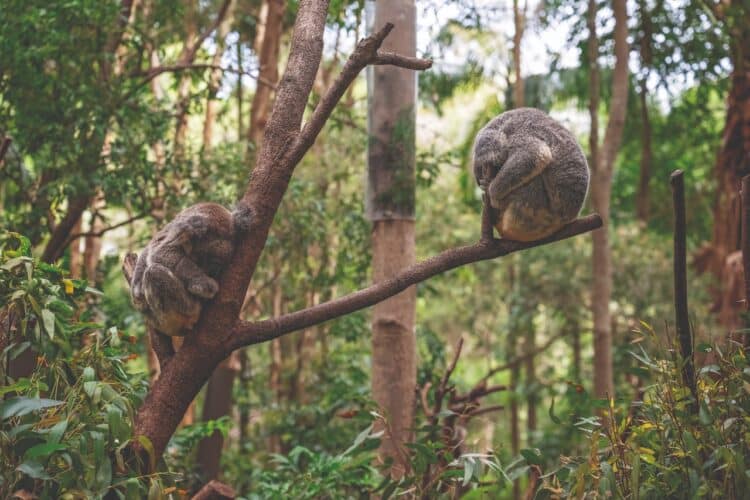
Smart mapping and strong policies can accelerate renewable energy adoption while protecting Australia’s threatened species.
For Australia’s net zero goals to be achieved, it’s not just a matter of deploying renewable energy en masse, it must also be mobilised strategically.
The Mapping Renewables for Nature report, a collaboration between the Australian Conservation Foundation (ACF) and researchers from the University of Melbourne, has found that renewable energy projects must be carried out in alignment with people and nature.
The effect clean energy adoption has on flora and fauna is particularly in focus, with the report detailing the importance of good siting – i.e. the process of selecting and planning the location of renewable energy projects – and smart mapping in optimising the rollout.
With the Federal Government recently announcing a renewed target of achieving 62–70 per cent emissions reduction below 2005 figures by 2035, the report said nature mustn’t be left behind.
And there are examples where it already is.
“Australia has the highest mammal extinction rate in the world,” the report said. “Over 2200 species are now listed as threatened, including koalas, wombats, parrots, cockatoos, gliders, wallabies, frogs and fish.
Following the release of Mapping Renewables for Nature, reforms to the Environment Protection and Biodiversity Conservation (EPBC) Act were launched in November, with stronger protections installed for nature and forestry.
“ACF welcomes the wider protection for forests, the introduction of a national EPA and the removal of the possibility that coal and gas projects will be fast tracked,” ACF chief executive officer Kelly O’Shanassy said.
“Exemptions and loopholes that have facilitated the destruction of forests have been a shameful feature of this law for quarter of a century. Today, those loopholes will be closed.”
Mapping Renewables for Nature uses three case studies located in Gippsland, Victoria; Central West Orana, New South Wales; and the Banana Shire, Queensland, to demonstrate the benefits renewables can deliver for regional Australians while safeguarding threatened plants and animals.
Gippsland opportunities
Gippsland, a region known for its coal-fired power plants, has existing infrastructure on its side.
“By locating new wind generation near existing powerlines, planners reduce the need for new lines and (can) repurpose legacy coal assets for clean energy,” the report said.
“The zone already avoids high-value farmland, biodiversity hotspots, and densely populated areas, reflecting community feedback and ecological priorities.”
Gippsland is already paving a sustainable path for renewable energy adoption, but more can be done.
The proposed Gippsland Shoreline renewable energy zone (REZ), the report said, must find the win–win spots with the highest wind capacity and least biodiversity.
“The draft Gippsland onshore zone has less land and less threatened plants and animals than our other study areas,” the report said.
“By avoiding 30 per cent of land with the highest biodiversity in the study area, an average of 73 per cent of the habitat for threatened plant and animal species can be safeguarded.
“Careful micro-siting and appropriate mitigation would help to reduce any remaining impacts.”
The Gippsland region can produce 13,000 gigawatt-hours (GWh) of electricity per year – powering 2.3 million homes – by value-adding 1.5 per cent of the REZ with renewables.
Combining solar and agriculture
The Central West Orana region, which envelopes NSW towns such as Dubbo and Mudgee and spans more than two million hectares, is leveraging agrisolar as a renewable energy option.
Agrisolar involves the dual-use of land for solar energy production and agricultural activities, with solar panels providing shelter for livestock during extreme weather, while reducing heat stress and limiting water evaporation from the soil.
The report used the example of farmer Tony Inder, who now saves around $450,000 per year in mowing costs by introducing 5000 grazing merino sheep across two solar farms. The sheep benefit from shade and shelter, while Inder has enjoyed a 20 per cent uptick in wool yields.
The Central West Orana region in NSW is leveraging agrisolar as a renewable energy option. Image: Australian Conservation Foundation
The Central West Orana REZ must focus on protecting threatened species such as regent honeyeaters, swift parrots, koalas, and brush-tailed rock-wallabies.
“About 70 per cent of the zone has relatively low conflict with important habitat for threatened species, making it well suited for renewable energy,” the report said.
“By avoiding 30 per cent of land with the highest biodiversity in the study area, an average of 93 per cent of the habitat for threatened plant and animal species can be safeguarded.”
The Central West Orana region can produce 17,000GWh of electricity per year – powering three million homes – by value-adding just 0.003 per cent of the REZ with renewables.
A known renewable energy corridor
Less of the Banana Shire is suitable to renewable energy (about 60 per cent) than the Gippsland and Central West Orana REZs, but there is plenty of potential to maximise this region.
While there is no formal REZ in place for the Banana Shire, the ACF sees this region as having great potential for renewable energy adoption while avoiding threatened plants and animals such as brigalow forests, black box woodlands, southern snapping turtles and painted honeyeaters.
Local councils and regional communities have identified an 930km renewable energy corridor through central and western Queensland. This initiative, which runs through the Banana Shire, involves the construction of a new transmission network running south from Hughenden to Barcaldine and then east to Biloela.
The Banana Shire must preserve threatened species such as brigalow forests and koalas during the energy transition. Image: Australian Conservation Foundation
The ACF said this project showed “how regional communities can shape renewable energy infrastructure placement” while ensuring “benefits are demonstrated and delivered for people and nature”.
The Banana Shire has access to good wind, sun, geography, and existing powerlines linked to coal mining and power generation industries.
“By avoiding 30 per cent of land with the highest biodiversity in the study area, an average of 90 per cent of the habitat for threatened plant and animal species can be safeguarded,” the report said.
The Banana Shire can produce 15,600GWh of electricity per year – powering 2.74 million homes – by value-adding 0.004 per cent of the study area with renewables. This could see farmers and landholders receive $28 million in direct payments each year.
What needs to happen
These case studies highlight the opportunities, however the ACF said more needs to be done from government, industry and communities to ensure the protection of flora and fauna while the clean energy transition ramps up.
Alongside recent EPBC Act reform, which included the creation of an independent Environment Protection Agency, the Federal Government can also commit funding to smart mapping, which is where industry comes in.
“Industry should use smart biodiversity mapping tools … to identify locations for renewable energy that avoid the critical habitat of threatened species,” the report said.
“They should also set nature protection and restoration goals and targets that align with Australia’s 30 by 30 plan and the Global Biodiversity Framework (GBF).”
The Federal Government’s 30 by 30 target involves conserving 30 per cent of Australia’s landmass and 30 per cent of Australia’s marine areas by 2030, while the GBF was implemented in December 2022 to guide international action on biodiversity conservation.
As one of 17 countries in the world described as ‘mega diverse’ (known for having a high number of species), Australia was actively engaged in the development of the GBF.
The ACF said communities also have a key role to play in preserving biodiversity during the clean energy transition, by showing support for appropriately sited renewable projects, and by challenging misinformation campaigns targeting climate action.
The renewable energy transition has the potential to boost Australia’s economy by almost $89 billion while creating nearly 400,000 jobs by 2040. These benefits can only be fully achieved, the ACF attests, by protecting nature.
“We know how to get this right,” the report said. “With smart tools, strong laws, industry action and community leadership, we can build an energy future that restores, retains and repairs what we love most.
“Australia can lead the world in showing how climate action, nature protection and community empowerment go hand in hand.”
This feature appeared in the November edition of Energy.