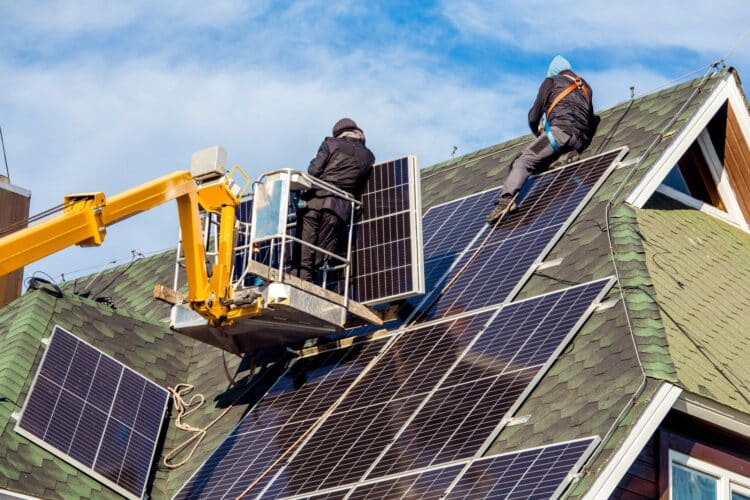
South Australia’s rooftop solar fleet has pushed electricity demand from grid-scale generation to a new winter low, highlighting the growing influence of distributed energy resources on the state’s power system.
The Australian Energy Market Operator (AEMO) said rooftop solar met 99.9 per cent of South Australia’s total electricity demand at 1.30pm on August 31, reducing operational demand to just two megawatts (MW).
High rooftop solar output and negative wholesale electricity prices also drove above-average battery charging as storage absorbed excess generation for use later in the day.
Subscribe to the Energy newsletter and discover all you need to know about the energy transition.
Never miss a second and subscribe to Energy in print.
The South Australian result coincided with a new winter minimum operational demand record across the National Electricity Market (NEM).
Operational demand fell to 11,992MW at 1.30pm, eclipsing the previous winter low of 12,144MW set in August 2024. Rooftop solar supplied close to 54 per cent of underlying NEM demand at the time.
Battery charging accounted for around 10.5 per cent of total generation, while wholesale electricity prices were negative in every NEM region.
South Australia has been at the forefront of the rooftop solar revolution. On March 8 this year, rooftop solar exceeded the state’s total electricity demand for periods during the day, equating to 108.5 per cent of demand at 1.35pm.
That abundance also creates balancing challenges. During the March event, 500MW of potential utility-scale solar output and 295MW of wind generation were curtailed.
AEMO said these records demonstrate an increasingly dynamic electricity system, where high renewable generation is being increasingly balanced in real time by batteries, hydro and gas, supported by the transmission network.