The Australian Energy Market Operator (AEMO) has offered a clear perspective of the electricity landscape through its latest Quarterly Energy Dynamics (QED) report.
The report highlights how renewables have surpassed fossil fuels on a quarterly generation basis, comprising 51 per cent of the National Electricity Market (NEM) energy mix in the fourth quarter (Q4) of 2025.
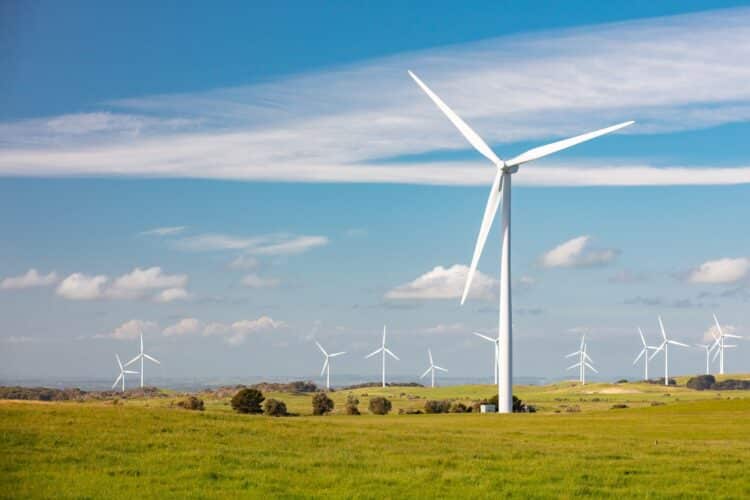
Wind generation was the biggest winner for the quarter, increasing its output by 29 per cent to make up 16.3 per cent of the NEM supply mix (up 3.3 per cent). By combining wind and grid-scale solar (15 per cent output increase), variable renewable energy posted a new quarterly average output record of 6627MW.
Rooftop solar was also a success story, singularly supplying the second highest proportion of energy to the NEM of 17.6 per cent (behind only black coal). This drove record lows in minimum operational demand in the NEM of 9666MW, with South Australia in the negative at -263MW.
Battery discharge also soared, nearly tripling to average 268MW, benefited by 3796MW/8602MWh of large-scale battery capacity being added to the grid since the end of 2024.
This comes as coal-fired generation delivered an average quarterly output of 11,544MW – an all-time low and 4.6 per cent down from Q4 2024. Gas-fired generation posted its lowest quarterly output since 2000, averaging 741MW.
What did this mean for prices?
Wholesale electricity prices averaged $50/MWh across the NEM in Q4 2025, down $39/MWh from Q4 2024 and down $37/MWh from Q3 2025.
Increased wind generation and battery discharge reduced the reliance on gas and hydro generation during evening peaks, suppressing average prices and limiting the incidence of high-price intervals (+$300/MWh).
Average Queensland prices dropped 55 per cent to $58/MWh, with New South Wales prices declining 48 per cent to $75/MWh. Wholesale electricity was most affordable in South Australia and Victoria at $37/MWh, with 30 per cent and 18 per cent quarterly declines, respectively.
Wholesale electricity price volatility decreased in Q4 2025, with aggregated NEM-wide cap returns – representing contributions when the spot price jumps above $300/MWh – declining from $86/MWh in Q4 2024 to $13/MWh in Q4 2025.
On the flip side, the frequency of negative prices across the NEM notched a new record in Q4 2025 at 31 per cent of regional dispatch intervals (up from 23.1 per cent in Q4 2024).
These were cushioned by lower prices for large-scale generation certificates (LGCs), which dropped from $34/certificate in Q4 2024 to $9/certificate in Q4 2025, and saw the average price during negative intervals lift from -$41.3/MWh to -$19.4/MWh.
The QED report observed the NEM-wide negative price impact – reflecting the combined effect of negative price levels and frequencies on quarterly average price – decline from $9.5/MWh to $6/MWh in Q4 2025.
Subscribe to Energy and discover all you need to know about the energy transition.