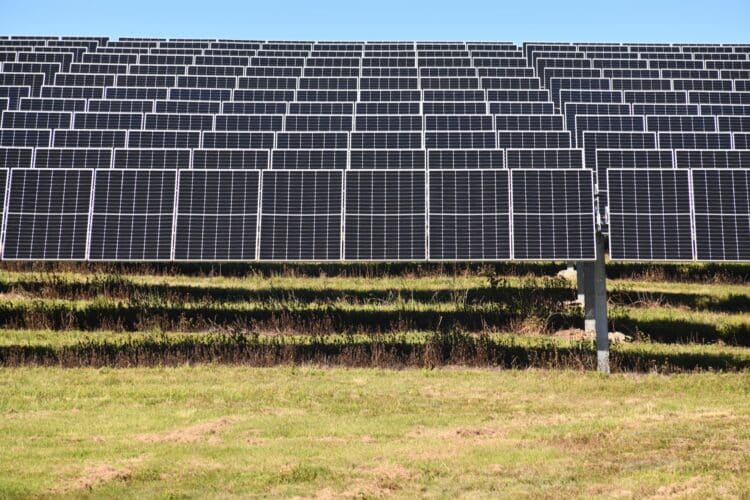
Renewable energy has reached a new milestone in the National Electricity Market (NEM), powering 80 per cent of the grid for the first time.
The Australian Energy Market Operator (AEMO) recorded the milestone at 12.30pm on Saturday, benefiting from a warm, sunny day across much of Australia’s east coast. This drove contributions from rooftop solar to 52 per cent, with utility-scale solar contributing 16 per cent and wind contributing 11 per cent.
Renewables contributed 26,146 megawatts (MW) at this time, with non-renewables contributing 6360MW (coal contributed 19 per cent of the NEM’s power).
The result is an instantaneous record rather than an indication that renewables are supplying 80 per cent of the NEM over longer periods, but it demonstrates how the generation mix is changing as more renewable energy filters through the system.
Subscribe to the Energy newsletter and discover all you need to know about the energy transition.
Never miss a second and subscribe to Energy in print.
Renewables represented an average 42.1 per cent of NEM supply in the June quarter of 2026 – a new Q2 high – after contributing 46.5 per cent of NEM supply in the March quarter – a new Q1 high.
As average underlying electricity demand reached a June-quarter record of 24,220MW, average wholesale prices across the NEM fell 47 per cent year-on-year to $74/MWh – their lowest June-quarter level since 2020.
Victoria recorded the largest year-on-year decline in wholesale prices, falling 60 per cent to $56/MWh. Prices declined 53 per cent in New South Wales and 44 per cent in Queensland during the quarter.
While these results are impressive, AEMO has a task on its hands to orchestrate renewable energy sources at a time when coal-fired generation is increasingly being phased out of the grid.
This is increasing the importance of storage and transmission capacity that can shift renewable electricity across time and between regions, particularly as the system moves towards more frequent periods of high renewable generation.