Record-setting quarters for both big and small renewable energy have underscored the federal government’s message that Australia will reach an 82 per cent share of renewables in its electricity mix, whether or not it hits the targeted date of 2030.
New data from the Clean Energy Regulator (CER) shows that for all of the failed COP pledges and policy hypocrisy, fossil fuels are being edged out of Australia’s power mix at a record rate and helping to deliver a 27 per cent reduction in wholesale electricity prices within the space of a year.
The CER’s Quarterly Carbon Market Report (QCMR) shows 2.1 gigawatts (GW) of new large-scale renewable energy capacity reached final investment decision (FID) in the July to September period (Q3), taking the running total for the year so far to 5 GW, already exceeding the 2025 full-year record of 4.9 GW.
And more post-quarter investment has taken the year-to-date total to a record 5.5 GW, the CER says.
Wind energy, meanwhile, capped off its strongest quarter ever since tracking began, with 1.1 GW of capacity reaching FID.
The CER says that more than half of the projects reaching FID to the end of Q3 2026 were backed by the federal government’s Capacity Investment Scheme, demonstrating its “growing influence” on the investment pipeline.
That said, the data shows total capacity in the power stations approval pipeline remains relatively low, with 570 MW under assessment as at September 30, 2026.
“Although a small number of applications from large power stations can increase the capacity under assessment sharply, current activity suggests that approvals are unlikely to reach the 3.5 to 4.5 GW range projected in the Q1 2026 QCMR,” the report says.
“We now anticipate that between 2.6 and 3.4 GW will be approved under the LRET in 2026.”
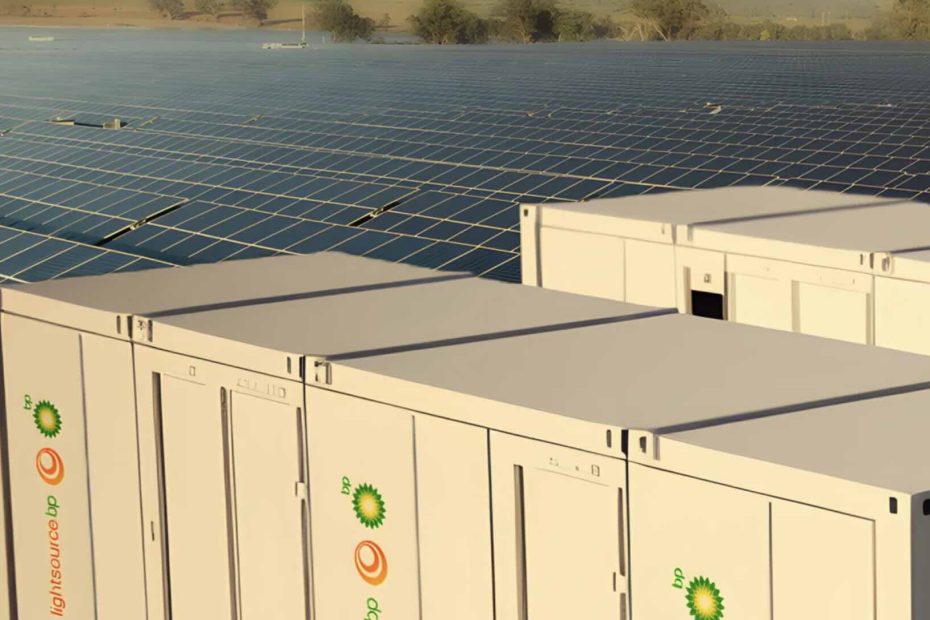
On large-scale energy storage, the CER says its new big battery pipeline tracker shows a total 13.8 gigawatt-hours (GWh) of storage capacity reached FID in the quarter, taking the 2026 total to a nice round number of 20 GWh.
The average capacity of batteries coming into service on the grid, meanwhile, more than doubled from 265 megawatt-hours (MWh) in 2025 to 621 MWh in 2026.
“Grid-scale batteries are also playing a growing role in electricity market outcomes,” the CER says. “Together with lower demand from the grid, increased grid-scale battery participation contributed to National Electricity Market wholesale electricity prices falling 27 per cent compared with Q3 2025.”
On the consumer energy side of the equation, the data shows rooftop solar recorded its strongest September quarter on record, with 890 MW installed, taking total 2026 installations to 2.8 GW – and putting the year on track to set a new annual record of higher than 3.2 GW.
These already impressive numbers from a market that many thought had long since peaked are in line for a fresh boost, CER notes, with the official launch of applications for the mid-scale SRES incentive, which brings rooftop systems from 100 kW to 1 MW into the subsidy scheme.
Home battery installations also remained strong, the CER says, with a total of 10.3 GWh of behind-the-meter capacity installed and approved under Cheaper Home Batteries in 2026 to the end of Q3 – a growth trajectory that has led the CER to increase its full-year projection from 8–12 GWh to 13–15.5 GWh.
“The growing deployment in consumer investment is increasingly visible in electricity demand and market outcomes,” the CER says in its report.
“The Australian Energy Market Operator found that growth in distributed solar exceeded growth in total (grid plus distributed) electricity demand in Q3, reducing average demand from the grid.
“Households with rooftop solar and batteries imported 74% less electricity during the evening peak than households with solar alone, contributing to lower evening peak demand from the grid.”
CER chair Tony Chappel says that with the introduction of the mid-scale rooftop solar rebate, there is no ceiling on the potential of Australia’s distributed energy resources.
“Consumers are continuing to change how energy is generated, stored, and used across the grid,” Chappel said on Thursday.
“Households with solar and batteries are using less grid electricity during the evening peak, helping to bring down costs for everyone.
“The latest data for the National Electricity Market show us that average Q3 wholesale spot prices are the lowest since 2021, driven by lower evening demand from the grid, more large-scale batteries, and less volatile prices overall,” he said.
If you would like to join more than 29,000 others and get the latest clean energy news delivered straight to your inbox, for free, you can click here to subscribe to our free daily newsletter.
Sophie Vorrath
Sophie is editor of Renew Economy and editor of its sister site, One Step Off The Grid . She is the co-host of the Solar Insiders Podcast. Sophie has been writing about clean energy for more than a decade.
Share this:
Facebook
X
LinkedIn
Reddit
Email
Print