Australia’s energy regulators and market operators are going to have to be nimble to ensure that households are able to benefit from the unexpected boom in battery storage, the upsizing of rooftop solar systems, and the push to electrification.
Matt Kean, the chair of the Climate Change Authority, echoed network calls for a regulatory rethink on Thursday in light of the home battery boom and the new focus on how consumer energy resources can and should be at the forefront of the switch to green energy.
“The electro revolution will create exciting new opportunities for consumers and companies alike, (and) regulators will have to be nimble if we’re going to maximise the potential for innovation, and importantly, ensure that households get their fair share of the benefits,” Kean said.
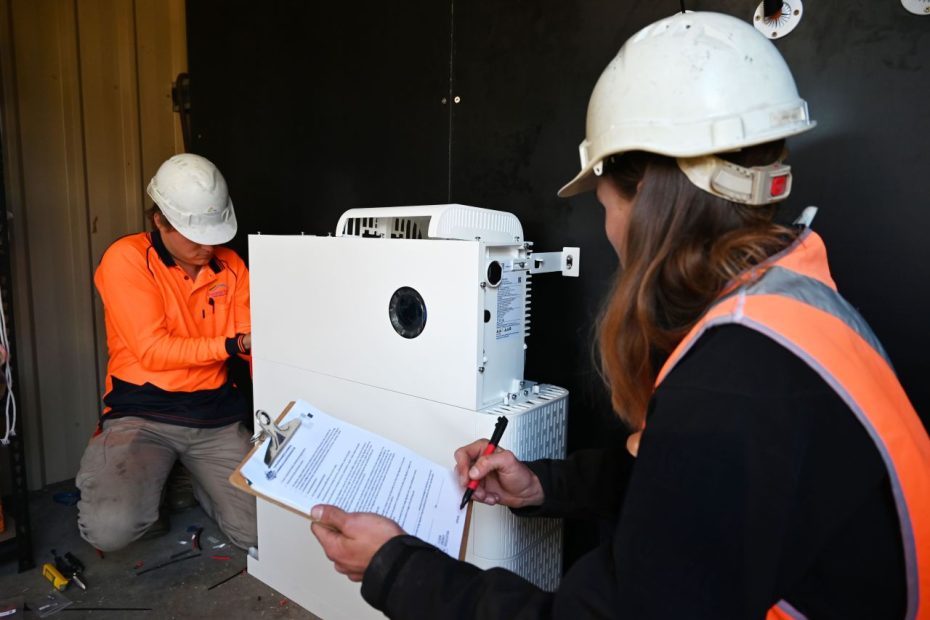
“The surprising, indeed stunning, success of the take up of home batteries reveals the scale of the appetite in the community for new products and new ways to manage energy.”
Kean was speaking at EN26, the biannual conference of the Energy Networks Association, which is also putting out calls for regulatory change to allow for new ways to manage energy, arguing for the ability to provide more carrots and less stick to consumers.
See: “Grow your own and buy local”: Networks seek change and flexibility to manage a 100 pct renewable grid
Kean said the number of home battery installs since its launch last July is now just shy of 280,000, and rooftop solar systems are also being upgraded, with the average size of the 4.2 million homes that have rooftop PV jumping to 10 kilowatts.
He says the rapid evolution of this segment will require a few adjustments when the Australian Energy Market Operator finalises its 2026 integrated system plan (the latest iteration of its multi-decade planning blueprint) around the middle of this year.
“The draft ISP released last October expected household storage capacity to rise to 10 gigawatt hours by 2029 2030, but in fact, we’ve already surpassed that, and we’re not even at the end of the first quarter of 2026,” Kean said.
Kean said that regulators will need to get across the growth in EVs and electrification that will shift peak demand from summer to winter, home energy storage and the advanced load shifting technologies will play a key role in balancing demand peaks and troughs and easing strains on the grid.
“With the right regulatory settings and incentives for consumers and energy firms alike, these changes are entirely manageable,” he said.
“The power of the people is no longer a mantra of the hippie era, but a live reality for men, those legions will keep growing in number because of the opportunities that changes in technologies bring, and certainly the opportunities that low cost energy brings.
“Because of renewables networks that can change with the times will also prosper as well. It’s a win, win for everyone, including helping us decarbonise the grid, delivering more reliable energy and cheaper energy, that’s the story that everyone can sign up for.”
The agility of regulators, or the lack of it, is not just an Australian issue.
“The transition is moving at roughly half the required pace,” says McKinsey’s Gracie Brown. “Electrification and renewables are moving forward, but the harder challenges remain broadly stuck, and increasingly the bottleneck is the grid.
“Transformer and cable prices are up by about a third. Lead times have doubled to two or three years, and roughly 1,600 gigawatts of solar and wind are waiting connection today globally.
“So for network operators, this becomes a capital allocation challenge under uncertainty, how much to build, where to build it, and how to sequence it.
“Network planners and operators often have the longest term time horizon view. We’re investing in 20, 30, 40, year assets. Policymakers are often thinking about the next legislative cycle. Customers are thinking about the next monthly bill.
“We’re the ones who have to be taking that long term view of what an of the integrated and complex planning and have conviction on that long term view, first for ourselves and then for our stakeholders, what’s the right path forward to make the transition successful, reliable, affordable and at pace?”
Giles Parkinson
Giles Parkinson is founder and editor-in-chief of Renew Economy, and founder and editor of its EV-focused sister site The Driven. He is the co-host of the weekly Energy Insiders Podcast. Giles has been a journalist for more than 40 years and is a former deputy editor of the Australian Financial Review. You can find him on LinkedIn and on Twitter.
Share this:
Facebook
X
LinkedIn
Reddit
Email
Print