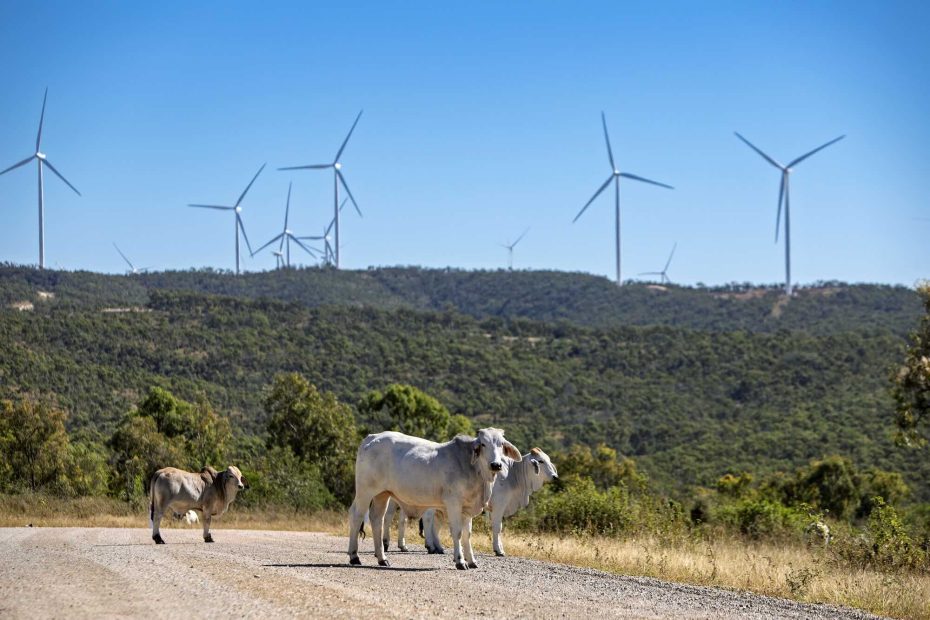
The Queensland government is sounding out interest from industry players and energy users to deliver new renewable energy generation and battery storage projects to North West Queensland with the backing of a new $200 million fund.
The North West Energy Fund (NWEF) was announced late last year as part of the Liberal-National government’s changes to the proposed CopperString transmission link made after the cost of the project had blown out from the original $1.8 billion to more than $13.6 billion.
Changes to the project, which aims to connect North and North West Queensland with the National Electricity Market (NEM) via a new transmission link between Townsville and Mount Isa, included a pared down Eastern Link stretching from Townsville to Hughenden, which is set to be completed by 2032, and a future yet unspecified Western Link from Hughenden to Mount Isa.
In place of any specific details for the Western Link, however, the Queensland government committed $200 million to a new North West Energy Fund (NWEF) which would supposedly support “bespoke” solutions in towns such as Mount Isa, Cloncurry, Julia Creek, and Richmond.
This week, both the Queensland state government and the Queensland Investment Corporation (QIC) announced that a market sounding process had begun on the NWEF, with more than twenty organisations already engaged to participate.
The Fund will support the delivery of new renewable energy generation projects and battery energy storage systems in partnership with the private sector, with a key focus on projects that can be fast-tracked for investment.
“This Fund ensures communities west of Hughenden are supported as work continues on the accelerated delivery of the project’s Eastern Link,” said David Janetzki, the state treasurer.
“As part of the market sounding process, energy developers, generators, electricity distributors and suppliers, users, as well as local councils, are being engaged.”
According to QIC, the initial focus of the NWEF will be an assessment of energy delivery solutions and potential market reforms that can address systemic issues facing the delivery of more affordable and reliable energy supply, and accommodate the anticipated future growth of the state’s North West, particularly towns and cities like Mount Isa, Cloncurry, Julia Creek, and Richmond.
“Queensland’s energy transition is creating a multi-decade pipeline of infrastructure and our role is to turn the objectives of the Queensland Energy Roadmap into investable projects that deliver reliable, affordable and lower-emissions energy outcomes for the state,” said Ross Israel, head of global infrastructure at QIC.
“Through the North West Energy Fund, we have a clear and credible pathway for investors to coinvest with us on projects which will be identified as a priority the region which leverage the need from customers for flexible and pragmatic solutions in the near term.
“For developers, generators, customers and suppliers with an interest in the NWMP, there is now the opportunity to leverage a dedicated fund supporting investment in and around areas like Mount Isa, Cloncurry, Julia Creek and Richmond.”
If you would like to join more than 28,000 others and get the latest clean energy news delivered straight to your inbox, for free, please click here to subscribe to our free daily newsletter.
Joshua S Hill
Joshua S. Hill is a Melbourne-based journalist who has been writing about climate change, clean technology, and electric vehicles for over 15 years. He has been reporting on electric vehicles and clean technologies for Renew Economy and The Driven since 2012. His preferred mode of transport is his feet.
Share this:
Facebook
X
LinkedIn
Reddit
Email
Print