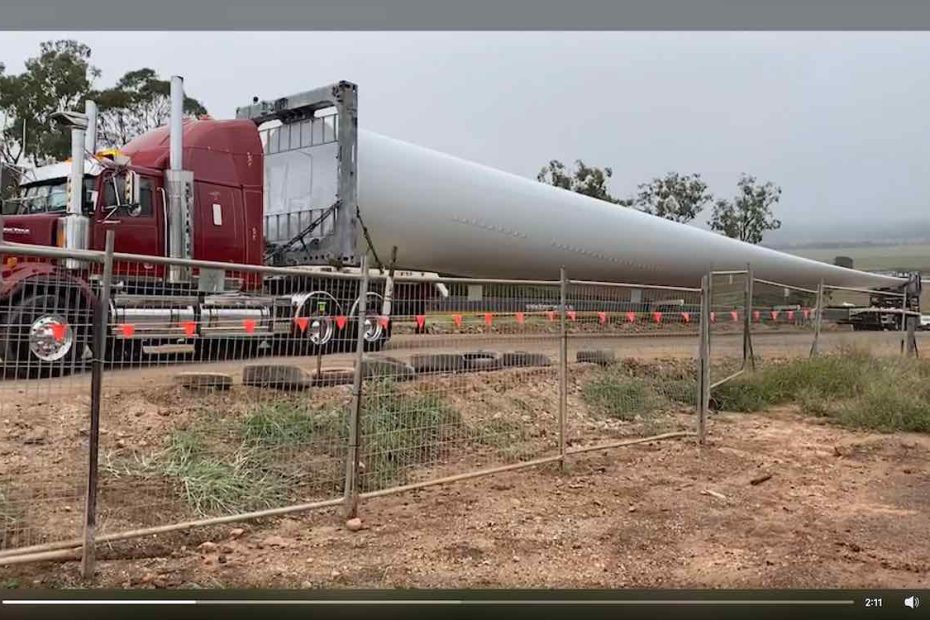
A Queensland council is baking in a new road maintenance fee for renewable energy developers, with rates up to $100,000 per road.
Developers in the Banana Shire will pay an annual road maintenance contribution to the shire council while they’re building a project.
The cash will be held as a guarantee with the base fee per road set at $100,000, unless the parties agree on an estimate of costs, and any unused funds are transferred into the following year’s contribution before being refunded once construction is over.
The council confirmed the motion last week.
“The quantum of the guarantee will be based on an annual estimate of work required to be undertaken to maintain the standard of road agreed between Council and the proponent. If an amount cannot be agreed the amount is $100,000 per road,” the notice says.
Banana Shire councillors Kerrith Bailey and Terri Boyce, who respectively proposed the idea in late 2025 and put it to council in March, have been contacted for comment.
However, the Queensland Renewable Energy Council (QREC) points out that the recently updated codes for renewable energy projects already put the onus — and cost — on developers to look after roads during both construction and operation.
“Developing wind farms often involve road improvements. In areas like the Banana local government area, there is also significant industry use of roads – whether it is agriculture, resources and other forms of energy generation,” says QREC chief Katie-Anne Mulder.
“The existing Code for wind farms ensures any road impacts are managed upfront and should be managed as part of the wind farm’s approval conditions. QREC will continue to work with Banana Shire Council.”
Councils irritated with road damage
The new fee comes after a series of media reports in Queensland and New South Wales (NSW) about the impact that energy project traffic is having on local roads, and after the Banana shire saw significant road washouts and closures during heavy rains in March.
In February, the ABC reported on several NSW councils along the new interstate EnergyConnect transmission line, all irate about the state of roads left by Transgrid and its roading contractor.
In November last year, Central Queensland Today reported on complaints about the state of roads leading up to Squadron Energy’s Clarke Creek wind project, an article that formed the basis of the new Banana Shire road contribution.
The Banana Shire is a popular spot for renewable energy projects, with the council counting 25 projects that it valued at $40 billion in April last year.
Across Queensland, the number of projects that reached financial close or were under construction in the last quarter of 2025 was 25 and worth $9 billion, according to the Clean Energy Council’s quarterly report.
And yet unlike NSW, which just tipped another $180 million into shoring up roads used to transport oversize and overmass (OSOM) parts for wind, solar and battery projects, this task is falling to councils.
The Queensland state government began allocating some funds in 2024 to setting up REZs, which included roading, but the Crisafulli government has not continued specific funding to repair roads used for renewable energy project construction.
The OSOM issue in Queensland is one that has a long history, and one that is yet to be fixed.
A turbine part was famously stuck under a bridge last year, despite the state’s rules requiring a police escort.
A 2023 review by the Queensland Transport and Logistics Council recommended the creation of corridors designed for OSOM movements, which not only avoided obstacles such as low bridges but also dealt with maintenance issues.
“Both developers and local council raised concerns about social licence,” the review says.
“Council also noted that while proponents may fund some infrastructure upgrades, ongoing maintenance of (often expensive sealed) roads had to be paid for by Councils and this caused a strain on already stretched budgets.”
The new Banana Shire contribution appears to be purely targeted at damage caused by the regular use of local roads to build wind, solar and battery projects in the region.
But it’s a tariff that may not have been needed had successive state governments heeded calls to fix Queensland transport routes for heavy traffic.
* This article has been updated with comments from the QREC.
If you would like to join more than 29,000 others and get the latest clean energy news delivered straight to your inbox, for free, please click here to subscribe to our free daily newsletter.
Rachel Williamson
Rachel Williamson is a science and business journalist, who focuses on climate change-related health and environmental issues.
Share this:
Facebook
X
LinkedIn
Reddit
Email
Print