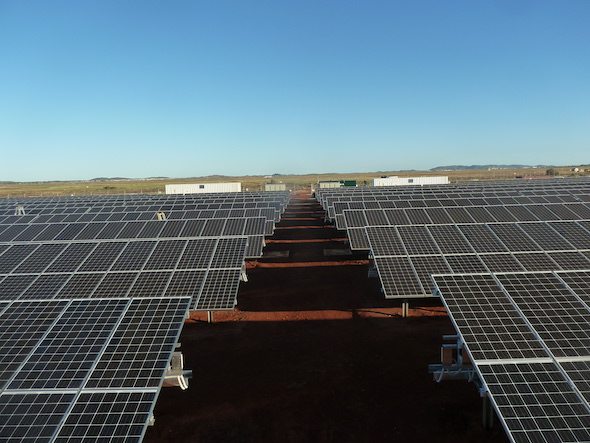
A 50 megawatt (MW) solar project near Karratha will be the first stage of a massive 5 gigawatt (GW) energy vision, with Western Australian chemicals conglomerate Perdaman as the proponent.
The solar project will connect to Perdaman’s $4.5 billion Project Ceres urea plant on the Burrup Peninsula near the Pilbara town, as well as into the local grid, according to a Western Australia government statement.
It’s expected to be connected to the urea plant by the end of 2027, with terms promised by the end of this year.
It will also be the first project inside an up to 1.2 GW energy park being built by the Ngarluma Aboriginal Corporation (NAC).
The NAC energy park vision is to lease land it owns in the Pilbara to green energy developers, offering up acreage that already has unified land access, heritage, environmental approvals, planning and commercial pathways.
The vision is being backed by the Western Australian government, which in December promised $2.7 million for the first of these hubs to fund surveys, approvals works, and technical activities over the next 12 months.
Ngarluma country stretches across much of the coastal areas in the western Pilbara region and includes the coastal towns Karratha, Roebourne, Wickham, Cape Lambert, and out to Whim Creek. The region is home to much of the Pilbara’s Industry including Rio Tinto Iron Ore, Dampier Salt, Woodside, Yara, and Perdaman.
“Ngarluma Green Energy Parks will be a game changer for the fast and straight forward development of large-scale renewable projects,” Ngarluma green energy director Belinda Churnside said in a statement.
“It is 100 per cent owned and operated by NAC for the benefit of Ngarluma people. We very much appreciate the support and partnership we have with Perdaman and the state to help NAC activate the first green energy park as soon as 2027.”
A statement from WA energy minister Amber Jade Sanderson notes the Perdaman solar project itself will also connect to the Maitland-Karratha-Burrup transmission line, one of four corridors the Cook government is prioritising to speed up the decarbonisation of heavy industry in the north of the state through providing renewable energy sources.
Rachel Williamson
Rachel Williamson is a science and business journalist, who focuses on climate change-related health and environmental issues.
Share this:
Facebook
X
LinkedIn
Reddit
Email
Print