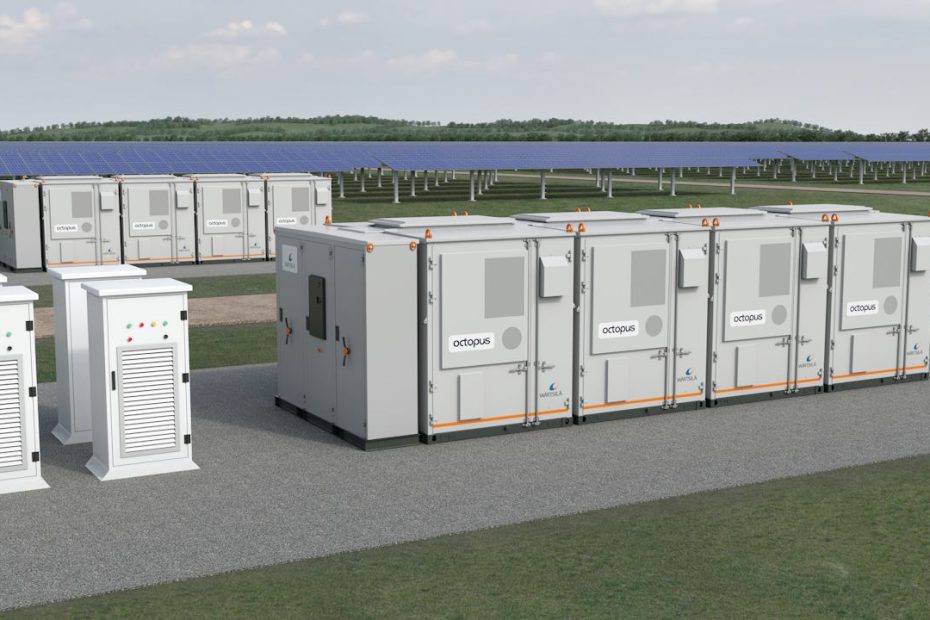
Clean energy fund manager and developer Octopus Australia has reached financial close on its second major firmed renewables project this year, locking in investor support for an $850 milliom DC-coupled solar and battery hybrid project in New South Wales.
The Blind Creek project will combine 300 megawatt (MW) of solar with a 243 MW / 486 megawatt-hour (MWh) battery energy storage system (BESS) on farmland near Bungendore, with sheep grazing set to continue across the site.
The project is backed by Octopus Australia funds, which includes investments from Hostplus, Rest Super, the Clean Energy Finance Corporation (CEFC), Westpac Private Bank and global infrastructure leader APG.
Blind Creek is also underpinned by what Octopus Australia describes as a “first of its kind” four-hour firmed power purchase agreement (PPA), although it can not yet say with whom or for how long.
The milestone for Blind Creek follows the commencement of construction in April at Octopus Australia’s Fulham solar and battery project in Gippsland, Victoria, after that project reached financial close in the first quarter of 2025.
Fulham was one of the first, and largest, in the current rush on so-called “DC-coupled” solar batteries, which means solar generation flows directly to the battery through a DC/DC converter, which minimises conversion losses, and connection costs.
The follow-up success with the much bigger Blind Creek project demonstrates just how bankable solar-battery hybrids have become. But Octopus Australia chief Sam Reynolds says the company’s “stacking” strategy is a big part of its success.
“We effectively stack renewable energy assets into one portfolio … providing energy customers a firm, reliable power purchase agreement, a bit like what they would buy from coal and gas,” Reynolds told Renew Economy.
“A big part of our strategy, and how we’ve been able to attract institutional investment, is that we don’t… just invest into, say, a solar-only or wind-only site.
“Our product will say to them, ‘Look, we’ll sell you four hours of reliable energy, a bit like the way you’ve been hedging your energy exposure in the past… and it’s just a different way to do it.
“It’s almost like, if a customer wants … a loaf of bread, sell them a loaf of bread. Don’t just sell them the wheat.”
Monique Miller, the chief investment officer at the CEFC, the federal government’s green bank, says Blind Creek offers a powerful example of how global capital and Australian innovation can work together to deliver renewable energy at scale.
“The start of construction at Blind Creek marks a major milestone in Australia’s clean energy transition,” Miller said on Wednesday.
“By integrating solar generation, battery storage and regenerative agriculture, Blind Creek is powering local homes while supporting local business.”
Reynolds says that it’s a tricky time for the Australian renewable energy industry, with “plenty of debt” around but a shortage of institutional capital, or equity, getting deployed.
“It’s a bit difficult for institutional investors to see the market signals,” he tells Renew Economy. “They probably spend a bit too much time talking about net zero.
“An institutional investor probably doesn’t fully understand net zero, or what the risk-adjusted returns are for that, right?
“What they do understand is that we are losing supply of energy because our coal-fired power stations are being retired and … that’s not political, that is just physics and engineering – that they’re reaching the end of their useful life.
“[They] do understand that when supply comes out, but demand doesn’t go down with it, then that’s going to set some pretty interesting price signals – as long as you have a product that can compete with with the outgoing coal.”
And this is where DC coupled solar and batteries are really hitting the mark. But Reynolds says there’s still strong potential for onshore wind in Australia, under favourable conditions.
“We still quite like wind,” he says, “as long as the wind is generating in the right area on the grid and is generating at the right time of day.
“If you have wind generating in the middle of the day on a part of the grid that is congested, [it’s] really difficult… and the reason why you’re not probably seeing many assets get to financial close is because they’re trying to make that maths work, and it’s pretty challenging.
“If you’ve got wind assets where the wind is blowing in the afternoon, or through the evening, great! And [if it’s on] a great part of the grid, amazing!”
For Octopus Australia – a subsidiary of one of the world’s largest investors in clean energy, the Octopus Group – the key is having a variety of renewable energy and firming assets across a number of states, owning 100% of those assets and keeping them all in one portfolio.
“[By] stacking wind, solar and batteries all into the same portfolio, you can start to use your assets,” Reynolds tells Renew Economy.
“Your solar is obviously during the day, your wind is in the afternoon and at night, and you’ll have a number of batteries on different parts of the grid to create that firmed, reliable product offering for customers.
“So if you think about the [National Electricity Market] across those main three states [of Queensland, New South Wales and Victoria] as a bit of a jigsaw, what we want to do is place – if the pieces are wind, solar and storage – we want the right mix in each state so that we can provide these products to each state.
“We have a energy markets team… that do amazing things with with data and weather forecasting and grid government policy to help us manage that jigsaw so that we know how assets are going to perform, but also how assets going to perform alongside the other assets in the portfolio.”
Once complete, the Blind Creek project will generate up to 300MW of clean electricity, enough to power more than 120,000 homes. The two-hour battery will store energy for use during peak demand.
Octopus Australia says it continues its collaboration with GRS as EPC Contractor and Wartsila as the BESS supplier to deliver the DC-coupled solar hybrid project.
If you wish to support independent media, and accurate information, please consider making a one off donation or becoming a regular supporter of Renew Economy. Please click here. Your support is invaluable.
Sophie Vorrath
Sophie is editor of Renew Economy and editor of its sister site, One Step Off The Grid . She is the co-host of the Solar Insiders Podcast. Sophie has been writing about clean energy for more than a decade.
Share this:
Facebook
X
LinkedIn
Reddit
Email
Print