A mammoth proposed 70 gigawatt wind, solar and hydrogen hub project in Western Australia’s Nullarbor has enough “offtake interest” in green ammonia to justify bringing the first stage online by 2033.
Interest from Japanese and Korean companies for green ammonia from the Western Green Energy Hub (WGEH) supports an initial 1.4 million tonnes per annum facility, says lead developer Intercontinental Energy.
The news comes just a month after the developers brought in several new Asian partners to work on a feasibility study for the first phase of the project, which includes 6 gigawatts (GW) of wind and solar to produce around 330,000 tonnes of green hydrogen a year.
Those partners are Chinese renewable energy supplier Sany and several unnamed South Korea companies.
“The last three months have been transformational,” Intercontinental Energy CEO Alexander Tancock said in a statement this week.
“The interest we are seeing at WGEH from customers in Japan and Korea validates the alignment between Australia’s long-term vision and that of its strategic trading partners, marking another major step forward towards a large-scale green hydrogen industry in Western Australia.”
WGEH is led by InterContinental Energy, and international renewables outfit CWP Global, and a commercial subsidiary of WA Mirning People Aboriginal Corporation (WAMPAC) called Mirning Green Energy Ltd (MGEL) are also shareholders.
The WGEH project is of a scale that hasn’t been tried anywhere in the world before.
The vision is for up to 35 “nodes” of around 2-3 GW of wind and solar supporting either a 1.5 GW electrolyser and/or data centre at the centre of each.
It would be built in stages over 30 years, and deliver up to 3.5 million tonnes of green hydrogen a year and up to what the company says will be 28 million tonnes of green ammonia annually as well.
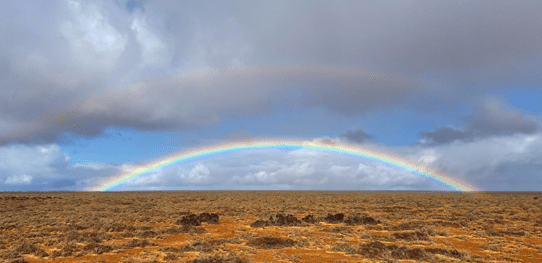
It would cover around 2.3 million hectares of pastoral leases and crown lands, stretching hundreds of kilometres in and around the Nullarbor from north-west of Eucla, near the border with South Australia, towards Cocklebiddy and north of the Eyre Highway to south of the Trans Australian Railway.
WGEH is currently working through an EPBC assessment and the Western Australian Environmental Protection Authority (EPA) approvals process.
But it received federal major project status last year which provides quicker approval processes, and plans on making a final investment decision in 2029.
The 2033 start date, provided planning approvals go smoothly, combined with the customer interest is keeping the light alive for the massive project in a field where others have failed.
“The Western Green Energy Hub, which will scale to be the world’s largest green e-fuels project, represents a pivotal opportunity for Western Australia to position itself at the forefront of the clean fuels sector,” WGEH CEO Raymond Macdonald said in a statement.
“We’re seeing tremendous alignment between our local and international stakeholders. This growing customer interest highlights the project’s strategic importance.”
Rachel Williamson
Rachel Williamson is a science and business journalist, who focuses on climate change-related health and environmental issues.
Share this:
Facebook
X
LinkedIn
Reddit
Email
Print