Share
Share
0
Share
A new residential development in suburban Western Australia will integrate rooftop solar, battery storage and virtual power plant participation as standard, in what is being hailed as a significant milestone for sustainable housing.
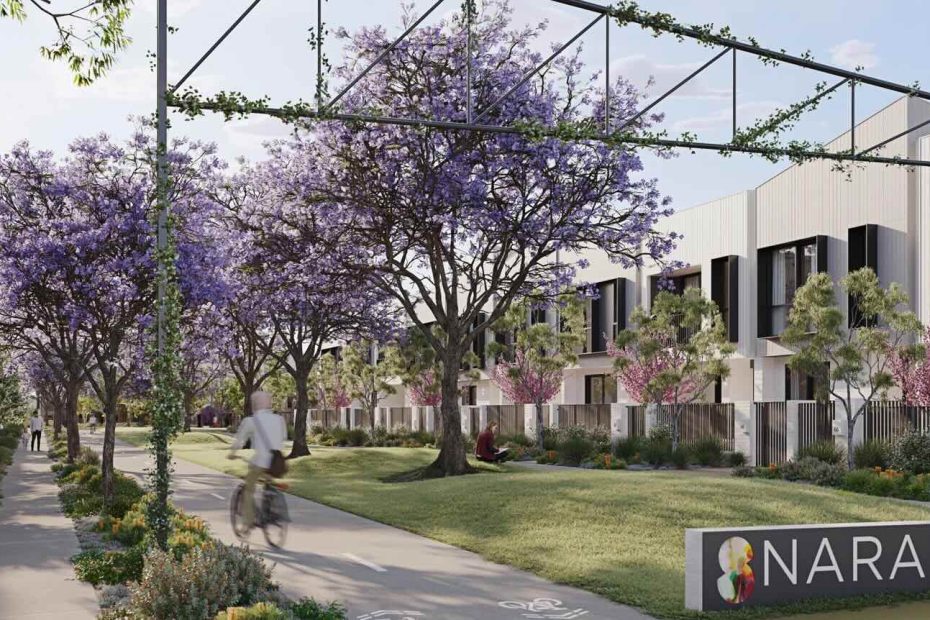
Residential developer Stockland and virtual power plant (VPP) pioneer Plico announced last week their collaboration on the 55-home Nara project in Beaconsfield, south of Fremantle, as a joint bid to build “future ready” communities.
The project will see each new home come with a fully installed solar and battery system – 7.48kW of rooftop PV, a 5kW inverter and a 10.1kWh battery system – to be managed and maintained through Plico’s digital service platform.
As well as generating and storing renewable power for use in the home, the solar and battery systems connect to the Plico Virtual Power Plant, which allows households to earn credits or payment for exporting power and supporting grid stability during peak demand.
According to Stockland, other sustainable design features include electric water heaters, cool roofing, double glazing and “provisions” to add electric vehicle charging.
“This is one of the most forward-thinking residential sustainability projects we’ve seen,” Plico CEO Robbie Campbell said in a statement.
“It gives homeowners immediate access to premium clean energy technology, removes upfront cost barriers, and seamlessly connects them to our VPP from day one.”
As One Step Off The Grid recently reported, Plico has been in the VPP game for some years now, having started up in 2017 as the Dunsborough Community Energy Project (DCEP) founded by Starling Energy Group and funded by Swiss sustainable investor SUSI Partners.
After expanding and rebranding, Plico has grown to a network of thousands of home solar and battery systems, with the combined capacity equivalent to a 33 megawatt-hour battery as at September this year.
But things have become a good deal busier for Plico since it was tapped as the only independent VPP provider approved under WA Labor’s Residential Battery Scheme which, since July, has been “stacked” with the federal battery rebate.
This means that in WA, solar households can apply for discounted home energy storage through the federal government’s Cheaper Home Batteries, or they can opt for a combined offering taking in the state rebate, too.
In most cases, choosing the “stacked” state and federal rebate means a bigger overall discount on the cost of investing in a battery, and gives medium- and low-income households access to a $10,000 interest free loan.
Opting in to the state rebate also makes it mandatory to sign up to a VPP, which is currently limited to two state-owned retailer offerings, with one alternative from Plico Energy (via Synergy).
No doubt, access to these rebates has helped nudge Stockland in the direction of energy-forward Nara development, by reducing the cost of going all in on consumer generation technologies.
How it goes over with home buyers will be interesting to see, with Plico promising that the solar and battery systems at Nara will generate and store more electricity than the homes are expected to consume, leading to reduced power bills and occasional financial rewards.
The companies say that once the home settles, the solar and battery system becomes the homeowner’s asset, backed by warranties of up to 30 years and Plico’s ongoing local support.
“Homes at Stockland Nara provide residents with the immediate benefits of clean energy – it’s not something residents need to consider later or pay extra for,” says Col Dutton, Stockland’s general manager of WA development.
“We wanted to make it easier for people living at Nara so there’s no need to spend time arranging multiple quotes, or worrying about VPP participation; it’s all built in.”
Campbell says the partnership demonstrates how property developers and clean energy providers can work together to make sustainability standard, rather than a premium feature of new-build homes.
“This partnership demonstrates what’s possible when developers and energy innovators work together with a long-term mindset,” he says.
“It’s not just about solar panels, it’s about empowering families to take control of their energy future, save on power bills, and even be financially rewarded through participation in the Virtual Power Plant.”
Homes in the Nara development will be completed and handed over between 2025 and 2027, the companies say. One Step
Sophie Vorrath
Sophie is editor of One Step Off The Grid and editor of its sister site, Renew Economy. Sophie has been writing about clean energy for more than a decade.
Share
Share
0
Share