The Australian Energy Market Operator (AEMO) believes 120GW of wind and solar, 40GW of grid-scale storage and hydro, 14GW of flexible gas and 6000km of new transmission lines will be the required recipe to meet 2050 targets.
This comes as part of AEMO’s Draft 2026 Integrated System Plan (ISP), which advises on the lowest cost path for generation, storage and transmission infrastructure in the National Electricity Market (NEM) to supply secure and reliable electricity and meet government policies by 2050.
The AEMO says it has shaped a plan in consultation with industry and other stakeholders that balances consumer needs, industry investment and government policy.
AEMO chief executive officer (CEO) Daniel Westerman said the roadmap reflects investments and momentum underway, and what’s needed as Australia’s remaining coal power stations become less reliable and withdraw.
“Extensive stakeholder consultation and modelling of thousands of potential investment combinations has identified the least-cost option,” he said.
“Renewable energy, firmed with storage, backed up by gas and connected with upgraded networks remains the least-cost roadmap to meet Australia’s energy needs. This aligns with consumer, industry and government investments already underway,” he said.
Electricity consumption is expected to nearly double by 2050, driven by electrification of transport, expansion of data centres and industry shifting from gas to electricity.
It predicts two-thirds of the remaining coal fleet would close by 2035, in many cases earlier than publicly announced closure dates, with all due to retire by 2049.
The least-cost optimal development path proposed includes adding a total of 120GW of grid-scale wind and solar, 40GW of grid-scale storage and hydro and 14GW of flexible gas.
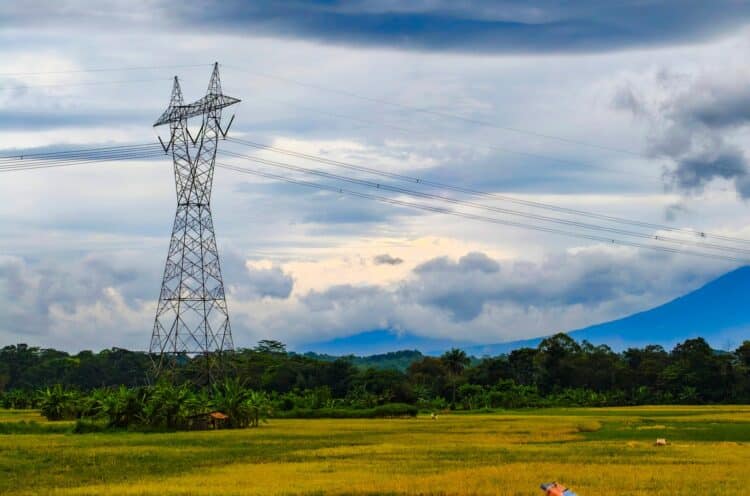
An added 6000km of transmission lines will also need to be added to the existing 44,000km network.
The report noted these transmission investments of around $9 billion are expected to repay their costs, save consumers an additional $22 billion in avoided costs and deliver emissions reductions valued at $2 billion.
The AEMO says rooftop solar and home batteries would continue to play a big part with an expected growth of 87GW of small-scale solar, 27GW of behind-the-meter batteries and 9GW of storage from electric vehicles by 2050.
“Australian consumers are world leaders in rooftop solar and are now adding home batteries and electric vehicles,” Westerman said. “If those consumer devices can respond to market signals through their retailers, it will result in a lower cost power system for everyone.”
Westerman notes that the momentum for investment must continue to lower risk and reduce the chance of higher consumer costs.
“While momentum in investment and delivery continues to build, challenges remain in delivering essential infrastructure at the pace required,” Westerman said.
“Slower progress will erode benefits to consumers and present risks to reliability.”
Industry reactions
The energy sector was quick to respond with many affirming the need for investment in new transmission infrastructure to provide consumers access to lower cost energy.
Energy Networks Australia (ENA) said the plan highlights the importance of the networks in the transition but has also “right-sized the task ahead”, with AEMO suggesting only 6000km of transmission lines are now needed by 2050 (with 2800km currently underway) – a decrease from the 10,000km previously outlined.
Energy Networks Australia CEO Dom van den Berg said the Draft ISP brings welcome clarity to the national conversation about networks.
“The ISP makes clear that networks are not an optional add-on – they are the backbone that allows new generation, storage and customer-owned resources to operate as a reliable, integrated system,” van den Berg said.
“It also confirms that transmission investment represents around seven per cent of the future capital cost of the energy transition, while delivering substantial whole-of-system benefits for consumers.”
Van den Berg said the ISP appropriately highlights the need for the entire sector to remain focused on total system costs, not individual components in isolation.
“Industry, policy makers and regulators must stay eyes-wide-open on the affordability challenge and work together to keep costs down across the whole system,” she said.
The Draft ISP also begins to more fully recognise the role of distribution networks in enabling the transition, including through innovative approaches that reduce the need for transmission investment.
Investment call
Transgrid CEO Brett Redman said major transmission projects remain critical as NSW enters the ‘deep transition’, which will take the state from 40 per cent to 90 per cent renewables over the next decade.
“Old coal-fired generators are closing and we need to ensure new clean generation can connect efficiently to the grid,” he said.
“AEMO has confirmed the vital role of new transmission infrastructure in putting downward pressure on consumers’ energy bills, by moving renewable energy from high-resource areas to the industries, cities and towns that need it.
“Transgrid is committed to delivering the major transmission investments that will unlock these benefits for NSW consumers, such as the nation-critical EnergyConnect interconnector – one of the first committed projects in the ISP – which has now achieved 95 per cent construction completion.
“When it is commissioned next year, EnergyConnect will increase renewable energy sharing between NSW, Victoria and South Australia, adding reliability and stability to electricity supply across the National Energy Market and enabling consumers to access the lowest cost generation available.”
Transgrid’s EnergyConnect and HumeLink are among seven transmission projects identified as committed and anticipated, while Sydney South Ring, Sydney North Ring (Hunter Transmission Project), VNI West and QNI Connect have been maintained as actionable.
Redman welcomed the first ever inclusion of distribution network investments such as the Dubbo distribution project, which will export generation and storage to supply the Sydney, Newcastle and Wollongong load centres.
“The entire industry must work together if NSW is to best navigate the next phase of its transition from coal power to renewables,” he said.
“Transgrid also welcomes AEMO’s emphasis on the need for cooperative action on social licence issues to nurture trust with regional communities.
“Early and genuine engagement with communities is critical to the efficient planning and delivery of infrastructure investment over the next decade.”
Big projects with big reductions
The joint proponents of Marinus Link and TasNetworks also welcomed the ISP affirmation that renewable energy connected by transmission and distribution investment presented the least-cost way to supply secure and reliable electricity to consumers through to 2050.
It is forecast to save consumers $22 billion in avoided costs and deliver emissions reductions valued at $2 billion.
Marinus Link Stage 1 – involving an undersea cable connecting Victoria and Tasmania – is among three projects to now be listed as committed and anticipated transmission projects in the Draft ISP.
Marinus Link CEO Stephanie McGregor said the report recognises Marinus Link’s pivotal year of progress and reaffirms the project’s value to consumers.
“Marinus Link Stage 1 is now fully funded, we have primary Commonwealth and Victorian environmental approvals, a draft regulatory decision and almost all major contracts in place,” McGregor said.
“Marinus Link is essential infrastructure for grid reliability, resilience, and the efficient use of energy resources, which ultimately flows through to consumers.
“With Marinus Link in place, Tasmania and Victoria can share much more electricity, pairing Victoria’s wind and solar with Tasmania’s flexible hydropower system and geographically diverse wind.
TasNetworks CEO Seán McGoldrick pointed to AEMO’s recent Transition Plan for System Security, which concludes that while the switch to clean energy will bring power prices down over the next five years, they’ll drift higher in the 2030s unless clean energy rolls out quickly enough.
“We have a duty to start building NWTD early next year for Tasmanians who want and need the lowest possible future prices,” Dr McGoldrick said.
“Simple supply and demand: abundant energy equals lower prices. And we can only have abundant clean energy with transmission projects like NWTD, which carry necessary up-front cost.”
The report also listed Marinus Link Stage 2 as likely to remain actionable, a signal of the project’s important and ongoing role in providing a secure and stable energy grid.
The Draft ISP will be open for consultation, ahead of the final 2026 ISP to be released in June next year.
Subscribe to Energy and discover all you need to know about the energy transition.