Boosting the fixed network cost component of electricity bills could snatch back the savings promised to solar households who installed a battery through the federal government rebate, a new report has found.
The analysis, published by the Institute for Energy Economics and Financial Analysis (IEEFA) on Wednesday, digs deeper into claims that Australia’s solar and battery households will be among the biggest losers of an electricity pricing reform being proposed by the Australian Energy Market Commission.
The reform in question, published by the AEMC as part of a draft review in December, proposes to shift a greater share of electricity network charges – the cost of operating and maintaining poles and wires – into a fixed tariff on consumer bills.
The AEMC argues that a shift towards volumetric pricing – variable charges based on how much electricity a household uses – disadvantages customers like renters and high-use households that are unable to access solar or storage, or any other means to cut grid power consumption.
And it thinks that a higher fixed network tariff, that charges the same set fee per billing period per customer, regardless of how much electricity they use, would even out the ledger and prevent so-called “meter watching” – particularly as more renewables join the grid.
But critics of the proposal say higher fixed network charges will create its own set of winners and losers, the winners including high-income, high energy-usage households and network companies, with consumers locked in to cover sunk asset costs.
And the losers of the proposed reform, say critics – including IEEFA – would be households who have invested in energy efficiency upgrades, solar panels or batteries, as well as medium and low-consuming and potentially low-income households.
One of IEEFA’s key concerns about the AEMC proposal is that it is missing key information about how a shift to higher fixed network tariffs would work in practice – in particular, the lack of modelling on the potential negative consequences.
And this is what its latest analysis has sought to tease out – with some pretty alarming results.
“Most notably, our modelling found homes that installed batteries under new rebates could see bills rise by between $5,800 and $11,500 over the battery’s lifetime, which outweighs the rebate under the federal government’s incentive scheme,” says report author Jay Gordon, an energy finance expert on Australian electricity with IEEFA.
“The shift could also weaken the financial case for most other household energy upgrades. With longer payback times, households could be deterred from installing efficient electric appliances or rooftop solar.”
According to IEEFA’s modelling, the proposal to introduce higher fixed network charges would lengthen the payback periods for upgrading inefficient electric appliances to efficient appliances at their end of life by between six months to 2.5 years.
In most capitals, newer, efficient, all-electric homes without solar would see higher electricity bills under predominantly fixed network tariffs, while homes with rooftop solar could see bill increases of between $239 and $564 a year.
Solar and battery economics, meanwhile, are “significantly weakened,” under predominantly fixed network tariffs.
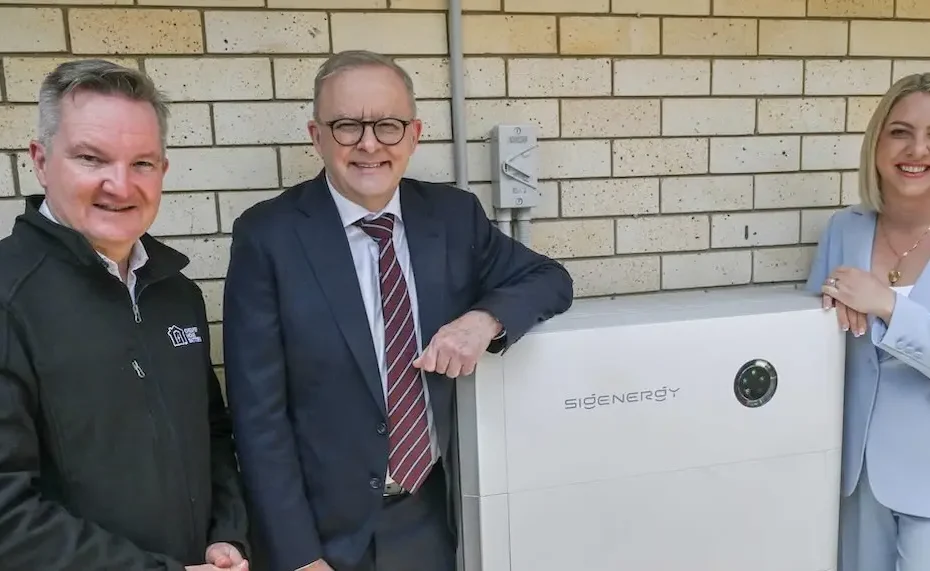
The report finds that a household that installed a 10kWh battery in 2025 could pay an extra $5,800 to $11,500 in electricity costs over the battery’s lifetime, well and truly outweighing the estimated $3,300 rebate it received through Cheaper Home Batteries.
Payback periods for new 8kW solar and 10kWh battery systems could increase by between 14 months up to four-and-a-half years – in some cities effectively cancelling out any benefit of government incentives.
“So yeah, it’s really kind of working in the opposite direction from that federal policy,” says Gordon in an interview with Renew Economy’s Solar Insiders podcast on Wednesday (link to come).
At the same time, he adds, shifting costs away from usage reduces incentives to cut peak demand, including through rooftop solar, batteries and energy efficiency upgrades – all measures that can, and do, bring system-wide benefits by reducing the amount of investment needed in new network assets.
In a statement issued in response to IEEFA’s findings, the AEMC says the analysis models only fixed charges, while the market rule maker’s proposal includes dynamic pricing alongside fixed charges, seeking a balance for customers with solar and batteries “who help the grid when it’s needed most.”
The AEMC also says that its own customer impact analysis will be published in April.
“Our draft report explicitly states that any transition would be carefully managed over approximately 10 years, with potential tiered charges, and protections to ensure consumers aren’t left worse off,” AEMC chair Anna Collyer said on Wednesday.
“The current pricing structure is creating a growing imbalance in how network costs are shared. Our reforms aim to address this fairly while maintaining the business case for clean technologies such as batteries and solar.
“If we do nothing, current pricing structures may not deliver the efficient, fair outcomes all households need as the energy system transforms. Our reforms aim to achieve a better pricing framework for everyone.”
Not a zero-sum game
Gordon says it’s also important to take into account the context from which the AEMC is proposing the reforms to electricity pricing.
“If you’re the AEMC and you’re trying to have the aim of implementing something like this in a way that’s equitable for different consumers, that’s actually really challenging.
“There is this genuine concern that there’s a bunch of consumers out there who, they don’t have these technologies, maybe they don’t have the ability to install them, and they are at risk of their network charges rising. And so I think it’s important to keep in mind that… that’s not an equitable outcome.
“But I think, fundamentally, it feels like we’re tackling the problem starting from the wrong place,” he tells the podcast.
“[We’re] coming at this problem… starting with the assumption that … this is a zero-sum game – consumers have to pay for the network in some way or another, so the only thing we can do is change which consumers are paying which shares of that cost.
“And so, in this example … where battery and solar owners might be paying fewer network costs [due to using less grid supplied power], the approach is essentially, okay, let’s increase the cost they pay and push that back on them.
“But I suppose the question, if we step back, though, is if we are in this situation where we’ve got more and more consumers installing these technologies that essentially provide them with an alternative way to get electricity… what we’re really seeing is, it’s essentially like a risk question.
“So, you know, who is bearing the risk of us requiring fewer network services deliver our electricity? And at the moment, it seems to be the consumer, and that’s just a product of the way the regulatory system works: less people are paying for the network, so we just have to increase the cost for the others.
“But we really think it’s important to take a step back and look at the other actors. …[This] might include other categories of consumer, both large and small, it might include generators who also benefit from accessing the network. And we need to think about, okay, so what costs should they be bearing, and what risks should they be bearing?
“And if we look at, say, network businesses’ returns, which is something that we have looked at quite a lot at IEEFA, we see that many of them earn quite high rates of return on that asset base, which might be more reflective of business that you’d expect is exposed to risk.
“So there is a case there to say, okay, maybe we should look at whether it’s actually the network businesses themselves that need to be bearing these costs, rather than just the consumers,” Gordon tells Renew Economy.
“We have to keep that in mind that … there are other options than just putting those costs back on solar and battery owners.”
If you would like to join more than 29,000 others and get the latest clean energy news delivered straight to your inbox, for free, please click here to subscribe to our free daily newsletter.
Sophie Vorrath
Sophie is editor of Renew Economy and editor of its sister site, One Step Off The Grid . She is the co-host of the Solar Insiders Podcast. Sophie has been writing about clean energy for more than a decade.
Share this:
Facebook
X
LinkedIn
Reddit
Email
Print