Solar PV and onshore wind are Australia’s lowest-cost generation options in 2030 and 2050 energy scenarios, a new report has found.
The draft GenCost 2025–26 report, delivered by CSIRO in partnership with the Australian Energy Market Operator (AEMO), details the costs of building new electricity generation through the lens of renewable energy, nuclear, coal and gas methods.
Capital cost analysis finds significant cost reductions in battery technologies, the first cost rise in three years for large-scale solar, and tentative signs of stabilising in onshore winds costs.
Future projections are more telling, with the capital costs of building renewables far more affordable than building coal and nuclear operations.
Image: CSIRO
Batteries
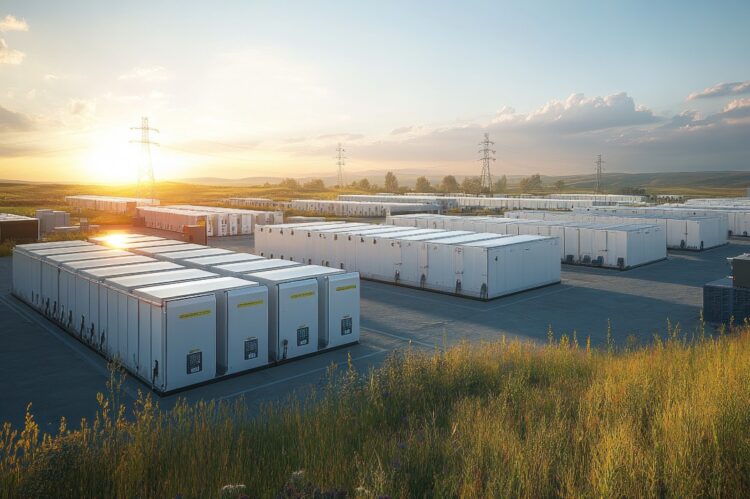
While two-hour battery storage capital costs equated to $525/kWh in 2025, if current policies continue, they are expected to drop to $484/kWh in 2030 and $358/kWh in 2050.
If Australia was to adopt policies aligned with the International Energy Agency’s global net-zero emissions by 2050 outlook (Global NZE by 2050), which poses strong climate policy to maintain temperature increases of 1.5°C, two-hour battery storage capital costs would decrease from $525/kWh today to $295/kWh by 2030 and as low as $219/kWh by 2050.
Solar
If current policies continue, the capital costs of large-scale solar PV would drop from $1621/kW today to $1239/kW in 2030 and $851/kW in 2050, while rooftop solar capital costs would drop from $1216/kW to $1135/kW in 2030 and $1091/kW in 2050
Large-scale solar sees a 54.16 per cent capital cost decrease by 2030 under Global NZE by 2050 policies, with rooftop solar’s drop more marginal.
Wind
Onshore wind capital costs decrease from $3248/kW today to $2697/kW in 2030 if current policies continue, and down to $2609/kW under Global NZE by 2050 policies.
Other methods
Other generation methods such as coal, large-scale open-cycle gas and large-scale nuclear will also see capital cost decreases, however, coal and nuclear are coming from a much higher mark – black coal and brown coal capital costs are $6946/kW and $10,725/kW today, respectively; and large-scale nuclear capital costs are $10,332/kW today.
Electricity costs
The draft GenCost report details an electricity cost of $91/mWh (transmission included) if Australia was to meet its target of 82 per cent renewables by 2030, and $81/mWh (transmission not included).
The lowest-cost large-scale generation mix consistent with achieving 82 per cent renewables by 2030 comprises six per cent hydro, 41 per cent wind, 31 per cent solar PV, four per cent gas, and 18 per cent coal.
Image: CSIRO
CSIRO and AEMO estimate the electricity sector emissions intensity to be 0.02–0.05 tCO₂e/MWh to deliver net zero by 2050 (current levels are around 0.5tCO2e/MWh). It was found eliminating electricity sector emissions would be more costly than reducing emissions elsewhere in the economy.
The draft GenCost report implements a more comprehensive method to scrutinise capital costs against various electricity emission abatement scenarios to 2050, called the system levelised cost of electricity (SLCOE) method.
This is different from the levelised cost of electricity (LCOE) metric used in the past, which simply compared costs of individual technologies.
CSIRO makes this applicable to data scientists, engineers and academics through its new Simple Electricity Model (SEM).
“GenCost has evolved from delivering verifiable cost data on individual technologies to now also providing system modelling of the future generation mix and average cost of wholesale electricity,” CSIRO chief energy economist and GenCost project leader Paul Graham said.
“Electricity systems will always require a diversity of resources to deliver all their functions and so no single technology will meet all the system’s needs regardless of its relative cost position.”
CSIRO energy director Dr Dietmar Tourbier detailed the value of GenCost.
“Under any scenario, there is a cost associated with the build of Australia’s future electricity system and GenCost plays a vital role in producing and sharing trusted, evidence-based information with stakeholders to help understand that cost,” he said.
“Through updating and publishing its data, its modelling and its cost projections every year, GenCost reflects the best available data in the most transparent way to help guide the electricity component of Australia’s energy transition journey.”
The draft GenCost report is open for formal consultation until February 2, 2026. Learn more here.
Subscribe to Energy and discover all you need to know about the energy transition.