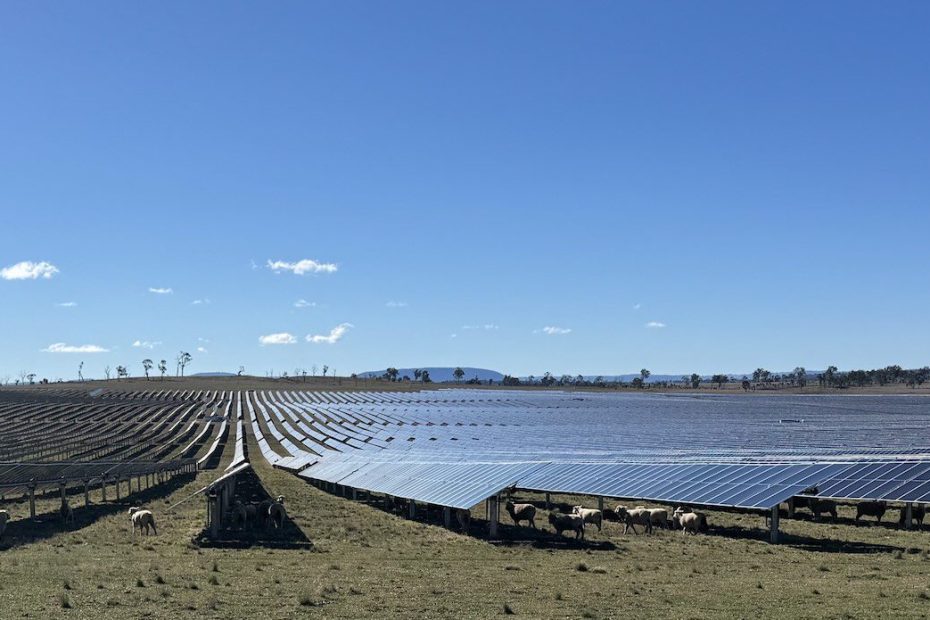
The Sundown solar and battery project in the New England region of NSW has moved one step closer to a construction start after the venture secured federal approval under the environment protection and biodiversity conservation (EPBC) act.
The project, to be located at Spring Mountain – about 30 kilometres east of Inverell and inside the New England renewable energy zone (REZ) – includes 350 megawatts (MW) of solar panels and a 150 MW, four-hour battery.
The developer, Recurrent Energy, a subsidiary of Canadian Solar, secured state development approval from the NSW Independent Planning Commission in August.
The EPBC approval was signed off on October 23 and applies until the end of 2066. It requires Recurrent to buy and retire biodiversity offsets to compensate for the wildlife loss resulting from clearing and construction required for the project.
Recurrent will also have to prepare a biodiversity management plan approved by the NSW Planning Secretary and publish it online.
Sundown solar and battery. Image: Recurrent Energy
If the NSW minister is not satisfied with the biodiversity plan, the government may direct the approval holder to take specific measures to amend it, the EPBC approval notes.
Renew Economy contacted Recurrent about whether the project has any remaining hurdles to clear, such as securing a grid connection.
In its earlier approval steps, the project secured final approval from NSW’s Independent Planning Commission (IPC) in just two months.
The IPC cancelled a public hearing after receiving just one registration to speak: a council representative who the IPC was already talking to. None of the 133 objectors bothered to show up.
A further 19 submissions were received by the IPC, with roughly equal numbers of support and opposition, including from a neighbour concerned about dust.
To join more than 29,000 others and get the latest clean energy news delivered straight to your inbox, for free, click here to subscribe to our free daily newsletter.
Peter Hannam
Peter Hannam is a veteran journalist whose work spans almost four decades and includes stints outside Australia, including time in China, Japan, Singapore and Mongolia. He has lately reported extensively on energy, climate and environmental issues in Australia, and also worked for the federal Climate Change Authority as a special media advisor.
Share this:
Facebook
X
LinkedIn
Reddit
Email
Print