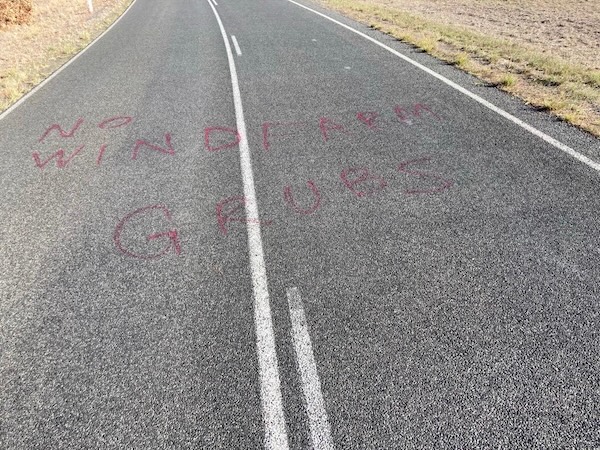
Last year was the busiest, yet, for the federal energy czar, who fielded 205 new cases and has reported an increase in complaints against large-scale solar farms, but a decline in those opposed to transmission lines.
Australian Energy Infrastructure Commissioner (AEIC) Tony Mahar says he can see some improvements from project developers, some actions are below best practice, and the situation on the ground in communities remains precarious.
“My overall assessment after this first year is that the challenges are more complex and deeper than I had even imagined,” Mahar writes in the introduction to the AEIC’s annual report for 2025.
“I have seen some genuine improvement in commitment and flexibility from companies in the sector which is encouraging… I have seen energy developers make changes in response to community concerns and input and improve benefit sharing.
“I have, however, also seen some activity that is below what I would call best practice and needed to be called out and improved.”
Mahar says the budding national Developer Rating Scheme, which is just starting now, won’t be “a silver bullet” but will be a step-change for improving accountability.
But getting senior executives from developers, and even sitting politicians, out into communities has already had explicit benefits, the report says.
The “simple act” of listening to people in person where they live, has improved or reset relationships between communities and developers.
Solar complaints up, transmission down
Of the 205 cases opened last year, 170 were complaints with one project attracting 15 of these. The vast majority were from Victoria and New South Wales, states with bigger populations and where the AEIC already has good visibility.
AEIC cases by jurisdiction in 2025. Image: AEIC
Wind farms remain the focal point of most community anger, making up half of the complaints the AEIC received last year, but grievances with solar projects also rose, particularly around “a couple” of unnamed proposals.
Transmission complaints fell because states have improved the ways people can make direct contact on these.
The most common issues were community engagement, amenity, natural environment, and economic loss, with complaints about planning processes nudging “safety” out of the top five.
The AEIC report says bushfire risk is an ongoing concern and it wants to see developers putting more time into showing how they’ll manage the risk and answering community questions.
The nature of issues raised in each of these categories also shows how tricky it can be to get that first contact right.
Under community engagement, for example complaints ranged from first contact coming too late, too early, and offering information that was too detailed or too simplistic.
Years-long planning processes are causing problems, as the timeframe for making a public submission is usually limited to just a few weeks within that whole period.
Individuals and communities are usually reading reports that can be hundreds of pages long and writing submissions with no help, either to understand what they’re reading or the process they’re submitting into.
Gearing up for national comms plan
The tone of this report was decidedly more positive than Mahar’s comments following last year’s one, when he worried that the 2024 review into community engagement was being allowed to gather dust, and risked letting problems “fester”.
The 2024 Community Engagement Review was delivered by Mahar’s predecessor Andrew Dyer, and was a scorching indictment of how the energy industry is interacting with and treating the people who live near new projects.
It found poor community engagement had created a “material distrust” of renewable energy project developers and, in particular, developers of major new grid transmission projects.
Dyer and his team made nine key recommendations including the Developer Rating Scheme and another which has become increasingly urgent – the need for a structured, comprehensive and government-led national communications program on the energy shift – to combat misinformation.
Recommendation 6, as it’s known, is now one of the top priorities for the AEIC in 2026, which the report notes is not “another advertising campaign” but a collective effort to explain why the energy transition is happening.
“If managed well, much of the ‘heat’ in the energy shift can be relieved through proponents and governments doing the basic things right that are required to scope, design and deliver new infrastructure better,” Mahar says in the report.
“Clarity, consistency, accountability, respectful relationships and trust will create confidence and certainty – a virtuous circle that also enables local collaborative efforts that maximise potential community benefits.”
The AEIC is planning a series of fact sheets on contamination, land-use planning, shadow flicker, noise and fire risk as it does its bit to deal with misinformation.
If you would like to join more than 29,000 others and get the latest clean energy news delivered straight to your inbox, for free, please click here to subscribe to our free daily newsletter.
If you wish to support independent media, and accurate information, please consider making a one off donation or becoming a regular supporter of Renew Economy. Please click here. Your support is invaluable.
Rachel Williamson
Rachel Williamson is a science and business journalist, who focuses on climate change-related health and environmental issues.
Share this:
Facebook
X
LinkedIn
Reddit
Email
Print