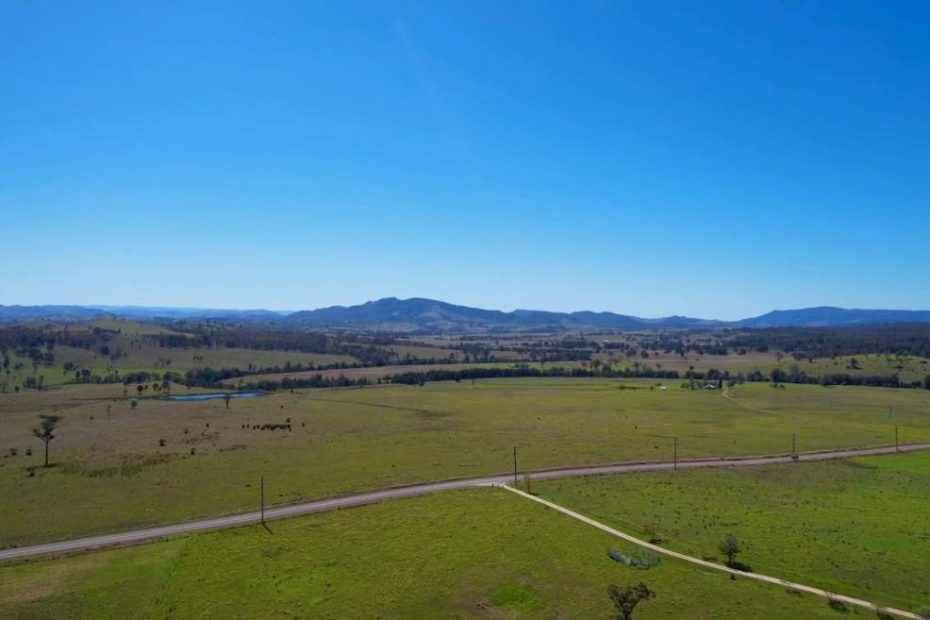
Plans to develop a solar and battery project at Mitchells Flat, around 75 kilometres northwest of Newcastle, have been dropped by the developer, in what has been described as a “really welcome outcome” for members of surrounding New South Wales communities.
Elgin Energy, which is majority owned by Copenhagen Infrastructure Partners, was in early development of a 90-megawatt (MW) solar farm with an accompanying 90 MW battery energy storage system (BESS).
The project 177,000-panel project was planned for the small rural location of Mitchells Flat, which has a population of around 250, around 12km northeast of Singleton and 150 km north of Sydney.
The site was earmarked by Elgin as as being lower quality agricultural land or ‘Biophysical Strategic Agricultural Land’ and well suited to solar due to being “relatively flat and clear land with few environmental constraints.”
But local opposition to the project appears to have galvinised after a meeting with the local community at the Singleton library in August of 2024, led by the Singleton Solar Standoff community group.
Michael Holz, a member of the group who addressed a NSW government inquiry into the impact of Renewable Energy Zones (REZs) on rural and regional communities and industries in NSW, said it was the proposed location the community objected to, and not the technology.
“Our community is simply asking that developments like what is proposed at Mitchells Flat be constructed in the right location within the Singleton LGA so that they do not impact on either our rural residential communities or our productive farming land,” Holz said.
Holz notes that the project’s proposed location, east of Singleton, is also home to new residential developments, while local industrial projects, such as mining, power generation, industrial estates, tended to be located to the north and west of Singleton.
“Anyone that has visited the Hunter Valley is aware that there are vast areas of mining rehab and buffer lands that are ideal for solar projects, given their cheaper establishment cost, being in close proximity to existing electrical grid infrastructure,” Holz said.
Holz points to examples like the Maxwell Solar Farm, proposed in 2019 for the old Drayton Mine site; the Muswellbrook Pumped Hydro Project to be built on the former Muswellbrook Coal Mine site and the top of Bells Mountain; and the Stratford Renewable Energy Hub which is aiming to use part of the Stratford coal mine once mining has ended.
Each of these is located west and north of Singleton.
Locals were also unimpressed by the proposed 14 kilometres worth of high voltage transmission lines that were to be built from the solar farm and battery, much of which would be built within the existing road reserve along several local roads.
In a Facebook post earlier this week, federal Hunter MP Dan Repacholi said the news that Elgin had decided not to progress the Mitchell’s Flat project was “a really welcome outcome” for the local community.
“Like many locals across the Hunter, I know there’s been a lot of concern raised about this project, from land use and environmental impacts through to what it would mean for the future of our regional landscape,” Repacholi says.
“Elgin’s decision is a positive step, and I think it’s fair to say there’s a real sense of relief across the community that they’ve chosen to focus their development efforts elsewhere.
“This outcome shows just how important it is that local voices are heard when it comes to major developments in our region.”
Renew Economy has reached out to Elgin Energy for comment.
Joshua S Hill
Joshua S. Hill is a Melbourne-based journalist who has been writing about climate change, clean technology, and electric vehicles for over 15 years. He has been reporting on electric vehicles and clean technologies for Renew Economy and The Driven since 2012. His preferred mode of transport is his feet.
Share this:
Facebook
X
LinkedIn
Reddit
Email
Print