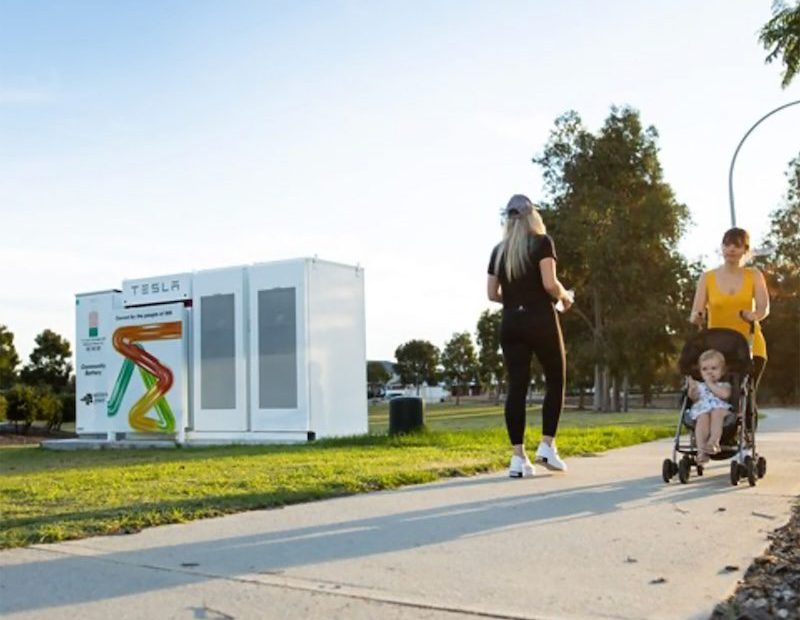
Victorian renewable energy company Indigo Power is launching the first of seven new community batteries to be deployed across regional Victoria and southern New South Wales, part of a $4.7 million regional energy resilience project.
Backed by a $3.4 million funding commitment from the Australian Renewable Energy Agency (ARENA), the first community battery to be unveiled is at the Old Beechworth Gaol in Victoria.
The site holds particular significance for Indigo Power, as it is where almost seven years ago the company’s very first solar project was switched on. The Gaol, one of Australia’s most significant post European cultural sites, is now a favourite tourist destination.
The new 340 kilowatt-hour (kWh) community battery, dubbed BEECH01, will be charged by a 99 kW solar PV system and will operate as a shared community asset, sharing energy with Indigo Power Customers.
Indigo Power expects the battery to share up to 38.2 megawatt-hours (MWh) of stored solar energy each year with participating households as well as helping to meet electricity demand at the Old Gaol.
The battery is also the first of seven community batteries Indigo Power is deploying across regional Victoria and southern NSW which will boast a cumulative 5 MWh between them – enough battery storage to back the company’s growing retail operation up to 2,000 customers.
“This project shows what’s possible when communities take the lead on the issues that matter to them,” said Benjamin McGowan, managing director of Indigo Power.
“When we speak with rural communities about batteries, the conversation always comes back to resilience; having reliable backup storage when it’s needed most. The Beechworth Community Battery is a practical example of a community stepping up to meet its own needs.”
BEECH01 will be able to provide long-duration backup power for potential outages caused by bushfires, storms, and flooding, as well as prioritising critical circuits and recharging during the day thanks to its connected solar system.
As such, the battery further enhances the Old Gaol’s ability to operate as an emergency centre during prolonged power disruptions and potential disasters.
“Backup power is no longer a ‘nice to have’ for regional communities; it’s becoming essential,” added McGowan.
“By placing community batteries at key sites, we can support the community’s ability to respond during emergency events and power outages, strengthen the local grid, and share locally generated renewable energy with households every day.
“We’re excited to be able to build resilience and share renewable energy at the same time.”
If you would like to join more than 26,000 others and get the latest clean energy news delivered straight to your inbox, for free, please click here to subscribe to our free daily newsletter.
Joshua S Hill
Joshua S. Hill is a Melbourne-based journalist who has been writing about climate change, clean technology, and electric vehicles for over 15 years. He has been reporting on electric vehicles and clean technologies for Renew Economy and The Driven since 2012. His preferred mode of transport is his feet.
Share this:
Facebook
X
LinkedIn
Reddit
Email
Print