Share
Share
0
Share
The Achilles’ heel of all the current plans to move consumers to more cost reflective tariffs is that it is very hard to change people’s behaviour.
Installing solar and monitoring certainly encourages energy literacy, but this option is not available to everyone.
Effective use of the proposed free power in the middle of the day plans will add an extra impetus to the need for consumer literacy around energy consumption and time-of-use tariffs. Solutions that actually work require maximum automation and minimal ongoing effort by consumers.
There is no doubt that the push to “electrify everything” makes a lot of sense in the long run, environmentally and financially.
But there are a lot of interacting complexities between solar PV, electric vehicles, changing from gas to electric cooking, options for electric water heating, and possibly a home battery.
All of these have options and implications for your house wiring and switchboard. Not to mention the capital cost. This is not a solution available to everyone.
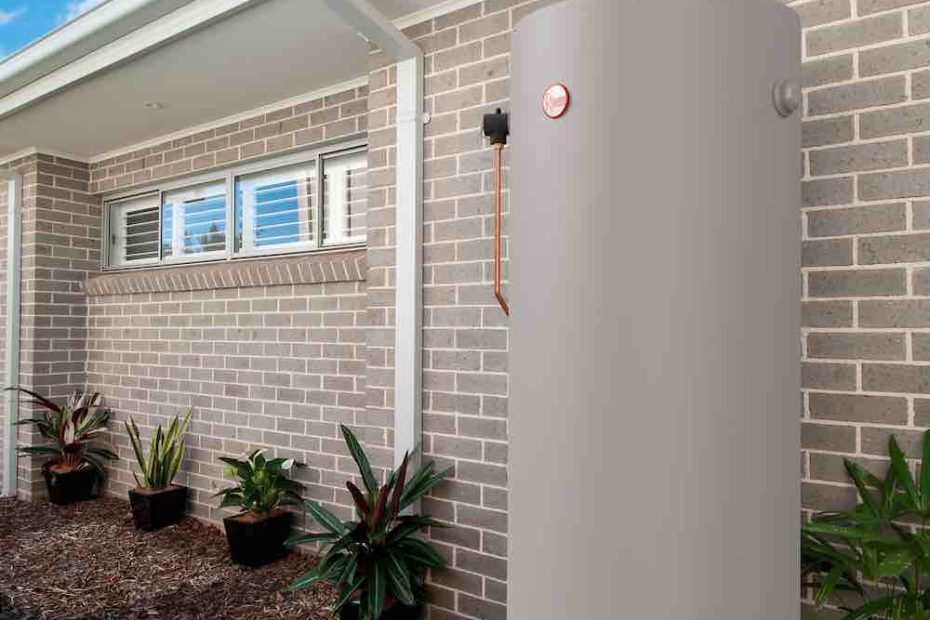
I got a bit carried away with looking for the simplest, cheapest, no-hassles solution. If you have a working electric storage hot water system, the cheapest way to save money is to put this on a timer. This applies whether you have solar PV or not, as long as you have an option to move to a time-of-use tariff.
Controlling the timing of water heating is the easiest way to reduce the cost of electricity, because water heating consumes a large amount of energy and can be done at any time of the day. It is, in effect, the battery you already own.
There are at least three scenarios in which this makes sense:
– If you have a reasonable size solar PV system, you probably export energy in the middle of the day and buy it back later at a higher price once you use hot water.
– If you are on a time-of-use tariff, avoiding heating water when electricity is expensive saves money.
– If you are eligible for the proposed Solar Sharer offer, this is an ideal time to heat water for later use.
My website explains the various options for adding time control to your hot water service. Even for this simple solution there are at least five different approaches to consider.
Being a bit of tinkerer with micro-electronics, I got carried away with developing the cheapest, most flexible approach to adding a timer to my hot water circuit.
I got an electrician to install a contactor (aka relay) in my switchboard controlling power to the water heater. Using a contactor powered by a 12 V supply means you have a range of DIY options for controlling the timing of water heating.
An added bonus of my DIY solution is that it displays, visually, when power is cheap, as well as automating water heating. This can prompt you to manually move other electricity consumption to cheaper times. We do this for our washing machine and clothes dryer.
The software as currently written is based on the Tasmanian time-of-use tariff, but if you have some familiarity with C++ programming you can change both the tariff times and the boost times.
If you don’t want to build this unit yourself it is still worth having an electrician install a 12 V driven contactor. You can control this for now with a cheap powerpoint timer and a 12 V power pack, and retain flexibility for future upgrades without having to pay an electrician to come back.
By all means investigate the “electrify everything” approach, but don’t ignore the possibility of a much cheaper and easier way of making a start on controlling your electricity use.
Jack Gilding is a retired community energy activist. He was previously the executive officer of the Tasmanian Renewable Energy Alliance and before that of the Hepburn Community Wind Farm Coop.
Share
Share
0
Share