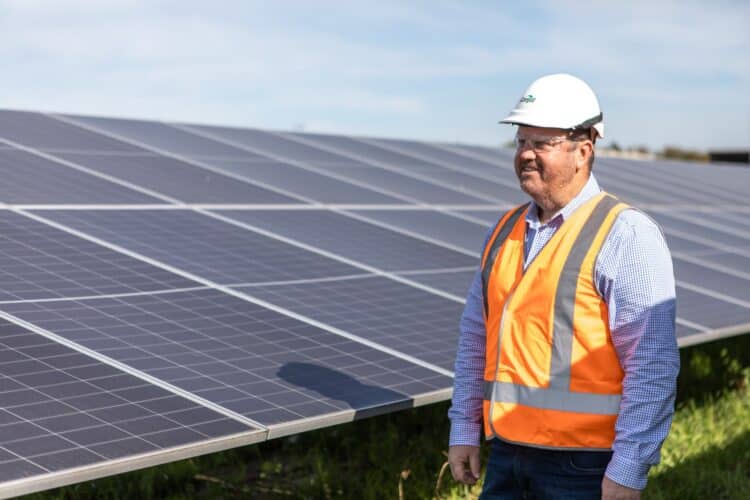
Cargill has installed a 2.58MW solar array to power its Newcastle crush plant in New South Wales, cutting Scope 2 emissions by about 2700 tonnes of CO₂e.
The project is set to generate 4200MWh of renewable electricity per year, with the US agriculture company noting the cost benefits of generating energy on-site.
“With energy markets becoming increasingly volatile, generating electricity on-site helps stabilise costs and improve the overall reliability of Cargill’s operations, delivering greater certainty for customers and the wider supply chain,” the company said.
The solar array forms part of Cargill’s investment in Australia’s oilseed processing network, where the company is investing $100 million to upgrade and expand its Newcastle, Narrabri and Footscray facilities as demand for food, feed and renewable fuels grows.
“By integrating renewable energy directly into our manufacturing infrastructure, we reduce emissions, enhance resilience and create lasting value,” Cargill senior director, regional operations – SSEA-Australia Nick Ebrill said.
“It is a strong example of what can be achieved when persistence and local insight come together to drive bold, transformative outcomes.”
The facility is said to be the only renewable energy asset fully built and owned by an Australian bulk handler and oilseed processor.
Cargill – a pioneer in biofuels technology – is set to play a key role as Australia builds a local low-carbon fuels (LCFs) sector.
The Federal Government announced in September 2025 it was investing $1.1 billion in LCFs through a 10-year Cleaner Fuels Program, targeting first ‘drop-in’ fuels, i.e. those that can replace traditional fuels in today’s engines, by 2029.
Cargill welcomed this announcement.
“A biofuels sector in Australia would create new markets for farmers, reduces farmers dependency on global uncertainties, support local manufacturing, provides significant tax revenues for the communities and help Australia meet its emissions reduction targets,” the company said.
“Cargill will continue to engage with the Federal Government and all stakeholders as Australia continues its journey to develop a low carbon liquid fuels sector.”
Subscribe to Energy and discover all you need to know about the energy transition.