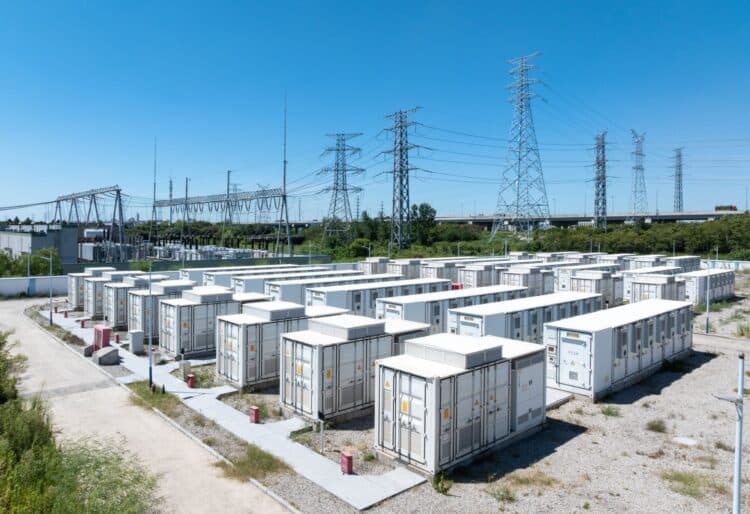
Queensland launched Australia’s first battery storage database in 2018, enabling homeowners to register their batteries to provide network transparency.
“Those batteries can help better manage the electricity network and supply during peak demand,” former Queensland Energy Minister Dr Anthony Lynham said at the time.
“This is part of our plan to use network energy assets to further lower wholesale prices, minimise price spikes and increase the resilience of the power networks.”
Queensland has been a clear early mover in energy storage, a responsibility championed by former Labor leader Annastacia Palaszczuk during her eight years as Queensland Premier.
In September 2022, Palaszczuk launched a $62 billion energy plan that prioritised pumped hydro and battery adoption, with a $500 million fund solely focused on investment in large-scale and community batteries.
Steven Miles continued that momentum during his time as Premier, launching his own $570 million Battery Industry Strategy in February 2024.
Between the fourth quarter (Q4) of 2023 and Q3 2024 under Miles’ leadership, the Queensland Conservation Council found 1635MW of storage capacity either reached financial close or commenced construction in Queensland.
The landscape looks slightly different under Liberal leader David Crisafulli’s premiership, with new regulation introduced in December graduating the approvals process for large-scale BESS (50MW or more) from local council to state government.
Planning (Battery Storage Facilities) and Other Legislation Amendment Regulation 2025 mandates these projects to undertake a social impact assessment and agree with local government on community benefits before a development application is lodged.
This aligns battery approvals with renewable energy developments in the state.
“The Crisafulli Government’s changes make sure BESS projects are assessed consistently and transparently, removing delays and providing certainty for industry and communities,” Deputy Premier and Minister for State Development, Infrastructure and Planning Jarrod Bleijie said.
“We’re giving communities a stronger voice and empowering local governments to play a greater role in managing social impacts, negotiating community benefits, ensuring projects deliver the best outcomes for communities.”
This development was welcomed by local farmers but opposed by clean energy advocates such as Jackie Trad, chief executive of the Clean Energy Council.
“The lack of consideration for what these changes will mean for project costs or grid stability is baffling,” she told The Australian Financial Review. “Deputy Premier [and Planning Minister Jarrod Bleijie] is once again attacking clean energy and driving away investment from the state.
“These changes, announced with 24 hours’ notice, have jeopardised billions of dollars of projects already in the pipeline and sends a message that the investment environment in Queensland is not stable.
“Industry is supposed to be welcome in Queensland, not frozen out.”
Soon after announcing the new regulation, the Queensland Government revealed its 2025 renewable energy and battery achievements, with 11 solar, wind and battery projects connected to the grid last year.
Treasurer and Minister for Energy David Janetzki then reaffirmed the state’s new energy roadmap, where the delivery of “affordable, reliable and sustainable” energy is prioritised.
“We need coal generation, more wind and solar, and additional dispatchable supply, including gas turbines, smaller and more manageable pumped hydro, and batteries for firming and storage,” he said.
What the trajectory for Queensland battery developments looks like in 2026 remains to be seen, but the Queensland Government’s energy vision is clear, and it won’t mean doing away with traditional energy sources such as coal and gas.
Subscribe to Energy and discover all you need to know about the energy transition.