The Banana Shire Council has become the first Queensland council to join the Circular PV Alliance this week, and only the second regional local government to pledge its support to a group looking to ensure that solar panels are recycled or reused and do not end up in landfill.
The Circular PV Alliance (CPVA) is a grassroots not-for-profit organisation, founded in 2021 by the solar energy industry to realise “the full potential and environmental benefits of solar energy” by supporting its transition into a “circular economy”.
The Alliance boasts eight members, according to its website, which will be boosted to nine with the addition of the Banana Shire Council, which follows the Dubbo Regional Council as the second regional local government to pledge its support.
“We want to activate as many opportunities for our local community as possible, and recycling used solar panels to recover valuable materials is the type of innovative business model we want to support,” said Tom Upton, Banana Shire Council CEO.
“Our community already has a number of renewable developments, with more on the way.”
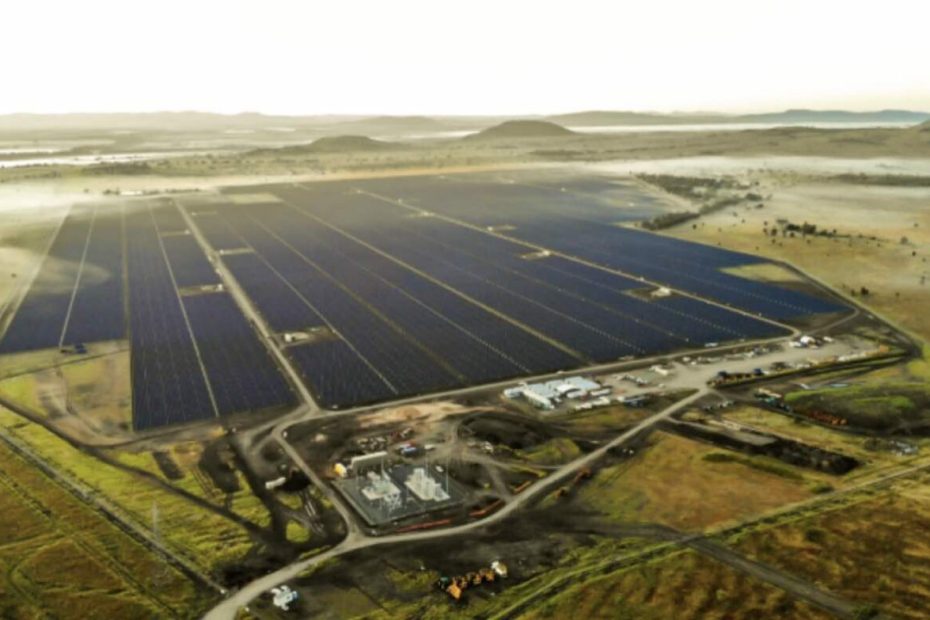
Banana Shire already hosts the Moura solar farm (pictured above), and has more in the pipeline, including the Baralaba, Smoky Creek, Sawpit and Callide solar projects. It also hosts the Callide coal fired generation complex and numerous wind projects.
“Circular PV Alliance helps solar developers design and manage solar projects in a more sustainable way that stops solar panels from ending up in local landfill,” Upton said.
“This is important work and it also creates local business and economic opportunities which Council is very supportive of.”
CPVA co-founder and CEO Megan Jones said that circularity practices must be factored in now so as to ensure Australia’s solar industry remains environmentally sustainable and socially acceptable.
“Local governments are trying to understand the impacts and opportunities of large-scale solar energy projects on their local communities, which can be difficult given the speed and scale at which the rollout is happening,” said Jones.
“We help project developers embed circularity practices into solar projects through our CPVA Certified assurance framework.
Part of this process includes making sure used or damaged panels are diverted from landfill and instead sent for recycling, or repair if possible. This stops local waste management facilities from being overwhelmed or accumulating certain types of tricky e-waste like solar panels.
“The solar circular economy is an emerging market. Communities like Banana shire, that will have a lot of solar projects located in their region, are well placed to become a hub for businesses in this new urban mining sector.”
The CPVA recently awarded the 400-megawatt (MW) Stubbo solar farm in central western New South Wales an “Exceeds” CPVA Certified rating for going beyond baseline requirements and taking a whole-of-lifecycle approach to managing materials for reuse rather than waste.
All 930,000 solar panels used at the Stubbo solar farm will be recycled at the end of their life, making the project the first large-scale project to meet independent standards designed to make circular management commercially viable.
If you would like to join more than 28,000 others and get the latest clean energy news delivered straight to your inbox, for free, please click here to subscribe to our free daily newsletter.
Joshua S Hill
Joshua S. Hill is a Melbourne-based journalist who has been writing about climate change, clean technology, and electric vehicles for over 15 years. He has been reporting on electric vehicles and clean technologies for Renew Economy and The Driven since 2012. His preferred mode of transport is his feet.
Share this:
Facebook
X
LinkedIn
Reddit
Email
Print