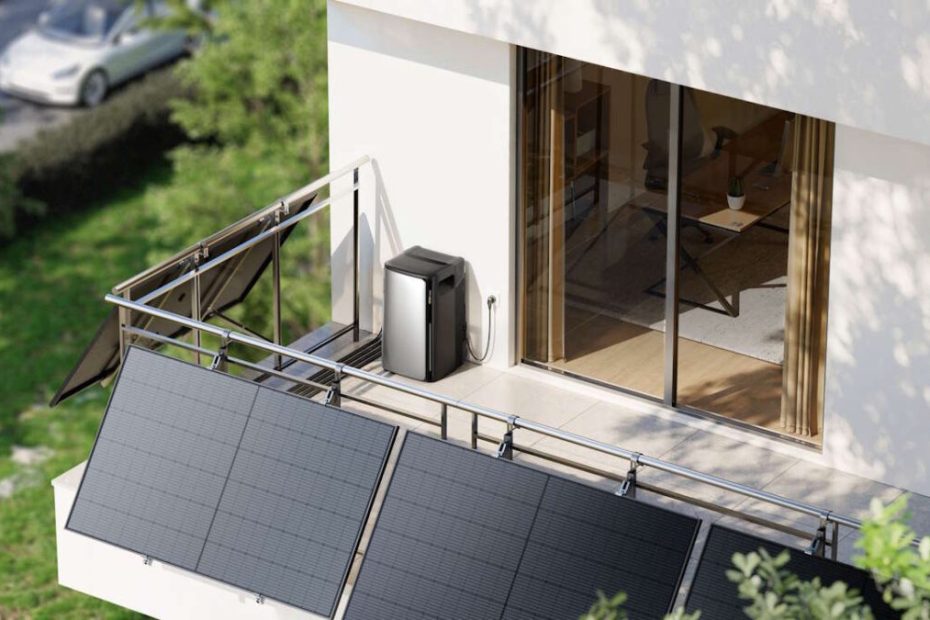
Balcony solar is now officially legal in the UK, with plug-in panels and batteries up for sale as of Thursday, including through one of Britain’s biggest retailers, Argo, where single panel units start at £599, including through buy-now-pay-later deals, or for just over £24 a month through a payment plan.
The UK joins Spain and Germany in embracing plug-in solar, Germany being the originator of the term balkonkraftwerk – balcony power plant – due to the huge number of apartment dwellers that have used the technology to generate power from sun-drenched terraces and slash their bills.
The UK has made plug-in solar happen relatively quickly, having announced in March that paving the way for the technology would be prioritised as part of a suite of measures designed to bolster national energy security in the midst of another fuel crisis.
This has not gone unnoticed in Australia, where groups like Solar Citizens are taking the opportunity to remind the federal and state governments and relevant regulatory authorities that they, too, could make balcony solar happen – within the space of a year.
Pressure is also mounting from across the proverbial ditch, where New Zealand is threatening to beat Australia to the punch after a major government review said legalising plug-in solar could be achieved within nine to 12 months given work has already started on determining the approach to developing or modifying standards.
To make plug-in solar happen in Australia requires making it legal – and safe – to plug in and use. But as Smart Energy Lab general manager Glenn Morris puts it, “none of the concerns raised about plug-in solar needs new technology, they need a rule that says what is acceptable.”
“The path to safe plug-in solar is not complicated,” adds Morris, in a statement released alongside Solar Citizens on Thursday.
“Germany has had over a million of these systems plugged in for years and the UK has just written the rules into its wiring regulations. We do not need to invent anything.
“We need a product standard so the inverter shuts down instantly when unplugged, a cap of around 800 watts (W) so it cannot overload a normal power circuit, and a simple registration with the network so they know it is there.
“That is a job for the Energy Ministers to hand to the regulators with a deadline.”
And, in fact, the work being done in New Zealand could serve to make the job for Australia even easier, given the two countries share many of the key electrical and safety standards that need massaging to allow plug-in solar.
Solar Citizens CEO Heidi Lee Douglas notes that while it’s not currently legal to use plug-in solar and batteries in Australia, people can quite readily buy the gear – making it more urgent than even to develop clear, nationally consistent rules.
“Solar Citizens has written to all Australian governments urging them to lay out a plan for the regulation of plug-in solar,” says Douglas.
“It’s unfair that more than three million Aussies who could benefit from portable plug-in solar panels are missing out because our regulations aren’t up to date with the latest technology.
“We see the UK, Germany, and our neighbour New Zealand making plug-in solar available – so it’s time for Australian politicians and regulators to work it out here. If it’s good enough for the Kiwis and the Brits, it’s good enough for us.”
What is plug-in solar?
As Solar Citizens explains it, plug-in solar refers to portable modules (and batteries) that can “literally be plugged into power points” to help offset the cost of energy hungry home appliances. In Australia, modules would likely range from 600-800 W of power and cost between $A650 – $A1300.
Portable plug-in solar panels can be attached to apartment balconies or installed in back yards and can be taken by renters when they move – and they don’t need selfie-taking electricians to install them.
“An 800 watt plug-in system on a balcony or in a backyard with reasonable sun will produce around 1,000 kilowatt-hours a year in most of Australia,” says Morris.
“It can be used to run the fridge, the router, the TV and whatever else is on during the day, that is worth $300 to $400 a year off the bill at current tariffs.
“A kit that costs about $1,000 pays for itself in three years and keeps working for 20. For most renters it is the only form of solar they can own, and they take it with them when they move.”
To join more than 29,000 others and get the latest clean energy news delivered straight to your inbox, for free, click here to subscribe to our free daily newsletter.
To support independent media, and help combat the spread of deliberate misinformation and disinformation about the energy transition, you can click here to make a one off donation or become a regular supporter of Renew Economy.
Sophie Vorrath
Sophie is editor of Renew Economy and editor of its sister site, One Step Off The Grid . She is the co-host of the Solar Insiders Podcast. Sophie has been writing about clean energy for more than a decade.
Share this:
Facebook
X
LinkedIn
Reddit
Email
Print