An Arena-backed renewable energy project that is hoping to establish northern Queensland as a major green hydrogen hub, backed by abundant wind and solar, has been withdrawn from the federal environmental approvals process.
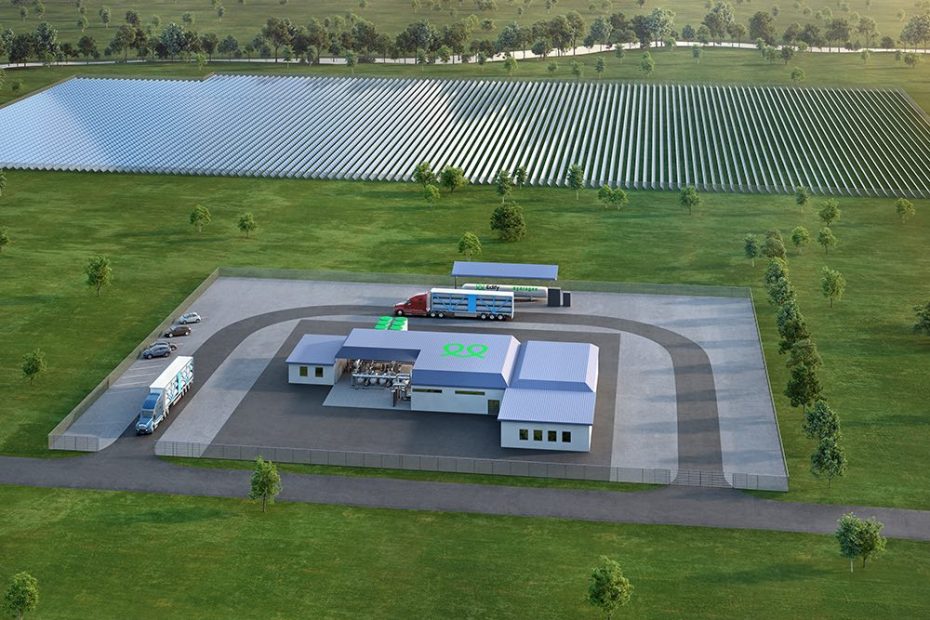
The Edify Green Hydrogen Project (EGH2), led by Edify Energy, proposes to build a 17.6 megawatt (MW) hydrogen electrolyser and 21 MW of solar and battery storage, as the first stage of an up to 1 gigawatt facility at the Lansdown Eco-Industrial Precinct (LEIP) in Townsville.
The $137 million project has been awarded $1.2 million in grant funding from the Australian Renewable Energy Agency (Arena) to support a Front-End Engineering Design (FEED) study, as part of an overall $ 20.7 million in Arena funding conditional to the project’s delivery.
In January 2024, EGH2 was awarded a further nearly $50 million in federal grant funding, in this case from the Regional Hydrogen Hubs program. At the time, Edify said construction of the project was expected to begin in 2025.
According to the federal government’s EPBC records, EGH2 was referred for environmental assessment back in July 2023. An update on Tuesday March 31, however, says the project has been withdrawn.
No details are offered on why the project has been withdrawn after sitting in the queue for more than two-and-a-half years, but given recent federal government reforms to the EPBC Act, it could be that an updated application is required.
Renew Economy is seeking comment from Edify Energy.
Commercial-scale renewable hydrogen production has proved notoriously difficult to get up and running, both in Australia and globally, as investors favour firmed renewables – and would-be developers wait for technology to improve and costs to come down.
In Australia, the focus appears to have down-shifted, somewhat, to smaller demonstration projects, such as the Kwinana Energy Transformation Hub (KETH) in Western Australia, which last week announced it has progressed to the next stage of a government- and industry-backed production and testing facility.
According to the EPBC documents, the first-stage plan for the EGH2 was to build and operate a 17.6 MW hydrogen production facility, using an electrolyser from project partner Siemens, with a generating capacity of 333 kg/hr.
In this initial stage, the electrolyser was to be powered by either a connection into an overhead transmission line or an integrated 21 MW solar plant and 6MW battery energy storage system (BESS).
After an initial stage of around five years at the demonstration scale, the plan was to then expand the facility to an up to 1 GW of hydrogen production in the final stage of the project.
If you would like to join more than 29,000 others and get the latest clean energy news delivered straight to your inbox, for free, please click here to subscribe to our free daily newsletter.
Sophie Vorrath
Sophie is editor of Renew Economy and editor of its sister site, One Step Off The Grid . She is the co-host of the Solar Insiders Podcast. Sophie has been writing about clean energy for more than a decade.
Share this:
Facebook
X
LinkedIn
Reddit
Email
Print